National Tsing Hua University-College of Engineering
Executive Summaries of the Program on BEST in the 111th academic year
With the support of the Blueprint for Developing Taiwan into a Bilingual Nation by 2030, this project aims to integrate the abundant bilingual teaching resources available at National Tsing Hua University (NTHU) and the expertise of our college's faculty, to create an immersive English learning environment.
Through the establishment of an internationalized learning environment, the College of Engineering (CoE) endeavours to cultivate students' advanced engineering talents with an international perspective, aligned with global standards, which can significantly enhance the international competitiveness of Taiwan's industries.
To achieve these objectives, the college has devised strategies and phased goals across various dimensions, including organization, students, teachers, courses, international exchanges, resource sharing, and inter-school cooperation. The Executive Summaries outlining these efforts during the 111th academic year are as follows:
Institutional Strategy and Management
CoE has set up a college-wise and a department-wise EMI promotion team. The college team, composed of the dean (as the convener) and the heads of each department, is in charge of work planning and reviewing. The departmental team is composed of the associate dean (as the convener) and the representative teachers of each department and carries out quarterly meetings to promote and track the working progress. In addition, there are curriculum committees set in each department, which assist in the EMI course-related affairs.
CoE invited 5 experts outstanding in EMI to form the EMI Teaching Advisory Committee, composed of two from outside NTHU, two from outside the college, and one retired teacher from the college. CoE convened consultation meetings to review and supervise current work conduction, and the associate dean acted as the convener.
Meanwhile, the college established an incentives and subsidies system for teachers and TAs, encouraging them to engage in EMI teaching, class observation and filming EMI online courses. After the revision in the 111th academic year, course evaluation will be incorporated into the teacher incentives assessment, aiming to encourage teachers to enhance their teaching quality.
Teachers and Teaching
Throughout the 111th academic year, CoE offered a total of 177 courses in English, comprising 64 at the undergraduate level and 113 at the graduate level. According to student feedback, over half of the EMI courses achieved excellent performance and received high scores on the course evaluation survey.
Responding to the requirement from MOE, the college carried out the class observation 4 times on a total of 20 EMI courses during the 111th academic year. In addition to the class-observation records, the college writes the report on class characteristics and reviewing.
The college actively encouraged teachers to enhance their EMI teaching skills. In the 111th academic year, two interdisciplinary EMI growth communities were established, and six micro-projects related to EMI curriculum and teaching innovation were proposed, by CoE teachers. Additionally, five teachers from CoE successfully completed the Cambridge Certificate in EMI Skills.
Moreover, the college recommended that teachers hire native students with English proficiency above CEFR B2 or foreign students as Teaching Assistants (TAs) to incentivize the TAs to enhance their English abilities. Additionally, the college encouraged TAs to engage in EMI TA training workshops, establish the EMI TA growth community, and participate in the TA performance evaluation system.
Students and Learning
According to the investigation conducted in the 111th academic year, approximately 83.9% of sophomore students and 80.8% of first-year Master's students have earned at least 20% of their required credits from EMI courses.
The college recommends that teachers assign Taiwanese students to groups based on their English proficiency levels and aim to include international students in each group to facilitate English communication among students.
To encourage students to enhance their English proficiency, the College of Engineering (CoE) has provided subsidies for the registration fees for English Proficiency Tests. During the 111th academic year, the college subsidized 163 students. Among them, 62% achieved scores equivalent to the B2 level of CEFR, and 21% achieved scores equal to or higher than the C1 level.
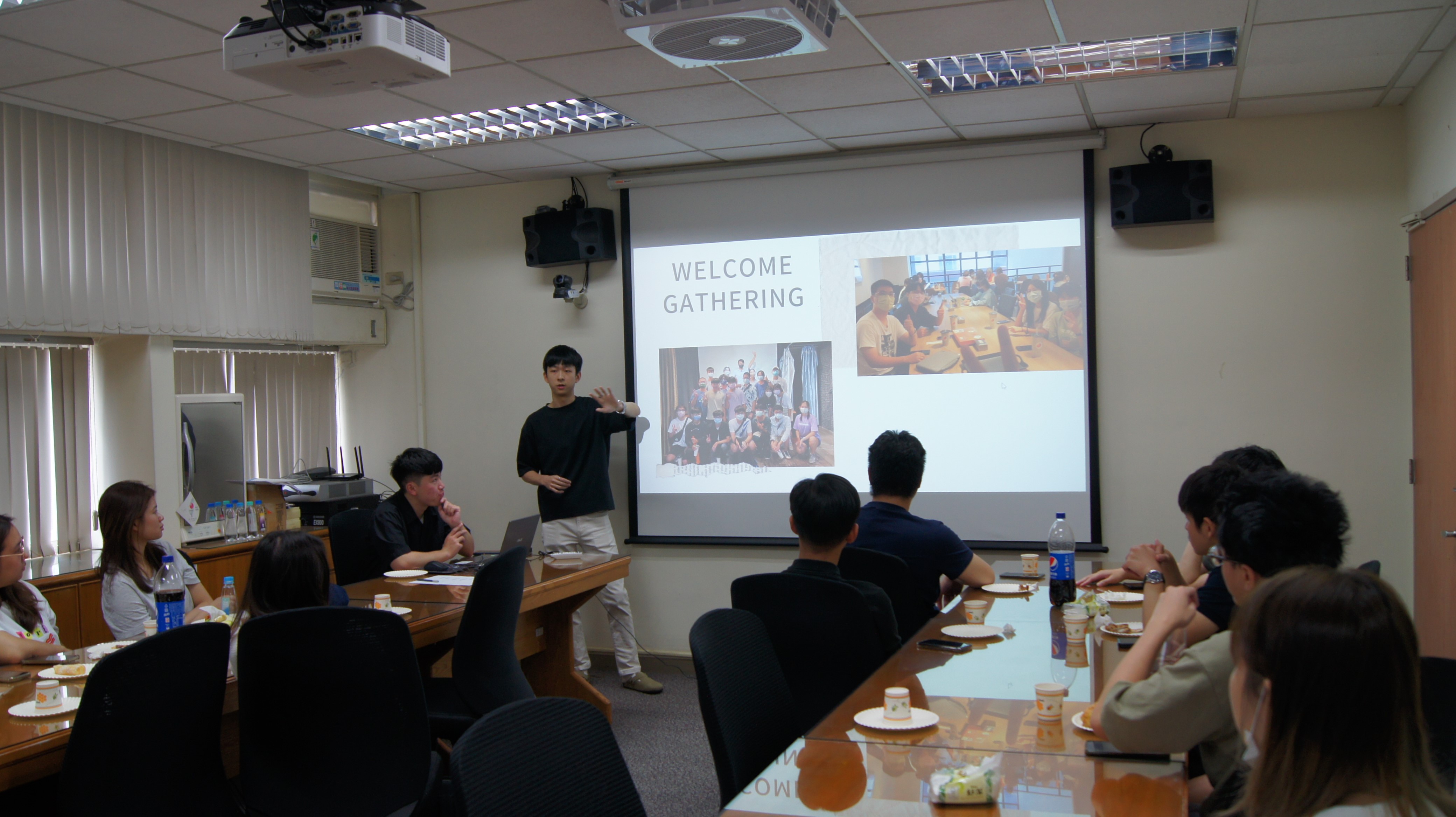
CoE also provides subsidies to the International Student Association (SA) to organize events and supports Taiwanese SAs in enhancing their events to be more inclusive and welcoming to international students. The college has encouraged students to participate the overseas activities such as exchange study, competitions, internships, etc.
Information to the Public, Resources Sharing and Interscholastic Collaboration
CoE has established a dedicated website that offers comprehensive information about the college’s EMI courses, as well as updates on skill-enhancing events both within and outside the university. Additionally, CoE teachers collaborated with the Center of Teaching and Learning Development to film two open courses during the 111th academic year.
Moreover, CoE also made the college’s EMI courses open for students from collaborating universities to select.