National Chengchi Universerity-College of Business
College of Commerce at National Chengchi University (NCCUC) can summarize the noteworthy achievements in the academic year 2022 by the following three aspects, the English Taught Program, the learning ability of NCCUC students, and the international cross-cultural interaction between professors and students.
1. English Taught Courses
NCCUC owns 145 full-time professors, including 7 professors from around the world. To strengthen bilingual education, three foreign teachers have newly joined the team in 2022. Over 53% of the professors teach in the English language.
NCCUC encourages professors to teach in English. In the academic year 2022, NCCUC offered 216 EMI onsite courses, 97 for undergraduates, 82 for master students, and 37 for PhD students. 20% of all courses offered by NCCUC were EMI courses, and it occupied 17.64%, 21.58%, and 23.07%, respectively in undergraduate, master, and PhD courses. Three professors are wholly responsible for the 36 English for Academic Purposes (EAP) courses in the academic year. The features of small class size teaching with a high interaction rate utilized the learning opportunity for students to improve their English speaking and writing ability.
In terms of teaching quality, the overall student evaluation of teaching evaluation of the EMI courses is 90.19, which is slightly higher than that of the Chinese-taught courses 88.57 in courses Financial Accounting, Financial Management, Statistics, and Investments.
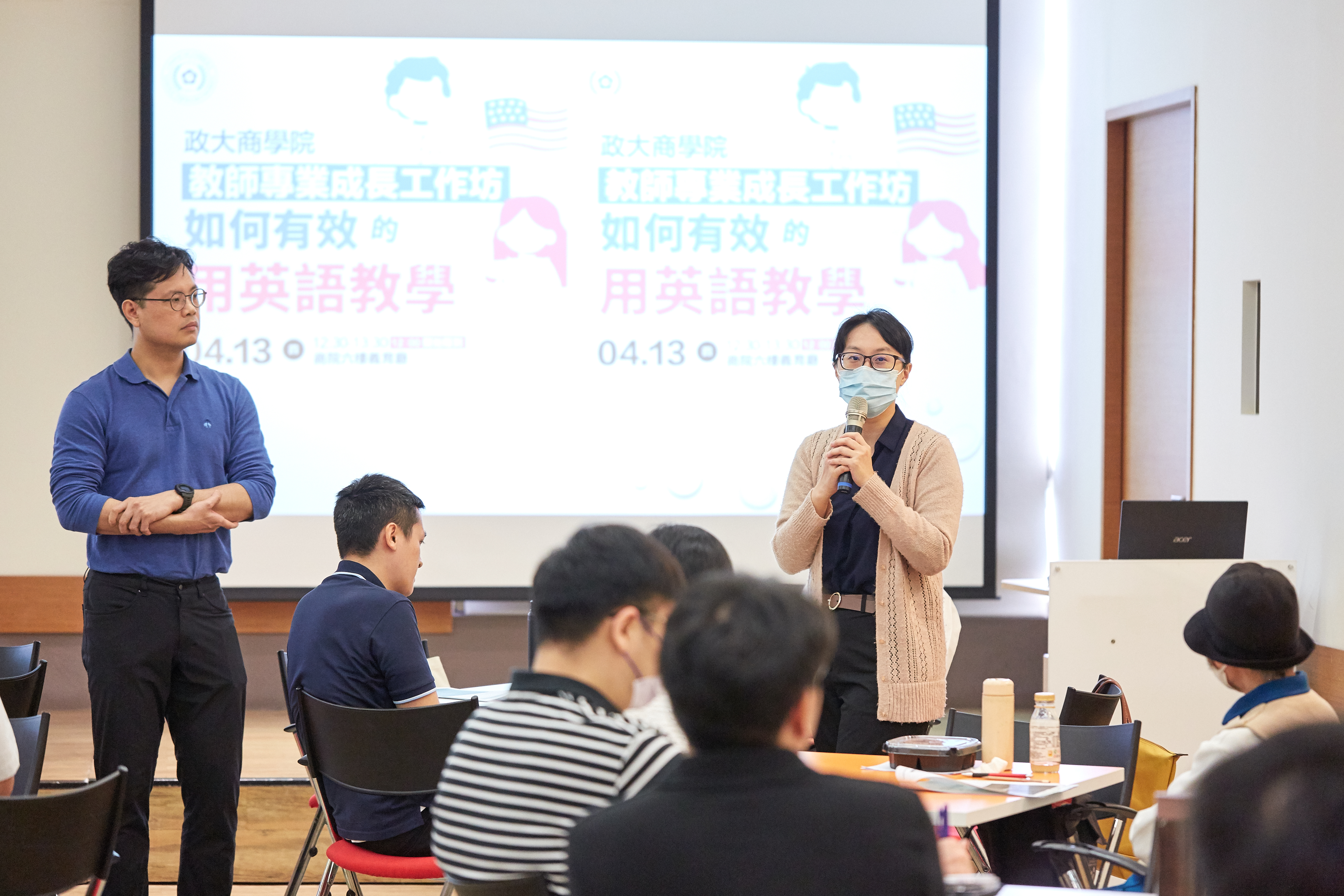
To enhance the quality of teaching, eight professor were recommended to participate in Oxford EMI Education Training, Harvard’s Global Colloquium on Participant-Centered Learning, & Babson's ELI Global Virtual. Additionally, two EMI teacher professional workshops were held, inviting four different teachers to share their experiences in English teaching, with a total of 74 participants from both inside and outside the NCCUC.
2. Learning ability of the NCCUC students
There are 2,219 undergraduate students and 1,029 master's degree students studying at NCCUC in the academic year 2022. 623 students reached the intermediate level (TOEIC 845, IELTS 6.5, TOEFL IBT 85) according to the NCCUC Subsidy Regulation for EMI, while 294 reached the advanced level (TOEIC 945, IELTS 7.5, TOEFL IBT 95).
According to the EMI project by the Ministry of Education, 160 students were awarded E1 level certification with 16 credits earned, 26 were awarded E2 level certification with 32 credits earned, 6 were awarded E3 level certification with 64 credits earned and 8 awarded E4 level certification with 98 credits earned.
NCCUC encourages students to take EMI courses. In academic 2021, 27% of sophomores had more than 20% of the classes taught in English, and the percentage grew to 31% in academic 2022. Both numbers reached the goal of the EMI project, which aims for 20% of the signed-up courses will be taught in English for 20% of student by 2024.
The learning performance of students taking the EMI courses is as good as that of Chinese-taught courses. Take Economics for an example. Students are required to take a joint Economics exam as the final examination, the average score of the non-EMI students was 65.15, and the English-taught students got 64.96 in the academic year 2022.
3. International cross-cultural interaction between professors and students.
The College of Commerce at NCCU has a total of 142 academic partners. In the academic year 2022, a total of 286 students went abroad for exchange programs, compared to 149 in the year 2021, marking an increase. The number of inbound exchange students also rose from 180 in the academic year 2021 to 250 in the academic year 2022. The highlights of students' international competitiveness are as follows:
- Three master's degree students from NCCUC Graduate Institute of Technology, Innovation, & Intellectual Property Management won the 3rd runner-up in the 2023 International Graduate Competition held by HEC Montréal. One was even chosen as the Top3 Presenter.
- The social enterprise "PackAge" established by students from the Institute of International Business participated in the DBS Foundation Social Impact Prize in Singapore and was honored with the championship title.
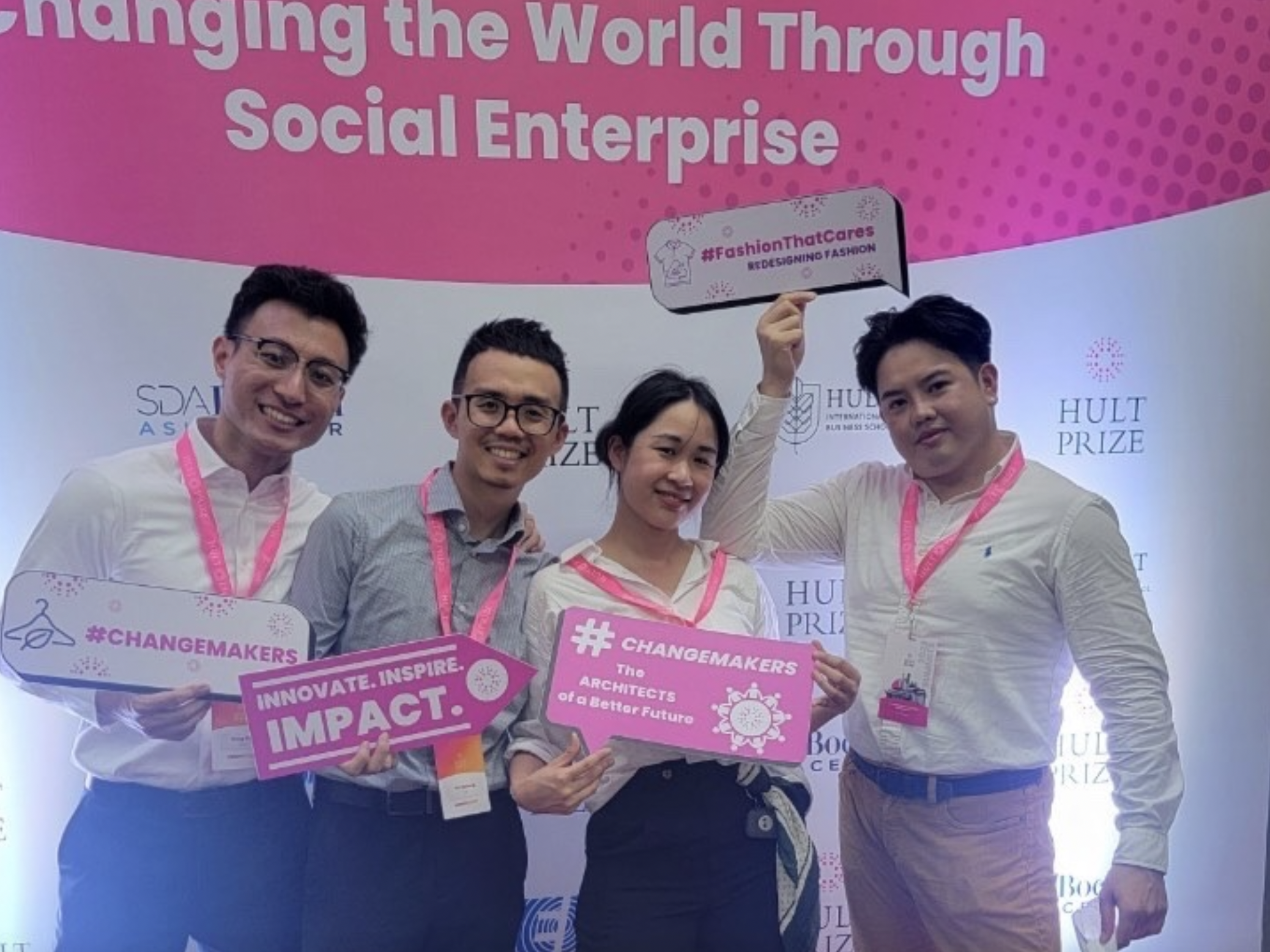
- During the academic year 2022, students also participated in International Competitions abroad, such as The Negotiation Challenge 2023 hosted by Luiss University in Italy and the Hult Prize 2023 competition in Mumbai, India.
Intercollegiate Cooperation Courses:
a. Virtual Business Professional Project:
In the academic year 2022, 45 NCCUC students participated in the students-centered project organized by the University of Southern California. Students from different countries, including the University of Hong Kong, BYU-Hawaii, Kennesaw State University, Baruch College, Hochschule Mainz - University of Applied Sciences, Jaume I University, and the National University of Kyiv, gathering students online to finish projects on multinational corporations.
b. GPAC: In the academic year, 29 students from the Department of International Business went to Hanoi, Vietnam, to join students from Waseda University, Tokyo Metropolitan University, Chiba University of Commerce in Japan, Seoul National University in Korea, the College of Management Academic Studies (Colman) in Israel, and Vietnam National University in Hanoi. They exchanged their individual papers and collectively discussed international economic issues.