National Chengchi Universerity-College of Social Science
Bilingual Program
Achievement of 111th Academic Year College of Social Sciences
- Introduction to the Features and Highlights of the Faculty
The College of Social Sciences (CSS) has the highest proportion of international students in the NCCU, with a wide range of countries of origin, and several international degree programs. The programs are designed to cover a wide range of social sciences research and issues to provide students with a diversified learning environment and study plans.
The College has gathered a wealth of international faculty and students, and through cross-country, cross-domain, and cross-institutional research and teaching collaborations, it has constructed an all-area bilingual education model oriented to the different professional clusters of the College.
- Summary of Highlights of the Academy's Achievements
Through the Bilingual Program for students, the CSS has created a bilingual education environment for the students of CSS, with the students, teachers, and the environment as the three main sides. The Office of International Programs promotes, connects, and coordinates the three main sides as well as the departments within the college to promote the program so that the effects can be multiplied by each other. The results of the implementation of the program are described as follows:
Student Side
1. The number of EMI courses and the ratio of enrollment between the university and graduate schools increased:
In addition to encouraging faculty members to offer EMI courses, we have also collaborated with the International College for Innovation and International (ICI) to offer new courses to increase the number of EMI courses offered by the CSS departments and to provide more choices for students to take English professional courses; in the 111th academic year, there was an increase of 1 course in the number of EMI courses offered by the undergraduate and an increase of 16 courses in the number of EMI courses offered by the graduate school. In the 111th academic year, the number of bachelor's degree graduates who have completed at least 16 credits of EMI courses increased from 2% in the 110th academic year to 6%, and the number of sophomores taking EMI courses also increased from 8.84% in the 110th academic year to 10.08%.
2. Increase in academic and professional English proficiency courses:
In addition to the three types of EAP (English for Academic Purposes) courses offered by the Center for Foreign Languages in the 111th academic year, EAP courses were also offered to ETP (English Taught Program) students in the College of Social Sciences. We also offer English for Specific Professions (ESP) courses by inviting native English-speaking graduate students to be the lecturers for the "Thematic English Classes.
3. Provide English assessment and incentives for taking courses.
To increase the motivation of our students to learn English, we have an English proficiency test incentive program for students who have achieved CEFR B2 or above. 96 students received subsidies in the 111th academic year, and 12 students received subsidies for the application fee for the freshman English proficiency test on a trial basis in the 111th academic year. In addition, the College has also set up an incentive program for English major courses, which provides different levels of incentives according to the number of credits taken by students who have taken more than 9 credits of English major courses in a single academic year, or who have accumulated more than 16 credits of English major courses in the semester, and a total of 38 students were given incentives in the academic year of 111, which has effectively promoted the students to take the EMI courses.
4. Organize activities to build a natural bilingual learning environment.
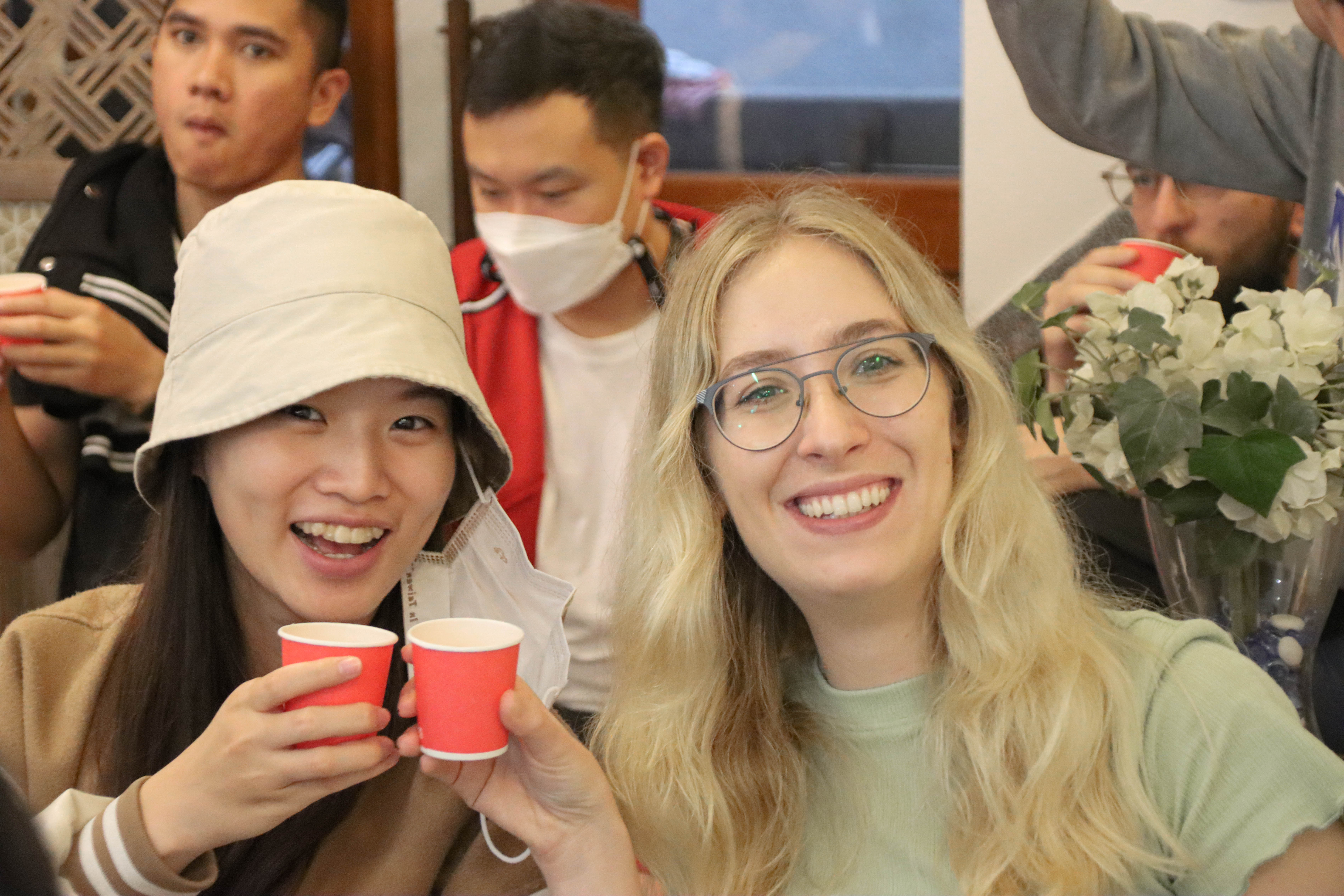
In order to create a natural bilingual learning environment, the International Family was established by combining local students of the ETP program and international students of the international program. The field trip was held in Dadaocheng, where local students introduced Taiwanese culture to foreign students in English, which brought local and international students closer and allowed them to learn and communicate with each other; five arts and culture concerts with bilingual interpretation were also held so that local and foreign students could learn daily life in a more natural and relaxing way. The program also organizes 5 bilingual concerts to allow local and foreign students to learn English for daily life in a more natural and relaxed way. In addition, 1 Fulbright Foundation internship seminar was organized to encourage local students to go to Taiwan and broaden their horizons; and 2 academic writing workshops were led by an American doctoral student to enhance students' English essay writing skills.
Teachers Side
1. Enriching the faculty of the English major program:
In the 111th semester, 2 foreign teachers were appointed for the bilingual program, and a third foreign teacher was appointed in the 111-2 semester. All three of them can teach in full English, offer EMI courses in the College, support the implementation of the bilingual program; and continue the practice of the 110th semester to support the appointment of part-time teachers for EMI courses in the College, with 6 teachers in the 111-1 semester and 4 in the 111-2 semester. In addition, we will continue the practice of the 110th semester to support departments in hiring part-time faculty for the EMI program.
2. Enhancement of teaching resources for EMI courses:
To increase teachers' motivation to offer EMI courses, EMI course teaching assistant grants are provided to teachers, who can hire teaching assistants according to their needs to reduce the burden of class preparation or to provide students with after-school tutoring; a total of 27 courses are subsidized for the 111-1 semester, and a total of 34 courses are subsidized for the 111-2 semester. In addition, the EMI course lecture subsidy is added to provide teachers with the opportunity to invite outside experts and scholars to give lectures at the school, so that the curriculum design can be more revitalized and diversified; a total of 26 lectures were subsidized in the 111th semester.
3. Enhancing Teachers' English Teaching Ability:
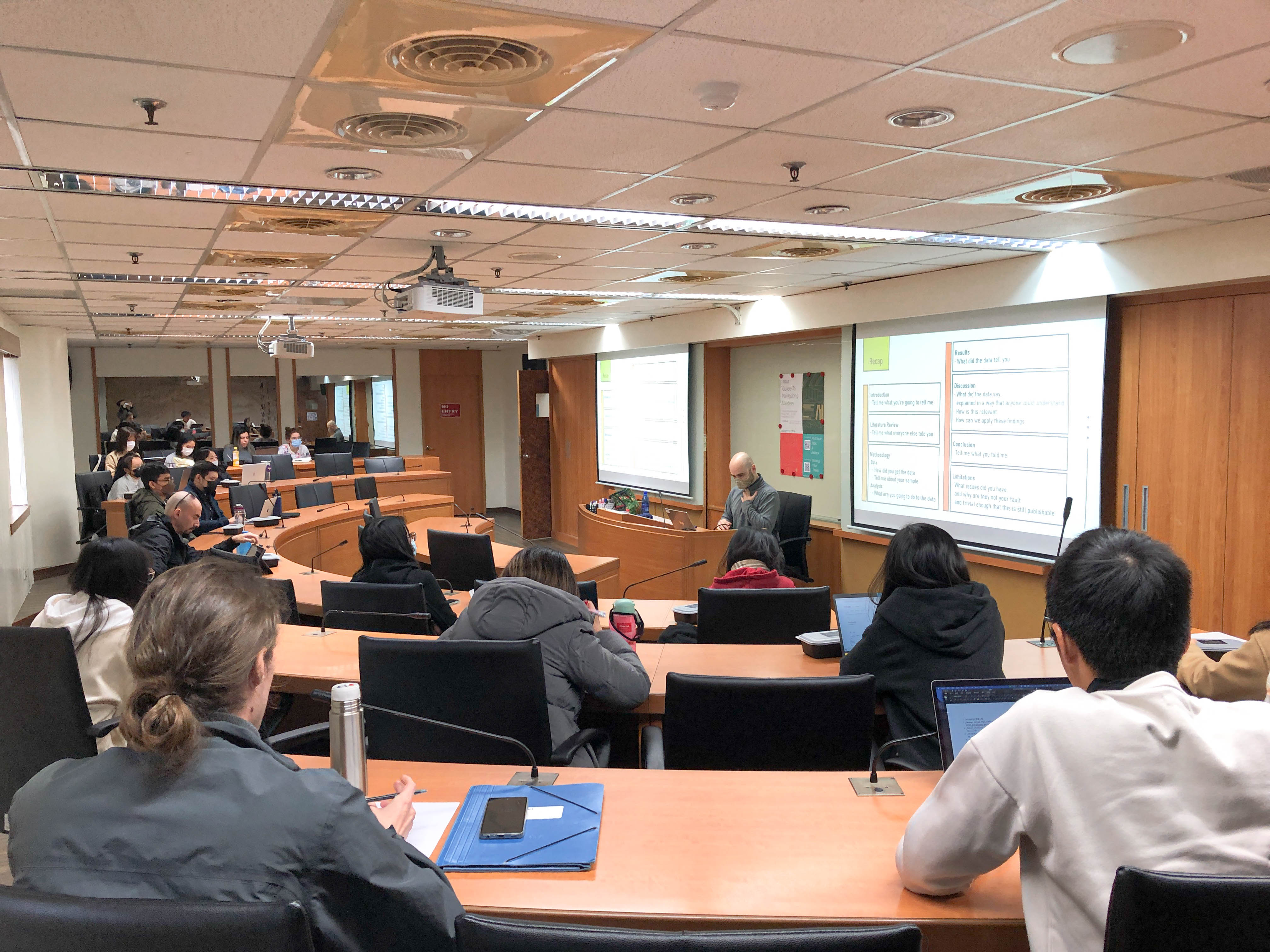
In order to improve the EMI teaching ability of our teachers, Prof. Jack Wu of the Department of Finance planned and hosted the EMI Teaching Community in the 111th semester, organizing several seminars and exchanging teaching experience; and co-organized with other faculties a TA English Teaching Ability Training Workshop to improve the English teaching skills of the TA group. In addition, with the three existing international programs as the core, we have invited teachers with rich experience in international teacher-student exchanges in different professional fields to form the "International Faculty Mentor Group", which is a group that promotes the sharing and exchange of international experiences among teachers and promotes the development of the "International Family" through different exchange activities.
Environment Side
1. Support the renewal of teaching equipment:
Supporting the renewal of teaching equipment in each department to improve the quality of bilingual teaching and learning.
2. Transparent and rapid information on bilingual learning resources:
In order to encourage students to participate in bilingual program activities and to show the results of the bilingual program, we have set up a bilingual program area on our website and a bilingual program bulletin board in the Office of International Programs, as well as regular e-newsletters and e-mail newsletters, to notify students of bilingual program-related activities, making bilingual learning resource information more transparent and rapidly disseminated.