National Chi Nan University
The goal of National Chi Nan University (hereafter NCNU) in fulfilling the Program on Bilingual Education for Students in College (hereafter BEST) is to become an international university by strengthening students' English abilities and cultivating English medium instruction (EMI) professors. With the solid foundation of the existing bilingual courses and the support of the Ministry of Education, BEST was developed to create a support system for EMI by improving four aspects of NCNU: organization and the system, professors and teaching, students and learning, and promotion and quality assurance.
During the 2022–2023 academic year, the university achieved remarkable results. The percentage of courses taught entirely in English reached 61%(surpassing the 30% target set for the Program on Bilingual Education for Students for 2024). Additionally, 20.7%of sophomore and first-year master’s students took at least one EMI course (exceeding the 5% target set for the Program on Bilingual Education for Students for 2024). To elevate students’ English proficiency, we have implemented measures such as teaching assistant training and incentive measures. Through these efforts, students’ English abilities have progressively improved. Moreover, we have achieved our predetermined goals in organizing EMI professional training lectures, workshops, and experience-sharing seminars. In the future, the university will continue to refine and improve its bilingual education measures in accordance with the key standards set up by the Ministry of Education.
A. Improving students' English abilities
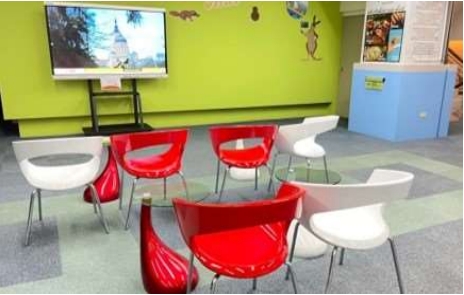
NCNU has created a strong English learning environment that consists of a foreign language learning platform, foreign language lectures and workshops, competitions, an all-English learning space, professional academic English courses, and briefing courses. NCNU has also established an EMI student support system, which categorizes students' English abilities, provides in-person and online learning resources, reinforces teaching assistant training, and provides incentives to improve students’ English abilities.
B. Building an EMI and support system in NCNU
The NCNU Council for the Advancement of Internationalization was formed to strengthen NCNU's internationalization strategies, with the principal serving as the chairperson and holding regular meetings to track, implement, and manage strategies to create an environment conducive to fulfilling the goal of creating a bilingual policy by 2030. NCNU also established the Bilingual Education Advocacy Center to construct a campus-wide bilingual education and support system that encourages and helps faculty members to invest in bilingual education, thus increasing the number of bilingual education courses and professors teaching courses, enhancing students’ bilingual abilities, facilitating internationalization, and increasing job competitiveness. The center also holds EMI professor training sessions to strengthen their EMI skills.
C. Achievements in the four dimensions:
(a) Organization and the system
The NCNU Council for the Advancement of Internationalization was formed to reach a consensus regarding the creation of an environment conducive to fulfilling the goal of becoming a bilingual policy by 2030. The Bilingual Education Advocacy Center was formed to construct a campus-wide bilingual education and support system, promote bilingual education, improve students’ bilingual abilities, and increase students’ international mobility and global literacy.
(b) Professors and teaching
NCNU trains EMI professors in the knowledge and skills to become all-English professors. In 2018, NCNU cohosted an overseas professional EMI professor training program with the University of California, San Diego of the United States. In Academic Year 2021/2022, NCNU cohosted an all-English professor training camp with the Queensland Institute of Australia, with several professors from sister schools in other countries being invited to participate. Through these efforts, NCNU has worked to coteach courses with sister schools, comprehensively improve the environment and quality of its English teaching, and share learning resources. As a result, the number of subsidized all-English courses has increased each year.
With extensive encouragement and training, a total of 121 EMI courses were offered in the 2022–2023 academic year. The university is committed to providing more resources to both teachers and students, steadily working towards the goal of becoming an “International University” and moving forward with the vision of complying with the 2023 bilingual policy.
(c) Students and learning
In Academic Year 2021/2022, NCNU began implementing the Oxford Placement Test to all entering students, with the pretest scores serving as the basis for students' assignment to classes of different levels and teaching materials. In the 2021–2022 academic year, a total of 1,078 freshman students took the OOPT (Oxford Placement Test). A post-test was conducted after the completion of the sophomore English course in the 2022–2023 academic year. Among the 859 students with both pre-test and post-test scores, the percentage of students who achieved a proficiency level of B2 or above increased from 31% to 45%, with the number rising from 269 to 392 students. This significant improvement in teaching effectiveness, coupled with 61% of English courses being taught entirely in English, has substantially strengthened the students’ English proficiency. To encourage students to take EMI courses, NCNU implemented the NCNU & University of California, San Diego, Guidelines for Rewarding Students for Taking EMI Courses. In Academic Year 2022/2023, an average of 20.7% of sophomores and first-year graduate students took one EMI course.
(d) Promotion and quality
NCNU created a website for the Bilingual Education Advocacy Center to introduce EMI courses and provide information on activities related to bilingual education. NCNU has also adopted a plan–do–check–act system to ensure teaching quality. Teacher feedback is collected regularly, with survey results being submitted to the School Affairs Research Center for analysis and to provide crucial information to the respective departments of EMI courses and the Bilingual Education Advocacy Center to improve teaching. The Bilingual Education Advocacy Center regularly convenes working group meetings and invites external advisory committee members to ensure the precise implementation and tracking of the progress of the plan.