National Taipei University of Technology-College of Engineering
Objectives of the Program
With "optimizing the English learning environment and cultivating disciplinary core competencies" as its main goal of promoting bilingual education, National Taipei University of Technology (NTUT) continues to establish an English-friendly learning environment, provide a comprehensive EMI support system for faculty members and students, strengthen cooperation with international alliance institutions, and achieve consensus among faculty members and students. Since launching “the Program on Bilingual Education for Students in College”(BEST Program), NTUT has adopted suggestions from stakeholders to gain support from various faculty members and students. In the Academic Year 2022/23, a total of 4 school-level consensus meetings and 2 college-level consensus meetings were held, where attendees, including school-level and college-level officials, faculty members, and students, were invited to discuss relevant strategies and policies. It is expected to gradually increase the overall ratio of entry-level EMI courses, in which they serve as bridge courses to advanced EMI courses, with the hope of improving the competitiveness of the younger generation in the long run.
Improving Students’ English Proficiency by Using Scaffolding as the Preparation for EMI Courses
NTUT has strived to improve students’ English proficiency by implementing various measures such as curriculum reform, learning resources, and different incentives. Freshmen are required to take the English placement test upon admission. In the Academic Year 2021/22, oral and written skills were integrated into both General English and English for Specific Purposes courses, and all intermediate and advanced English courses were taught in English. To strengthen students’ English speaking skills, in the Academic Year 2022/23, General English for Freshmen was renamed English Communication and Application. On the other hand, Diversified English was replaced by English for Specific Purposes to complement disciplinary EMI courses. 6 English for Academic Purposes courses were offered in the Academic Year 2022/23, with 128 students enrolled, including 27 students from the College of Engineering. Students taking these courses are required to take the College Student English Proficiency Test (CSEPT) at the end of the semester.
Corresponding to the promotion of the BEST Program within NTUT, the Center for Academic and Professional Writing (CAPW) was established in June 2023, in which online and face-to-face consultation services with a focus on English for Academic Purposes (e.g., reports or journals) and English for Specific Purposes (e.g., English proficiency tests) are offered by various instructors and/or domestic and foreign students with CEFR C1 level or above. The consultation service consists of two stages, which aim to provide free writing resources such as Grammarly, ETS, Criterion, etc. and to give relevant writing suggestions in the first stage, while further consultation will be assigned based on the topic, style, content, and complexity of the writing, if necessary, in the later stage.
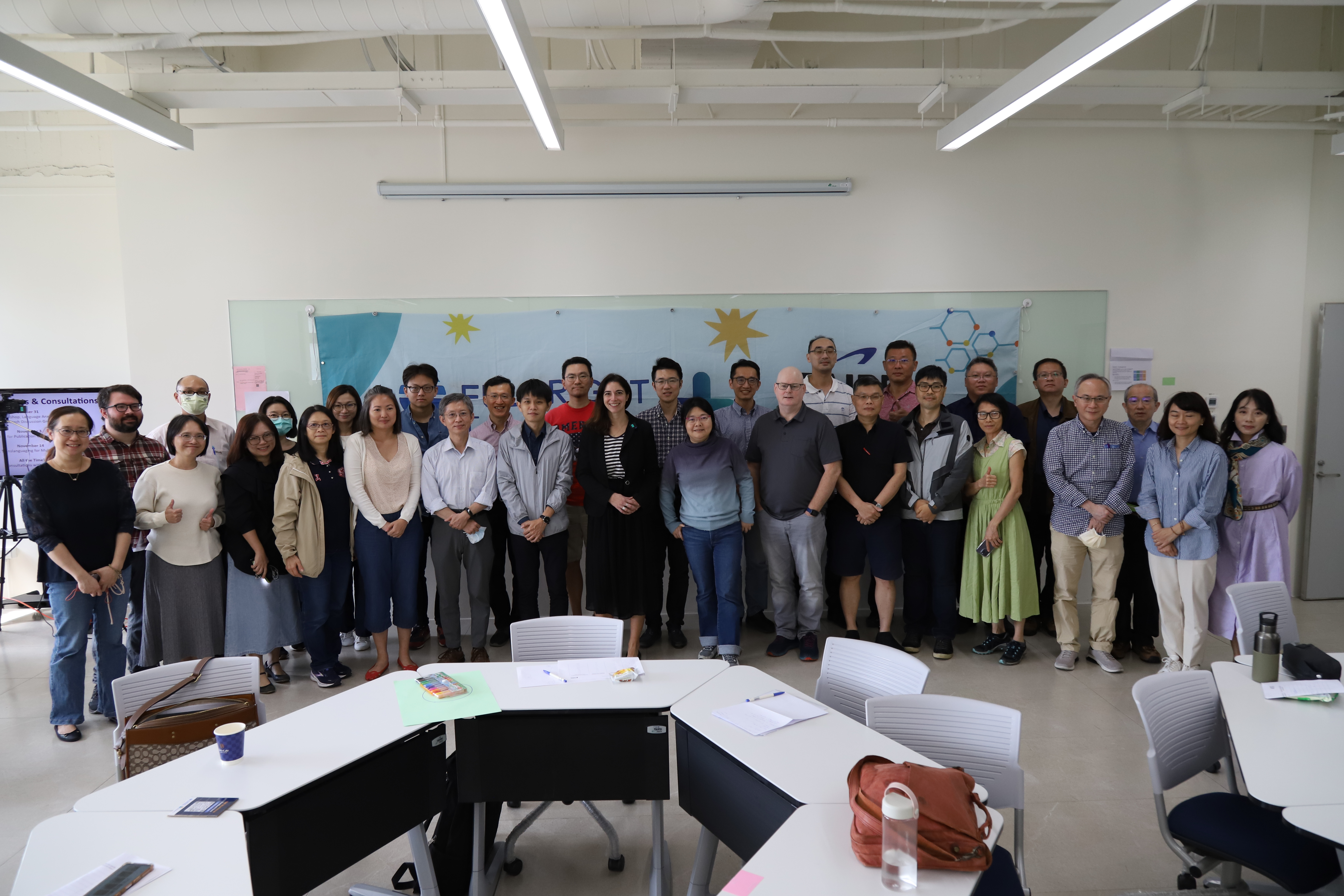
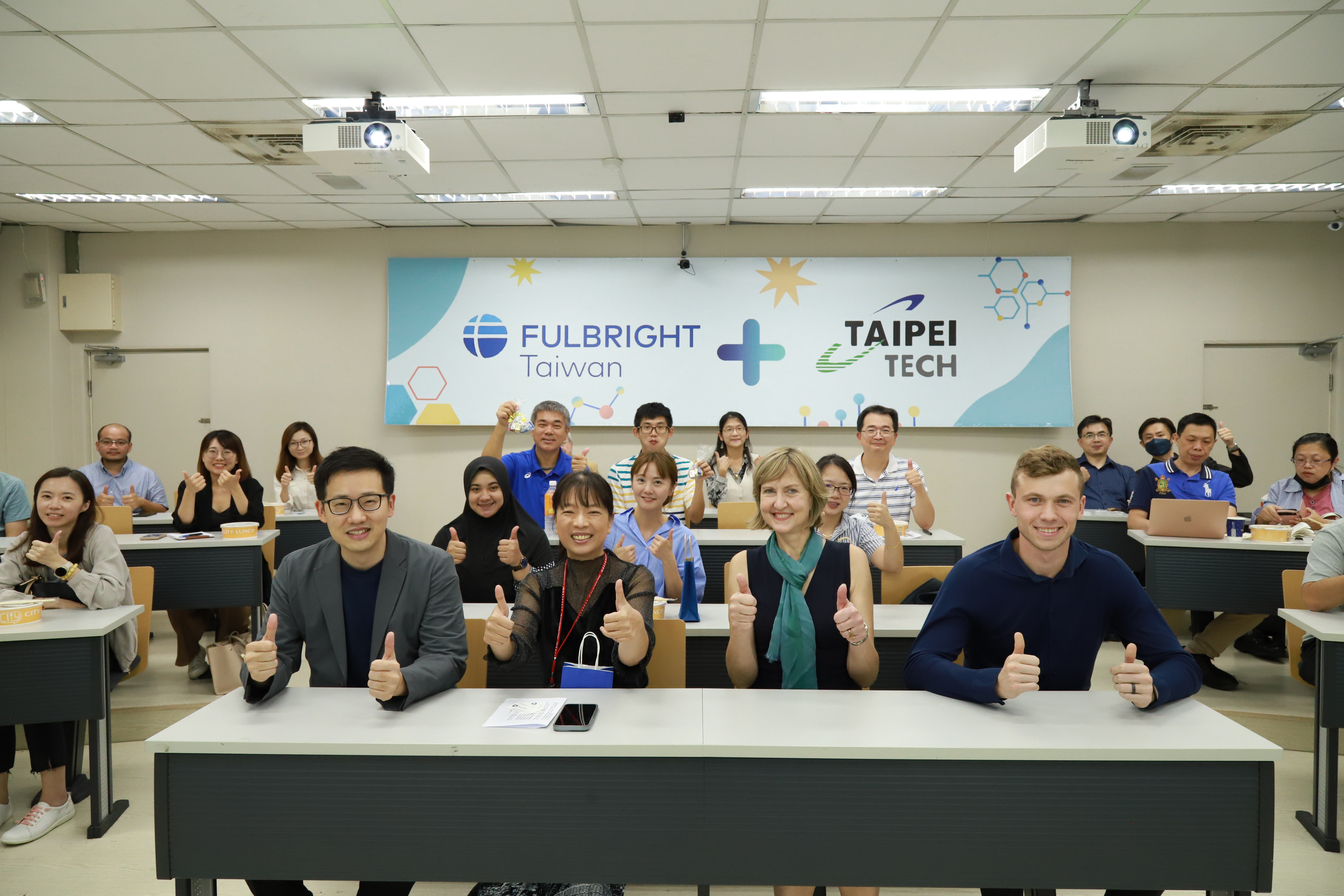
Information related to EMI and English learning resources is accessible on the official website and social media, such as LINE official and Facebook accounts jointly run by the College of Engineering and the Center for Bilingual Learning (CBL). Starting in Spring 2022, activities like English Producers are held to provide students with multi-themed speaking and writing practice, while intensive English speaking and writing courses are offered at the end of the semester. A total of 319 students participated in the Academic Year 2022/23, of which 96 (30%) were from the College of Engineering. In addition, NTUT works together with Fulbright Taiwan and holds a series of events, including Pro Workshop, American Corner, and English consultation services, to guide students to practice, discuss, and share their perspectives in English and to introduce American culture. A cumulative total of 88 students from the College of Engineering participated in those events in the Academic Year 2022/23. On the other hand, the Language Exchange Program was introduced. Domestic and international students formed groups and conducted English conversation practice on different topics throughout the semester. Moreover, the Student Buddy Program is also held, and domestic students are recruited to assist international students with their life and study matters. Other events, including the Welcome Party, Study Abroad Fair, and Farewell Party, are also organized.
Starting in the Academic Year 2020/21, NTUT English proficiency test was restructured, and all students’ English proficiency levels have been assessed since then. Online English learning resources such as the EasyTest learning platform are provided; 200 units of online interactive courses and mock test modules are covered; and NTUT continues to enrich the learning materials. In addition, English consultation services are also available for faculty and students. In the Academic Year 2022/23, a total of 61 faculty and students used the service mainly for academic writing and English for Specific Purposes. Also, the Taipei Tech English Speaking and Writing Test was conducted, in which a total of 191 students took the test, 46 of whom are from the College of Engineering.
To encourage students to enroll in EMI courses and to improve their English proficiency, ‘Guidelines on Incentives for EMI Learning’ and ‘Guidelines on Incentives for English Proficiency Tests’ were established. Students who achieved CEFR B2 level or above (4 skills) and outstanding students taking EMI courses are eligible for applications. To improve students’ workplace competitiveness and international mobility, students will be awarded scholarships and bonus points, which serve for overseas exchange programs, dual degree programs, and study abroad. On the other hand, regarding several English proficiency tests, the subsidy for the application fee is provided for disadvantaged students. There were 6 and 80 successful applicants, respectively, in the Academic Year 2022/23.
In the Academic Year 2022/23, 64.10% of the undergraduate students achieved CEFR B1 level, while 24.85% of the undergraduate students achieved CEFR B2 level or above in the College of Engineering. It is clearly stated in the Fall 2023 Admission Guidelines that some compulsory and elective courses are taught in English. At the same time, it is proposed to issue a certificate of completion for EMI courses and to work with world-renowned institutions to provide dual degree programs.
Assuring the Quality of EMI Courses While Increasing the Number of Disciplinary EMI Courses
NTUT also strives to promote EMI courses with the initiative of adopting various innovative teaching methods, such as flipped classroom, interactive response systems, game-based teaching, etc., in order to foster teacher-student interaction and improve learning effectiveness in the EMI classroom. Since 2019, the College of Engineering has taken the initiative to offer more and more EMI courses, resulting in an increase in the number of EMI courses from 66 courses (5 undergraduate courses and 61 graduate courses) to 141 courses (71 undergraduate courses and 70 graduate courses) in the Academic Year 2022/23. A significant rise in the number of EMI courses is shown, with a cumulative total of 1600 students enrolled in various EMI courses.
To increase faculty members' incentives for offering EMI courses, NTUT revised the ‘Procedures for EMI Course Application’ and the ‘Guidelines on Incentives for Promoting EMI Courses’ in the Academic Year 2021/22. Apart from EMI teaching rewards, such incentives are also included under the Merit Pay Mechanism for Faculty Members. Since implementing the BEST Program in Academic Year 2021/22, the College of Engineering has hired 11 new faculty members who are equipped with EMI teaching competency. Four of the faculty members achieved CEFR B2 or above and served as EMI mentors for the college, including 2 foreign faculty members. The College of Engineering is consistently looking for potential faculty members with EMI teaching competency.
EMI teaching assistants (TAs) are recruited to assist with different undergraduate disciplinary EMI courses. 24 and 23 EMI TAs, respectively, were recruited in Fall 2022 and Spring 2023, and they all have English communicative competence. In Academic Year 2022/23, 2 orientation sessions and 8 TA training sessions were held, with a total attendance of 115 students for the College of Engineering.
Meanwhile, to assure course quality, the disciplinary EMI courses offered within the College of Engineering are aligned with IEET accreditation, in addition to the establishment of correlative rubrics since Spring 2022. Moreover, in order to have a deeper understanding of students’ needs and learning effectiveness, midterm and final student feedback on EMI learning is collected, and teaching evaluation is conducted at the end of the semester. Other measures include checking on EMI course recordings, classroom observations, etc. The data collected also serves as a reference for EMI course improvement. According to the results acquired from midterm and final student feedback in the Academic Year 2022/23, a positive relationship is shown between the application of diverse interactive pedagogy and student learning effectiveness. The College of Engineering will continue to keep track of EMI teaching quality by adopting an internal and external evaluation mechanism.
Two faculty members from the College of Engineering are invited to compile video materials for online EMI courses in addition to the other 3 faculty members in Spring 2022. The videos will then be available on various online platforms. It is expected to motivate students’ active learning by providing different online courses. On the other hand, to further promote the shared academic resources, 2 bilingual micro courses (6-week) were opened to students from partner vocational high schools in the Academic Year 2022/23.
Cultivating EMI Teaching Experts and Sharing EMI Teaching Experiences
In order to improve EMI teaching competency, various teaching enhancement activities, including classroom observations, EMI workshops, faculty training, and teacher community, are consistently held. Starting in Spring 2022, faculty members who offer EMI courses are required to participate in classroom observations and at least 1 EMI workshop every semester. Also, beginning in the Academic Year 2022/23, NTUT works with Fulbright with the support of the EMI Program EMI Professional Supportive Group Program. A total of 13 EMI workshops were held in the Academic Year 2022/23, in which 243 participants were recorded, of whom 97 were from the College of Engineering.
In particular, 4 faculty members from the College of Engineering completed the 30-hour online EMI Certificate Program, which is jointly organized by NTUT and Pennsylvania State University in the Academic Year 2022/23. Meanwhile, a faculty member was nominated to participate in a 2-week overseas faculty training program at the University of California, San Diego. The training took place in January 2023, and the faculty trainees who participated in the program were invited to share their experiences in April 2023. A total of 85 participants took part in the ‘EMI Transformed: UCSD Experience 2023’ session, while 7 of them are from the College of Engineering.
On the other hand, 4 faculty members from the College of Engineering joined the EMI Enhancement Program, including 2 groups of the EMI&ESP community, 2 groups of the EMI2 community (i.e., 2 EMI teachers working with an EMI advisor), and a group of the EMI Specialists community. It aims to increase students’ learning effectiveness by introducing co-teaching and co-compiling teaching materials.
Educating International Research and Work Talents
The College of Engineering has sought to establish an English-friendly learning environment. Apart from nominating and sending outstanding students to study dual degree programs, it also aims to attract a larger number of international students to NTUT, provide students with an international learning environment and equip them with soft skills and competitiveness among talented peers in a globally competitive environment.