Tainan National University of the Arts
The overall goal of TNNUA’s development plan is to “innovate and embody in order to advance the university’s prestige internationally.” Under this vision, one of TNNUA’s development goals is to offer an “art education that pays attention to both local characteristics and international perspectives.” Our intention is to cultivate talented artists with global perspectives and creativity, so that they can showcase artistic talents on the world stage and obtain employment internationally. Therefore, TNNUA has implemented the “Program on Bilingual Education for Students in College” since 2021, and has laid the foundation for establishing rules and regulations, improving students’ English proficiency, providing support for EMI, revising curricula, and organizing bilingual events. The characteristics and achievement highlights in this academic year’s bilingual program are as follows:
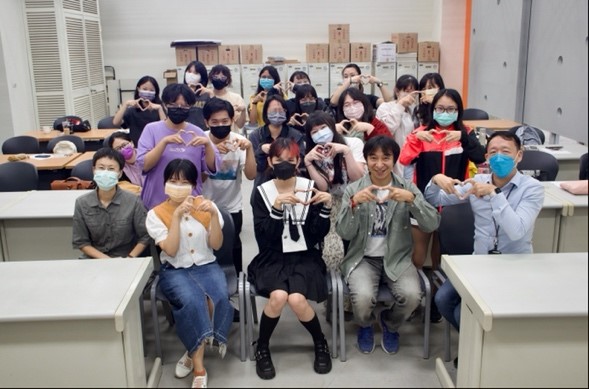
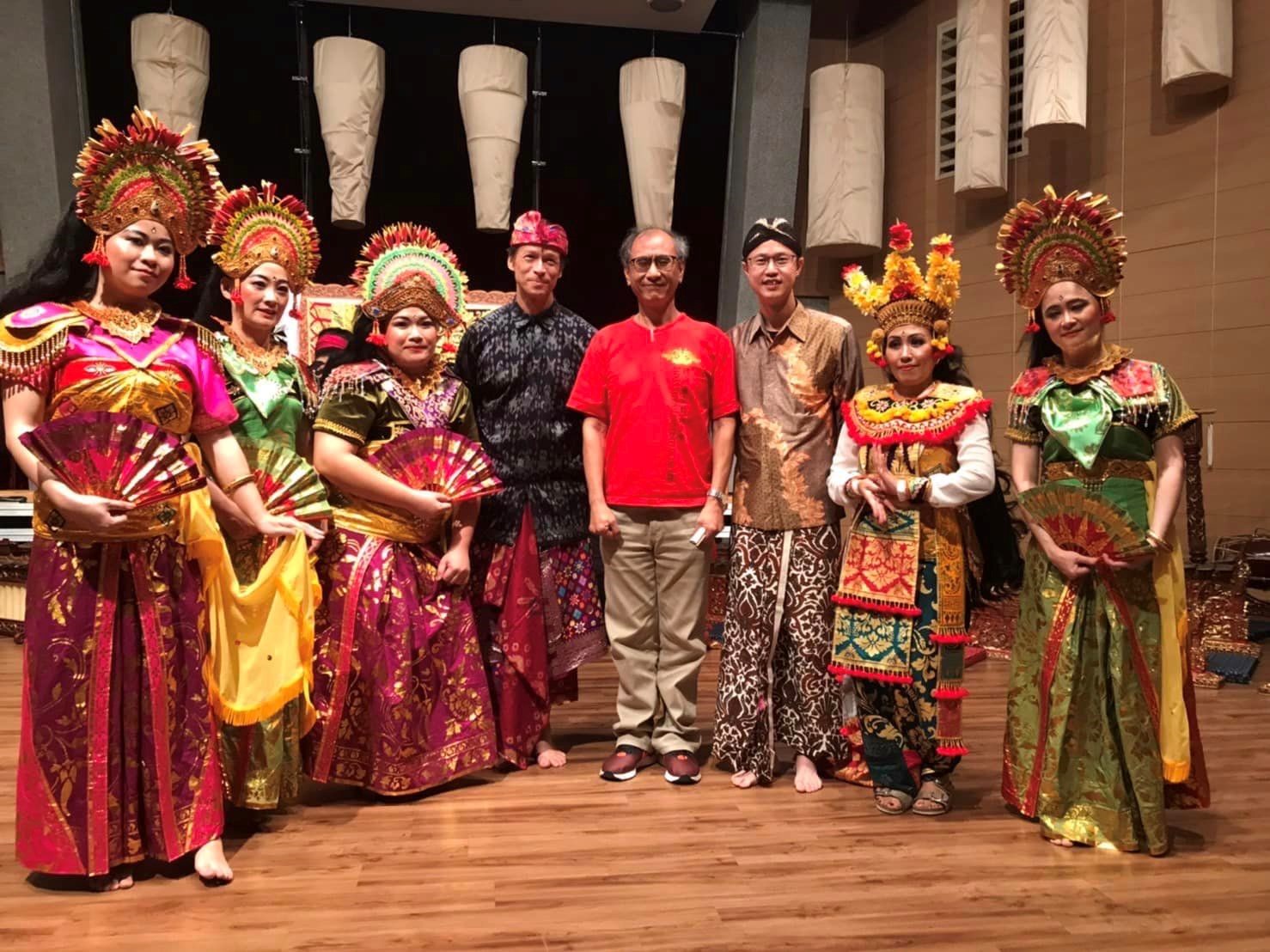
1. The leading department and graduate institutes take the lead in establishing an atmosphere of bilingual education. There are three leading department and graduate institutes this academic year: the Department of Art History, the Graduate Institute of Ethnomusicology, and the Graduate Institute of Sound Technology. The EMI course credits offered in the Department of Art History exceeded the KPI (8%) by 2.7%. Furthermore, the department promoted students’ English learning motivation and EMI courses by holding four events this academic year. In both semesters, the department held one sharing session, in which alumni shared the impact of English proficiency on their careers with the hope that students can better understand the crucial role English plays in their futures. Consequently, the students will be even more motivated to improve their English and take EMI courses. In each semester, the department also held one panel discussion in which the EMI instructors and teaching assistants shared their experiences. It is found that experienced instructors applied effective teaching strategies in EMI courses. The teaching assistants also developed helpful methods to offer peer students assistance (see pages 22-25 for details). The EMI course credits of the Institute of Ethnomusicology also exceeded the KPI (55%) by 2%. In addition, the Institute of Ethnomusicology organized several events: “Accessing English Workshop”, “Indonesian Dance and Music Celebration Concert”, and “EMI Proseminar”, as well as then7th Biennial Conference of International Musicological Society Regional Association for East Asia (IMSEA). All the events were conducted in English and related to EMI courses. These events inspired students to strengthen their English learning and professional knowledge in the research (see page 22 for details). The Graduate Institute of Sound Technology is an English program newly established this academic year, with the goal of cultivating international talents for sound technology and sound engineering. The offered events this academic year were also aligned with EMI courses: participation in a relevant international conference or holding relevant talks. The students’ feedback demonstrated that the activities have strengthened their English learning motivation and stimulated the development of their professional knowledge (see pages 25-26 for details). To conclude, the increasing number of instructors invested in EMI (see page 21 for details) revealed that the leading department and graduate institutes have gradually made the atmosphere of bilingual education in our college even more lively.
2. Diverse bilingual activities reflect the principles of EMI. The 2021 consultation committee and self-evaluation report review committee both expressed a deep appreciation for the variety of TNNUA’s bilingual activities. We kept this advantage and continued to provide diverse bilingual activities in the 2022 academic year, giving students the opportunity to use English as a lingua franca in learning and communication, as well as to better their studies in professional areas. For example, we increased students’ enthusiasm about learning English by organizing the event such as “Let’s Sing Together.” In English tutoring services, we provided “English Tutors on Campus.” In the music domain, we offered “EMI International Master Online Synchronous Courses,” held by the Graduate Institute of Collaborative Piano. In visual arts, we hosted “International Artist Gatherings.” In sound and image arts, we hosted the activity entitled “Creative Generation of Pre-production and Animation.” Moreover, the Graduate Institute of Sound Technology and the Department of Art History hosted events in the College of Metaverse and in the College of Letters and Cultural Heritages respectively. In sum, our bilingual events were disseminated around the campus to meet the needs of our students in every college.
3. We designed a form to collect activity outcome data with the goals of aligning with EMI principles and continuing to improve. Since the BEST Program was first launched in the 2021 academic year, some participating academic and administrative units were still in the exploration stage. This prompted the Bilingual Education Resource Center (henceforth, BERC) to create a feedback form for the activity outcomes. Examining the outcomes collected this academic year, we found that the form helped the activities align better with the BEST Program principles, while the qualitative data truly reflected how students felt. When the participating units planned bilingual activities, they considered the relevance to students’ English abilities and learning motivation, as well as students’ learning in their professional areas. The collected data could inform us how future activities can be improved, while qualitative data significantly enriched our reports.
The procedure for collecting the BEST outcomes enables TNNUA to evaluate its own implementation. First, BERC compiled all the outcome reports from the participating units. Second, under the guidance of the TNNUA administrative supervisors and the external consultation committee, BERC can further improve the BEST Program.
The following highlights and suggestions were given by the external consultation committee for this academic year:
(1) TNNUA embodied EMI principles by bringing in international speakers and art masters to give students opportunities to discuss arts-related topics in English outside of courses.
(2) TNNUA offered alumni-sharing sessions to effectively boost students’ enthusiasm for English learning.
(3) TNNUA can illustrate its positive impacts of the 2022 academic year by comparing the similarities and differences between 2021 and 2022 academic years.
(4) The effort to improve instructors’ teaching skills may be added to the PDCA flow chart on page 28 since much effort has been made.
(5)“English Tutors on Campus” currently provides 6-12 hours of service per week. When the usage rate rises, the service hours should be expanded. Small group discussions can be offered regularly to enhance students’ English learning.
(6) The university can facilitate stronger interaction and collaboration with surrounding universities. Instructors can exchange ideas and experiences in the partnership. This not only allows them to share resources, but also encourages more creative thinking.
(7) Taiwanese universities should promote a culture of classroom observation. Peer observation of each other may be a strategy to increase instructors’ acceptance.
(8) TNNUA's teachers and students have exceptional artistic talents and accomplishments. The university may consider advancing its global connections by offering oversea performances.
(9) TNNUA deserves much praise for expanding EAP and ESP courses. In the future, the university can further expand the courses by offering courses on arts English or multicultural competencies.