National Chengchi Universerity-International College of Innovation
International College of Innovation BEST Program
Highlights and Achievements
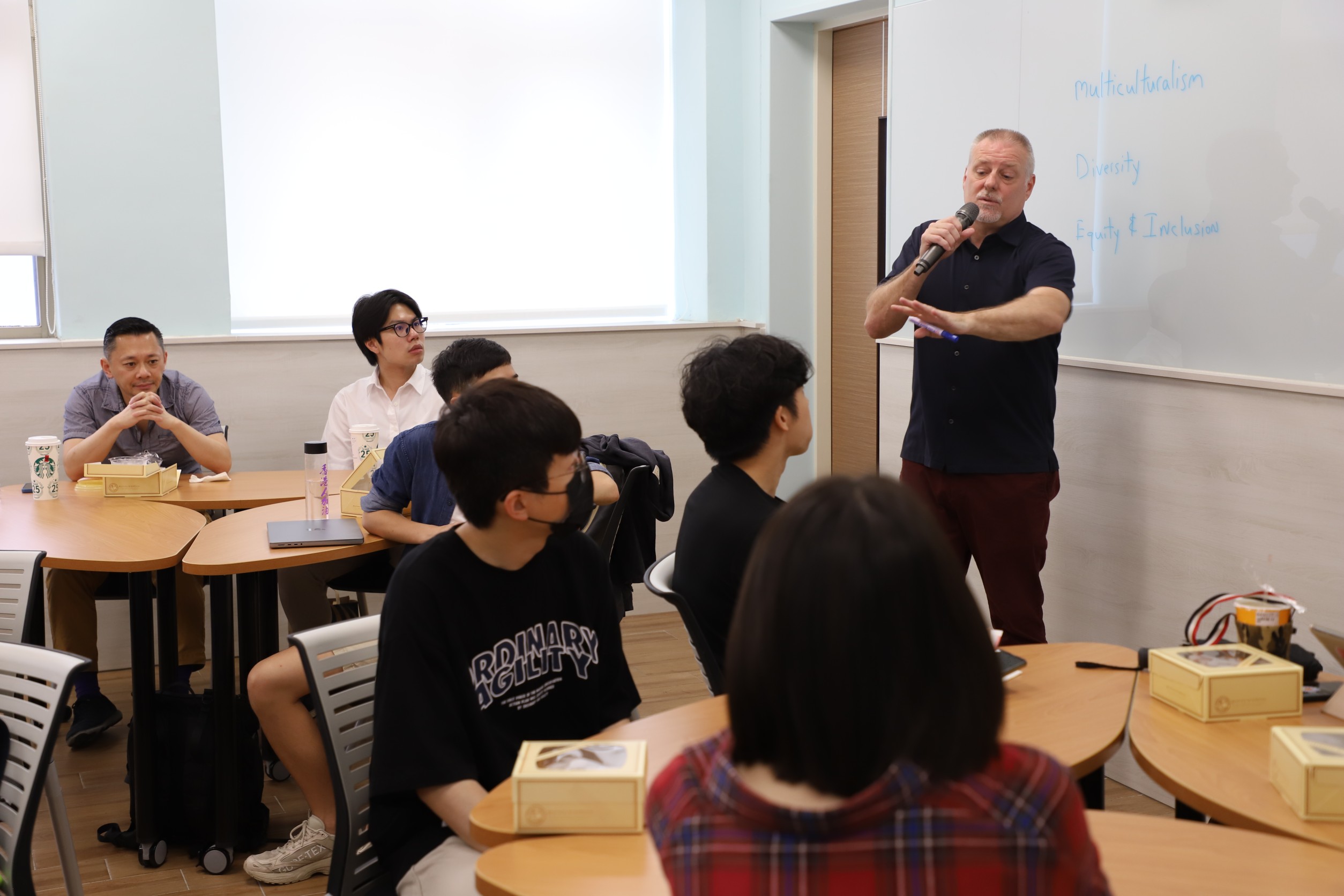
Since its establishment, the International College of Innovation has been led by faculty with extensive experience in English as a Medium of Instruction (EMI) teaching. We are also the first college in Taiwan to integrate global research and forward-looking strategies into our teaching and research core. All students (local and international) learn together in both daily life and classrooms, fostering students to develop advanced language skills, including academic English writing, presentations, and group discussions, from CEFR B2 to proficiency exceeding C1. On one hand, this helps international students expand their social circles and better integrate into campus life. On the other hand, it provides local students who may not have the opportunity for international exchange with the chance to experience internationalized learning and gain cross-cultural communication skills.
In terms of curriculum design, over 90% of our courses are currently taught in English. The core principles of our curriculum are interdisciplinary learning, information literacy, and sustainable development and citizenship. To cultivate well-rounded students in key national areas such as Asian regional studies, international trade negotiations, international communication, and data science, our college integrates interdisciplinary teaching and research faculty from social sciences, law, spatial studies, communication, information, and data science to create bilingual training and interdisciplinary integrated programs for students.
Highlights and achievements of the International College of Innovation BEST program are outlined as follows:
1. From daily life to classrooms, from 'B2' to 'C1':
Our college recruits students with CEFR B2 proficiency or higher, and our faculty are required to have experience in EMI teaching. Over 90% of our courses are conducted in English. All students (local and international) learn together, training advanced language skills in English (CEFR C1 and above) through activities such as report writing, class presentations, and group discussions. This aims to cultivate bilingual leaders in Taiwan. By providing all compulsory courses in EMI format, we have already achieved and surpassed the E1 (16 credits) and E2 (32 credits) goals set for freshmen and sophomores.
2. Focus on key areas and offering EMI interdisciplinary programs:
We integrate EMI resources from various international programs within the university, offering over 200 professional English courses and serving as the core of EMI virtual campus at NCCU. In addition to individual subject courses, we collaborate with various faculties to offer integrated bilingual courses with an international perspective. Students are encouraged to discuss and exchange views on global issues (such as climate change, health governance, media communication), fostering multidimensional and interdisciplinary bilingual skills. To align with Sustainable Development Goals (SDGs), we have developed two EMI courses centered on SDGs. In terms of teacher support, we held two training workshops in 2023 to develop EMI teacher training and guidance capabilities.
To encourage multi-disciplinary participation, we are committed to fostering creative and innovative teaching through cross-departmental collaboration, providing a broad range of interdisciplinary courses. Additionally, we will continue to build on our existing network within our university and the University System of Taiwan. For instance, the 'Global Health Governance' course is jointly organized by our college and the Centre for Global Health at Oregon State University in the United States, using a transnational Teaching English-Medium Instruction Program (TEMIP) in a 'Model United Nations' format. Through simulations and role-playing, students engage in self-motivated learning, applying their classroom knowledge to address various issues related to public health governance.
In terms of learning effectiveness assessment, our college has transitioned from traditional end-of-term evaluations to the InnoFest, a cross-disciplinary course exhibition involving ten courses, serving as an alternative interface to conventional written assessment systems. Students showcase project outcomes through posters and various exhibits, engaging with over a hundred booths and interacting with visitors. This approach effectively integrates and applies academic, professional, and daily English language skills.
3. Sharing EMI courses across campuses, creating nodes for bilingual interdisciplinary teaching:
In addition to cooperation with various faculties within the university, interdisciplinary courses are also open to students from other universities (such as students from the University System of Taiwan and interdisciplinary colleges like NTU's D-School), promoting regional bilingual teaching resource sharing. During the 2022/2023 academic year, a total of 72 physical EMI courses were offered.
4. Deepening international cooperation and enhancing the capacity for student and faculty international mobility:
In addition to encouraging students to participate in international courses or programs for knowledge exchange, we encourage students to engage in overseas exchanges and international internships to enhance their international mobility. By participating locally, students can enhance their multicultural awareness and broaden their international perspectives. To deepen international cooperation, the college has successfully added two new partner institutions abroad in 2023 (Singapore Management University-College of Interdisciplinary Studies, Utrecht University-Faculty of Social and Behavioral Sciences), increasing the total number of partner schools from three to five, providing more options for student exchange.
5. International faculty and guest elite collaboration to enhance teaching quality:
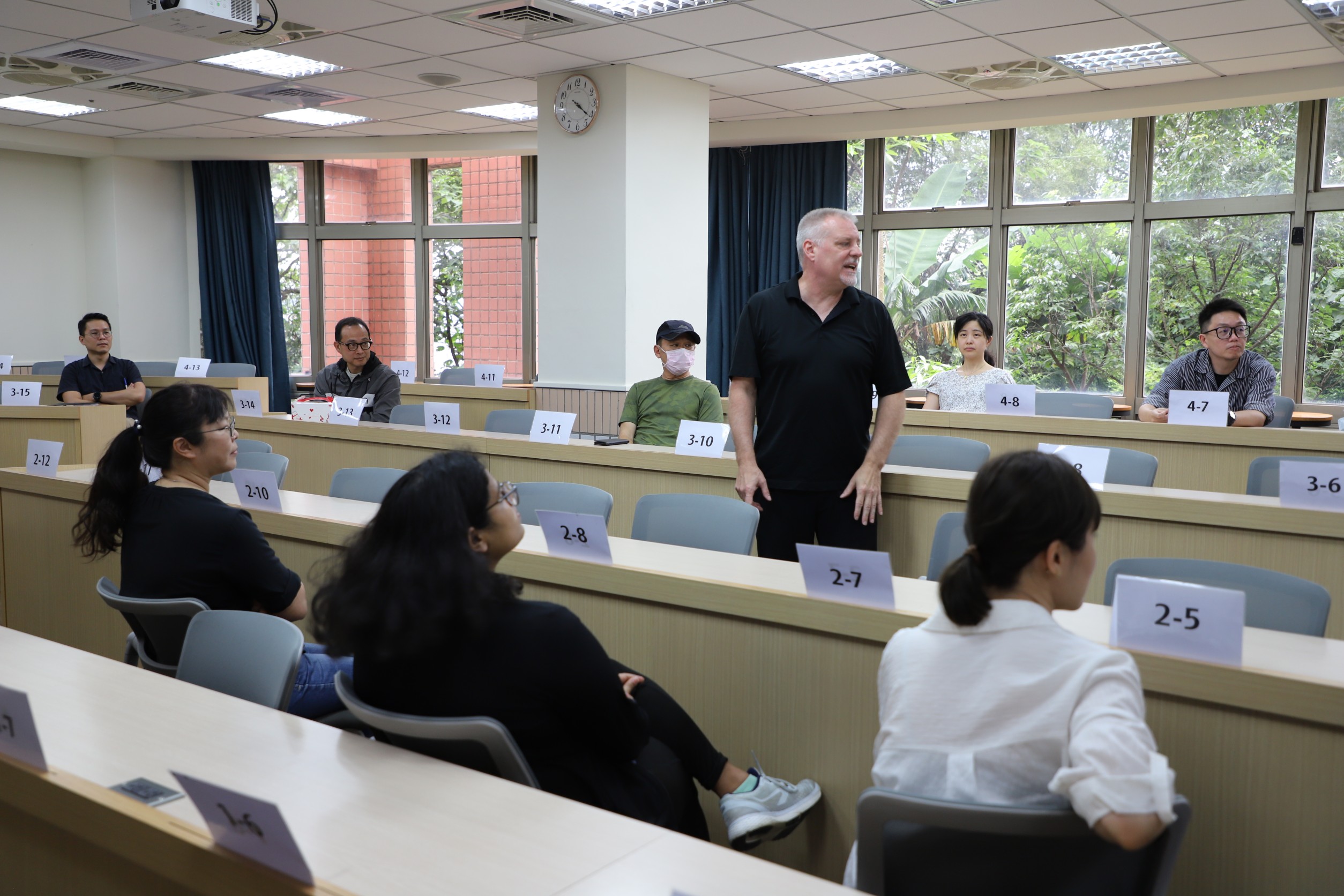
From 2022 to 2023, the college recruited four foreign adjunct faculty members (William Stanton, Deasy Simandjuntak, Kevin Chang, Michelle Kuo) to expand teaching capabilities. We actively coordinated international scholars to visit our college and co-teach with our faculty. In addition to offering specialty courses, opportunities are provided for sharing EMI teaching experience, and training seminars are provided for our faculty. Visiting scholars also serve as short-term on-site consultants for newly hired faculty, providing consultation and feedback. Our college closely collaborates with several of the most renowned international scholars in curriculum development, teaching consultation, and Capstone Project implementation. To improve the quality of EMI courses offered, we also actively organize EMI teaching experience sharing seminars, inviting excellent EMI teachers to share their EMI teaching experience. To date, we have held more than seven related seminars to enhance teachers' academic exchange capabilities and hosted an annual consensus camp in 2023.