National Taipei University of Business
As the first college specializing in business and finance education in Taiwan, National Taipei University of Business (NTUB) upholds a century-long tradition of practical and applied vocational education. Committed to offering the highest quality business and management courses, NTUB has become a popular and prestigious institution for business studies. Faced with significant changes in the global higher education environment, as well as the challenges posed by global innovation industries, the digital economy, and interdisciplinary learning, NTUB capitalizes on the “Program on Bilingual Education for Students in College” funded by Taiwan’s Ministry of Education and is dedicated to cultivating talents with global vision, competitiveness and mobility, promoting the internationalization of academic affairs, and enhancing the school’s visibility in global higher education. In the implementation of the “Program on Bilingual Education for Students in College” for the Academic Year 111, the university has worked on five aspects: “Curriculum,” “Student Learning,” “Faculty Support,” “Teaching Resources,” and “Administration” (creating bilingual learning environmental on campus). This has steadily improved the English proficiency of the students, achieving the goal of enhancing their English language skills and employability.
Curriculum: The university has established a comprehensive mechanism for developing and offering EMI courses. The number of EMI courses has gradually increased from 34 in the Academic Year 110 to 38 in the following academic year. On the institutional level, since the implementation of the bilingual program, the university has revised the “Regulations for the Implementation of English-Medium Instruction (EMI) Courses” three times, refining the regulations for applying for EMI courses within the university. In addition to the overall teaching assessments conducted each semester, the university has also implemented “Online Surveys on EMI Teaching,” both mid-term and final, to quantitatively assess and qualitatively analyze the effectiveness of English-medium instruction. This data is used for statistical purposes and informs future adjustments of EMI courses. Furthermore, the university has initiated reforms and adjustments to the English courses for freshmen, emphasizing the enhancement of speaking and writing skills. Students also have the chance to take English for Specific Academic Purposes (ESAP) courses, which will facilitate their transition to EMI courses (this aspect will be further elaborated in the plans for the Academic Years 112-114).
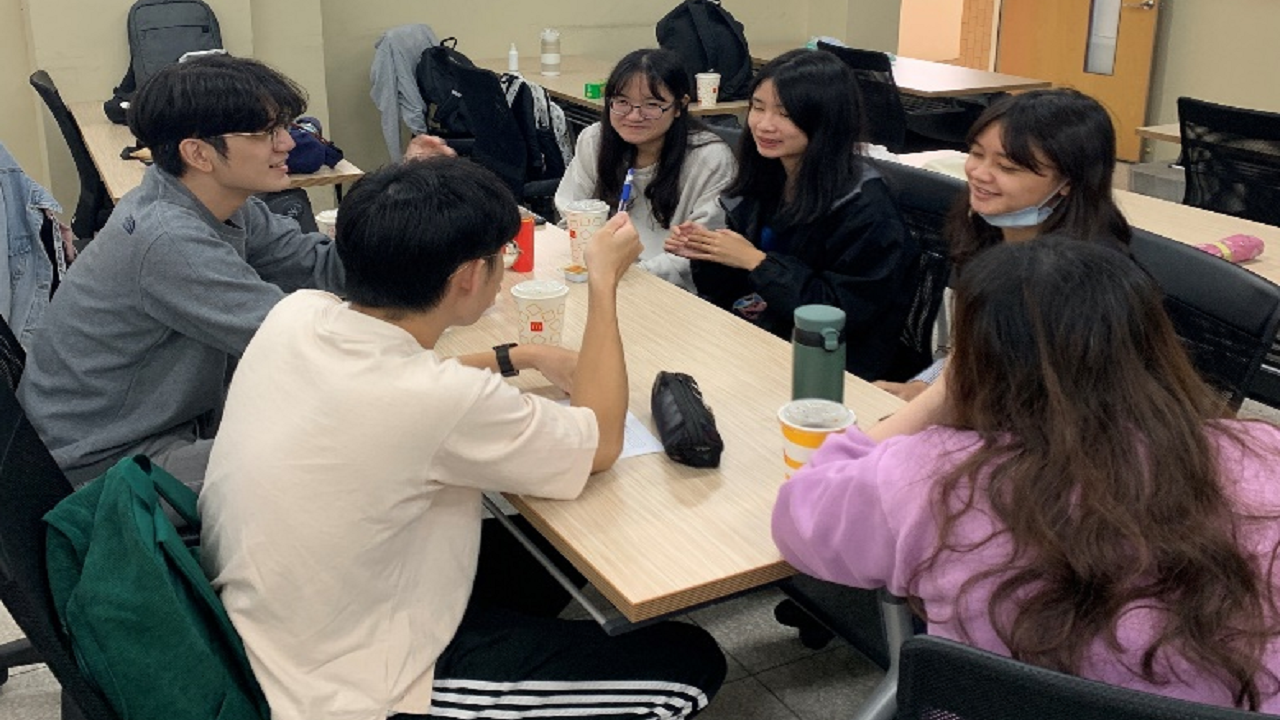
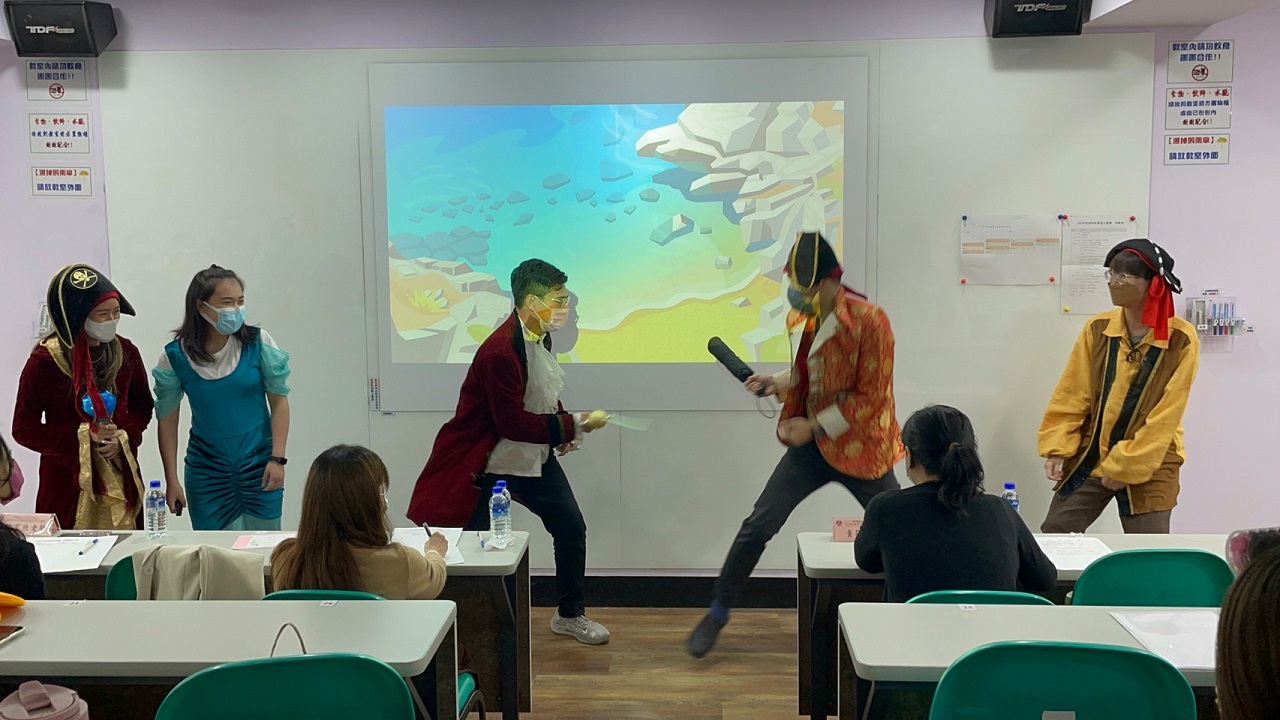
Student Learning: The university has established a comprehensive language assessment system and offers multiple language courses, language learning lectures, and competition events for students. To assess students’ English proficiency before graduation, the university requires students to either take recognized English proficiency tests or undergo on-campus English assessment tests and attain the specified grade requirements. At the beginning of each semester, the university announced a semester-long self-study program in English, organizing 20 lectures with approximately 40 participants in each session. Additionally, the university offered nine language certification courses, and formed nineteen English-speaking self-study groups. Furthermore, there are thirteen English competitions or presentation events organized throughout the academic year. These self-initiated activities, spanning from individual improvement in language skills to the acquisition of professional knowledge and the enhancement of international perspectives and global competitiveness, enrich students’ English learning experiences and adequately prepare them for bilingual courses.
Faculty Support: In the first semester, the university organized two EMI lectures, while in the second semester the “EMI Teachers’ Professional Development Community” was established, hosting two EMI lectures, one teaching-sharing seminar and one LTTC workshop on EMI teaching and pedagogical certification. This community received teaching support and fund from the EMI Teaching Resource Center at National Taiwan Normal University. The establishment of the EMI teacher community has marked a significant milestone, consolidating consensus among internal teachers on EMI instruction and serving as a teaching-resources sharing platform. The university will continue to offer EMI talks and workshops, regular classroom observations and teaching sharing forums. The university also provides opportunities for ELI Global Virtual (Experiential Learning Instruction) training, with some EMI teachers already participating and acquiring certificates. Additionally, the university has trained 19 EMI teaching assistants, enhancing not only their English proficiency but also imparting teaching strategies and communication skills, thereby providing assistance to teachers in their courses.
Teaching Resources: The university purchased Learner Plus, the online English vocabulary learning software, and Mondly, the VR/AR immersive English speaking app, enabling students to engage in vocabulary and interactive situational speaking exercises anytime, anywhere on their mobile devices. The university has also obtained the Versant English language test, covering the four listening, speaking, reading, and writing skills for student practice and proficiency assessment. In addition to these online learning resources, the specialized language classrooms have been improved with new audiovisual equipment, aiming to provide a better teaching and learning environment for both teachers and students.
Administration: In the Academic Year 110, the university signed a cooperative agreement with Medicine Hat College in Canada, further expanding our network of sister schools. The International Affairs Office of the university collaborates with sister schools and international academic institutions to organize various activities, such as student exchange programs, overseas recruitment, series of (online) specialized courses, and summer camps, aimed at deepening international exchanges and cooperation. Furthermore, our university has taken a significant step forward in participating in the AACSB accreditation process. Consultants from the association visited our university in February of this year, providing recommendations for improvements in areas such as learning quality assurance, faculty research, and curriculum planning. In May of this year, our university submitted the “Initial Self-Evaluation Report” (ISER). Additionally, in June of the year, the establishment of the “School of International Marketing” was approved during the university's administrative meeting. All these measures and events have played a significant role in fostering the internationalization of our campus.
Our university has established the “Bilingual Learning Promotion Committee,” consisting of a total of 14 members, to supervise the implementation of the bilingual education program. We have appointed Professor Ting-Chia Hsu from National Taiwan Normal University and Associate Professor Lei Lan from National Taipei University as external experts. External committee members have conducted evaluations and provided suggestions on the actual implementation of the bilingual program for the Academic Year 111, offering valuable insights to assist our university in refining strategies for future implementations. Our university will continue to increase a more diverse range of interactive learning resources to enhance EMI instructors’ teaching skills and students’ English proficiency. In July of 2013, we selected a teacher to attend a three-week teaching training program in the United States, and we plan to continue such initiatives if funding permits. Additionally, to create a more international-friendly campus, we offered English courses for administrative staff to improve their English service and communication abilities.
In the first phase of the Bilingual Education Program, our university gradually increased the number and improved the quality of EMI courses. In terms of faculty support, we have been providing double hourly incentives for EMI courses, teaching training and certification talks and workshops, EMI teaching assistant assistance to EMI teachers. For students, we assist them in adapting to English-taught courses by organizing physical and online courses for improving English proficiency, along with various English competition and events. We have also purchased online self-learning resources to allow students the flexibility of learning without being constrained by time or location. Student feedback on the EMI courses and English proficiency training activities has been highly positive. Moving forward, our university will integrate feedback and suggestions from faculty, students, internal and external committee members to adopt more flexible approaches, aiming to achieve the goal of “implementing bilingual teaching and learning, and establishing a well-rounded bilingual university campus.”