Nanhua university
Aligned with Nanhua University's Strategic Development Plan, specifically emphasizing global exchanges and international talent cultivation (axis E), the NHU BEST (Better English Students & Teachers) bilingual learning project emerges as a vital avenue for boosting English proficiency, nurturing an international perspective, and fostering global talents. The vision, encapsulated in "To mobilize and globalize Nanhua," epitomizes the commitment to bilingual talent development.
Following the principle of prioritizing the improvement of moderate-proficiency students over chasing higher academic records, this approach resonates harmoniously with national policies and global trends. Rooted in a pedagogical framework of "student-centered, teacher-centered, result-oriented, and evidence-based" methodologies, the university commits to creating a holistic learning environment.
The university's strategy incorporates the principles of "inventory, reference, integration, forward-looking," ensuring a nuanced and dynamic approach to bilingual talent cultivation. Upholding "integration, sharing, diversity, PDCA" conceptions for accreditation guarantees further underscores the commitment to a robust educational ecosystem.
Outlined for the years 2021 to 2025, the university's five-stage growth plan covers "sowing, germination, development, inspection, and refinement." The initial sowing stage, spanning one year, serves as a showcase for NHU BEST's distinctive features, accompanied by a comprehensive self-assessment report. This strategic roadmap, communicated with refined language, positions Nanhua University as a frontrunner in bilingual talent cultivation, ready to make notable contributions on the global stage.
1. Features
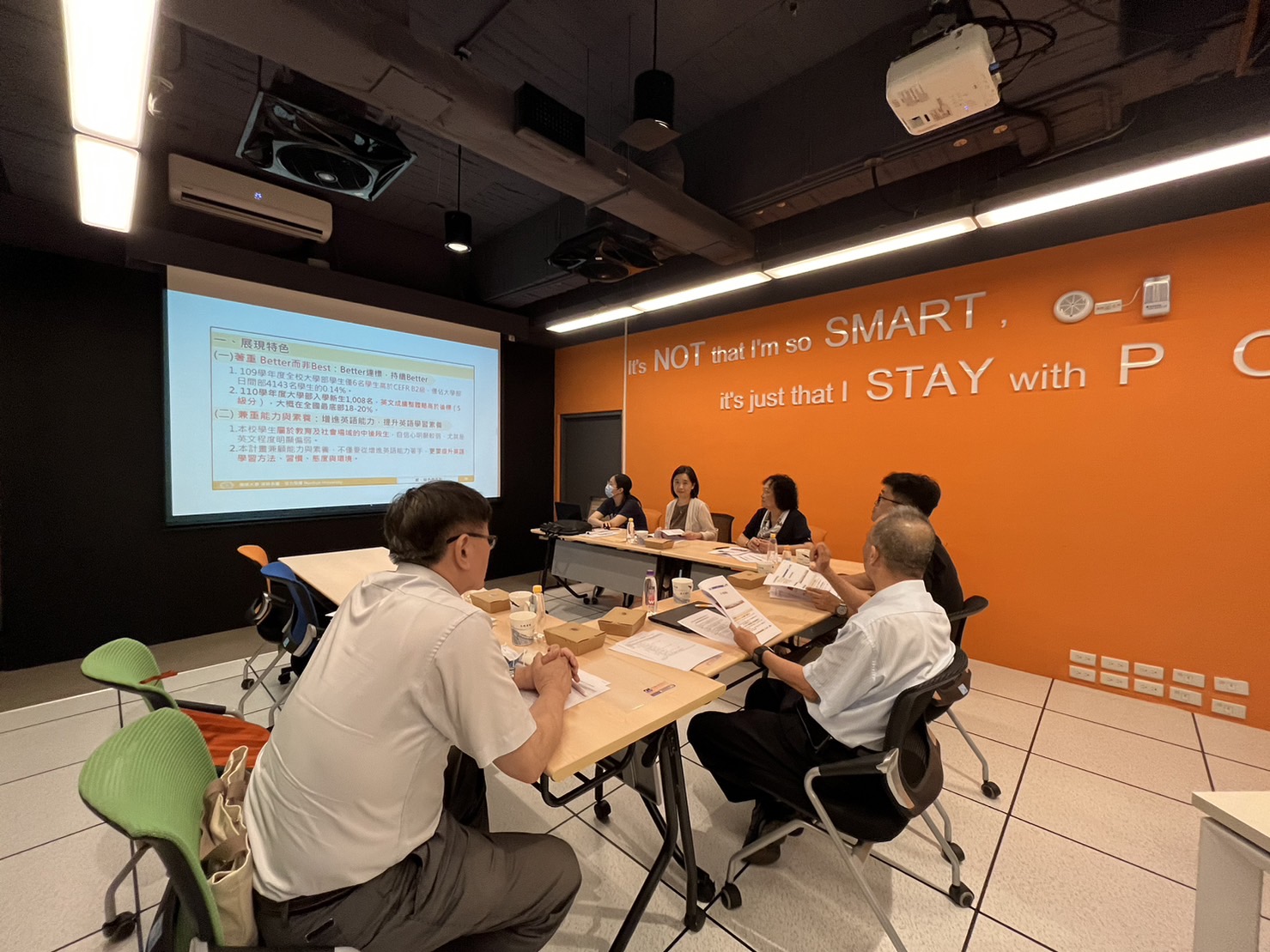
(1) Prioritizing "Better" over "Best," the university achieved a Betterment threshold and sustains an ongoing commitment to continual improvement.
In the academic year of 2021, a mere 0.14% of the day school undergraduate population at Nanhua University, equivalent to six students, surpassed the Common European Framework of Reference (CEFR) B2 proficiency level in bilingual skills. The situation in 2022 presented a more challenging landscape, with 1,008 freshmen exhibiting English scores marginally surpassing the lower threshold (5 points in GSAT, General Scholastic Ability Test), likely placing them in the bottom 18-20% nationally. In light of this, the pragmatic approach of the BEST (Better English Students & Teachers) initiative is introduced, emphasizing "betterment" as its pivotal objective, steering away from a pursuit of mere "excellency." Aligned with the philosophy that posits "there is no best, only better," the university aspires not only for students to enhance their English proficiency but to perpetually strive for improvement, fostering a continuous journey of self-betterment.
(2) Balancing ability and quality: Elevating English proficiency and refining language competence for a comprehensive and refined language skillset.
In the yearly research by the university affairs office, students in these cohorts exhibit comparatively lower academic performance and diminished self-confidence, particularly in English proficiency. This initiative addresses both capability and competence, commencing with the enhancement of English proficiency and extending to the cultivation of quality learning methods, habits, attitudes, and environments. A bespoke "Nanhua University Student English Competence Scale" has been devised, facilitating the assessment, analysis, and augmentation of each student's English learning aptitude. This holistic approach aims not only to elevate language skills but also to foster a comprehensive framework for sustained improvement and increased confidence among students.
(3) A self-compiled evaluation tool enhances PDCA through iterative design, ensuring quality control based on the English Competence Scale for comprehensive language proficiency improvement.
This initiative is guided by four overarching principles: "student-centered, teacher-centered, result-oriented, and evidence-based." In conjunction with leveraging the established campus English listening and reading proficiency test, we introduce a self-compiled standardized scale for assessing freshmen's language proficiency. This tool will progressively validate students' English skills annually, facilitating continuous enhancement of both capability and competence. Additionally, it establishes a comprehensive database for the Plan-Do-Check-Act (PDCA) quality assurance cycle, ensuring a systematic and iterative approach to the ongoing refinement of students' English proficiency and literacy.
(4) With assured stability and integration, we meticulously sow bilingual seeds, aligning with national policies and embracing international ethos in the process.
Guided by the steadfast approach of "steady progress, not impulsiveness," Nanhua University embraces a four-step strategy encompassing inner-survey, data-collecting, integration, and foresight. Aligned with the 2030 national bilingual policy and the global call for "transcultural bilingualism," these patient moves in sowing lay the cornerstone for future germination, growth, and prosperity. While instantaneous results may be elusive, the deliberate and patient foundation-building in the present ensures a robust platform for the university's future endeavors.
2. Key Achievements
(1) Initiate, nurture, and fortify the task force and measures with adept organizational leadership and management strategies for optimal effectiveness:
In the genesis of the Bilingual initiative, Nanhua University devised the "1368 Promotion Structure." A pivotal administrative meeting on September 27, 2021, marked the endorsement of a significant development—the establishment of a university-level cross-departmental collaboration unit, named the "Bilingual Teaching Office," under the stewardship of the university president. Associate Professor Yu-Te Kuo, from the Department of Foreign Languages & Literature, was strategically appointed as the Chief Executive Officer, endowed with substantial manpower and resources. This collaborative entity seamlessly coordinates with the Language Teaching Center and other academic units, ensuring a well-defined division of responsibilities. Noteworthy collaborations include a memorandum of understanding (MOU) with the University of the West, California, for a mutually enriching MBA 1+1 program. Additionally, Nanhua University, in fostering internationalization in the BA 2+2 program for international enterprises, sent 10 students to the University of the West over the past two years, resulting in two successful graduations.
(2) Develop and advocate for quasi-EMI courses, mitigating the impact on low-proficiency students through thoughtful course design and implementation strategies:
Merely 20.7% of the university's 2020 all-English courses align with the Taiwan Ministry of Education's policy on English as a Medium of Instruction (EMI), reaching the stipulated 100% English-speaking criterion. In an effort to further propel all-English instruction, a quasi-EMI module, encompassing courses meeting the 75% EMI threshold defined by the Ministry of Education, was introduced. In 2021, the university offered five quasi-EMI courses and 114 fully EMI courses, engaging 150 participants, with a total enrollment of 2,675. Additionally, 130 full-English courses accommodated 3,252 participants, marking a 35% increase from the 2019 academic year. Collaborating with Rajamangala University of Technology Lanna in Chiang Mai, Thailand, Nanhua opened a transnational English-oriented online course, "Global Environmental Change and Sustainable Development." This innovative initiative emphasizes English e-portfolios and personalized learning maps. Students leverage diverse informal classes and independent-study courses to fortify situational edification and enhance international mobility, embodying a holistic approach to language proficiency and global engagement.
(3) Create seed source teachers and teaching maneuver groups to enhance faculty awareness and effectiveness in pedagogical practices and strategies.
Nanhua University cultivates a cadre of 24 seed teachers, supporting them in acquiring 27 professional certificates. EMI teacher upgrading groups are instituted, aligning with the EMI teacher growth plan. Our pedagogical focus centers on a student-centered module, bolstered by language proficiency enhancement and fostering a positive atmosphere. Regular forward-looking meetings, departmental affairs meetings, and institution-wide faculty/staff retreats serve as platforms for continuous improvement. Encouraging the utilization of grouping and heterogeneous learning, we inaugurate three EMI teaching assistant groups, predominantly comprising international master and doctoral students. This initiative aims to implement a three-tiered remedial teaching system for EMI students, marking a strategic endeavor to enhance teaching quality and support diverse learning needs within the university community.
(4) Students achieve more than 1.5 times improvement in both key performance indicators: competence and learning.
Nanhua University fosters fundamental proficiency through deliberate practice, reinforced by a robust support system. Four English elite groups are established, complemented by scholarships promoting overseas study and double-degree programs. An adaptive pedagogy encourages diverse learning approaches. A nuanced reward system ensures the quality of learning outcomes. In the 2021 academic year, the initial threshold for "EMI courses" was set at 6%, and the accomplishment reached 8.8%, surpassing the original goal by 1.5 times. The 2021 target of 7% was exceeded, achieving an impressive 12.3%, nearly doubling the set objective. This exemplary performance underscores the university's commitment to achieving and surpassing its academic benchmarks with a focus on diverse and effective learning strategies.
(5) Enhancing curriculum and teaching evaluation for impeccable quality assurance.
Nanhua University has established an efficient mechanism for ensuring the quality of English as a Medium of Instruction (EMI) courses. Rigorous EMI learning effectiveness standards are in place, defining the pedagogical excellence required for EMI instruction on campus. This proactive approach underscores the university's commitment to maintaining and enhancing the quality of EMI courses.
(6) A self-compiled "English Learning Competence Scale" serves as the paramount tool for quality assurance and precise control of educational standards.
The standardized "Nanhua University Student English Learning Competence Scale" stands as a crucial benchmark for assessing student learning efficacy. This comprehensive scale encompasses four subscales: English learning methods, habits, attitudes, and environment, each with six items, contributing to a total of 25 items and a reliability-consistency index. Utilizing 417 valid samples, a university-wide norm was established, ensuring reliability and validity. This norm serves as a pivotal reference for students' self-awareness and the school's evaluation of respondents' English learning competence, providing valuable insights into the effectiveness of the university's English language education.
3. Self-Assessment
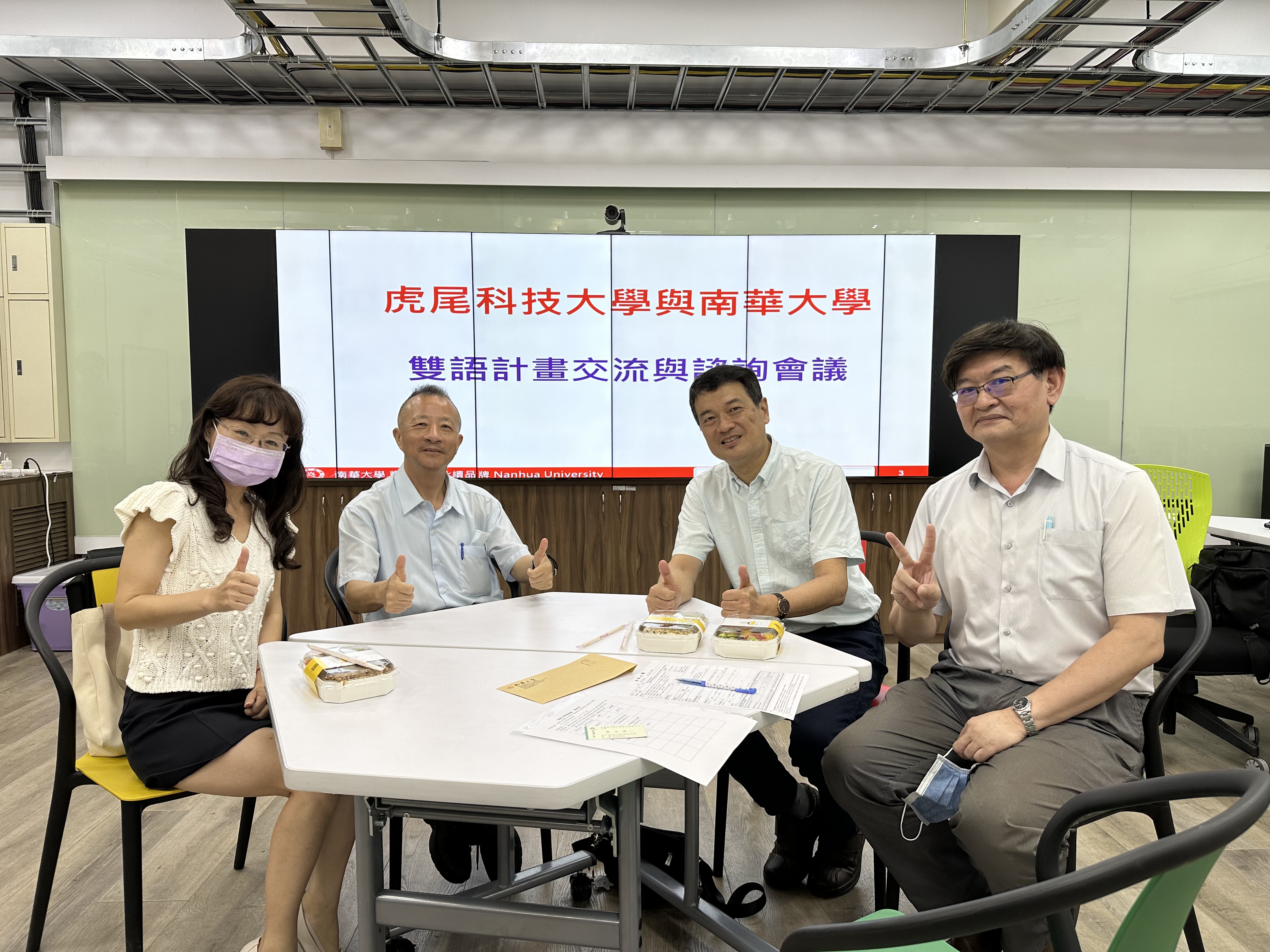
Embarking on a transformative journey from 2021 to 2025, the project follows a strategic five-stage developmental process: "seeding, germination, development, inspection, to refinement." The initial year, designated as the sowing period, is dedicated to establishing organizational mechanisms and grounding various sub-plans. At the administrative echelon, the implementation of quarterly evaluation management examinations signifies a commitment to meticulous oversight. A pivotal university/campus evaluation group meeting on July 14, 2022, saw the participation of external committee specialists in an expert meeting, concluding that the plan's emphasis on the "Better" vision and the creation of the "Student English Learning Competence Scale" is uniquely noteworthy and merits active promotion.
As the seeding period culminated, an impressive 83.3% achievement of Ministry of Education performance indicators was realized, marking a substantial stride toward the university's overarching vision of cultivating bilingual talents. This collective accomplishment underscores a burgeoning consensus among faculty members, aligning with the university's pursuit of excellence and innovation in bilingual education for a future characterized by linguistic proficiency and global competence.