Southern Taiwan University of Science and Technology
In order to enhance students’ interests in an all-English learning environment and improve teachers’ abilities and participation in delivering EMI courses, STUST has set two major objectives: a) to encourage English teachers to conduct all-English courses, and b) to motivate students to enter EMI courses. After analyzing the university’s current situation as well as the students’ learning characteristics, four principles have been formulated to implement this plan: bottom to top, less to more, basic to advanced, and foundational to general. The goal is to gradually increase the number of EMI courses offered each semester, the number of students taking EMI courses, and the number of teachers capable of teaching EMI courses.
The EMI program is promoted by a three-phase framework (figure1). The first phase is called the English proficiency development stage, which lasts for three consecutive semesters. The focus is to improve students’ general English for listening, speaking, reading and writing.
The second phase serves as a bridge to help students adapt to all-English courses in their academic fields. In this phase, we strive to offer all-English courses in different fields. Teachers from different academic fields conduct all-English classes with assistance from language teachers, and Mandarin can be used to explain the academic content in class if necessary. After completing the second phase of the program, students who have reached CEFR B2 or above are eligible to enter the third phase. The third phase is officially the starting point of all-English learning. Students should be capable of taking all-English courses, enrolling in international programs or participating in international exchange student programs with overseas partner universities.
In addition to the EMI teacher community and training activities, we have established a new step-by-step EMI teacher training mechanism. New EMI teachers are advised by language teachers in three phases over three semesters. The first phase is the development of EMI teaching knowledge and ability. This phase focuses on establishing the language and skills needed for EMI teaching. Bilingual teaching experts from outside the school are invited to give evaluations and suggestions based on a teaching demonstration. The second phase consists of EMI teaching drills and trial teaching which allows the teachers to practice and develop the skills learnt in stage 1. The workshops from the first phase are continued in this stage, but the duration of the teaching demonstration is extended, and bilingual teaching experts from outside the school are again invited to give comments and suggestions on the revised teaching demonstration drill. The third phase is the EMI teaching stage, in which content-area teachers cooperate with language teachers to establish official EMI courses.
Figure 1: A three-phase process framework for promoting EMI teaching

Through this three-phase process for promoting EMI teaching, we aim to achieve the following goals step by step:
- Establish a teaching model to improve students’ basic English listening, speaking, reading, and writing skills.
- Establish an EMI teacher support network to help teachers improve their English teaching skills, remain committed to EMI teaching, and help to increase the number of available EMI teachers in the university.
- Establish resource sharing and inter-school cooperation to build a solid base for English learning and extend this base to vocational education. In addition, we aim to establish English learning links between vocational high schools and STUST to help improve the English ability of vocational high school students so that they can participate in full English learning when they enter our university.
We have focused on the following aspects to promote full English learning: curriculum, tutoring, cross-cultural interactions, and activities. Firstly, we have established a comprehensive system for full English teaching and learning with support for staff and students. Secondly, we have designed supplementary activities to cultivate a holistic approach to English proficiency, for example, guidance and assessment in self-directed English learning courses to help students develop autonomous learning skills. Thirdly, we offer various activities to encourage cultural exchanges between local and international students. In this way, students gain real-life language practice which will support their self-directed English learning.
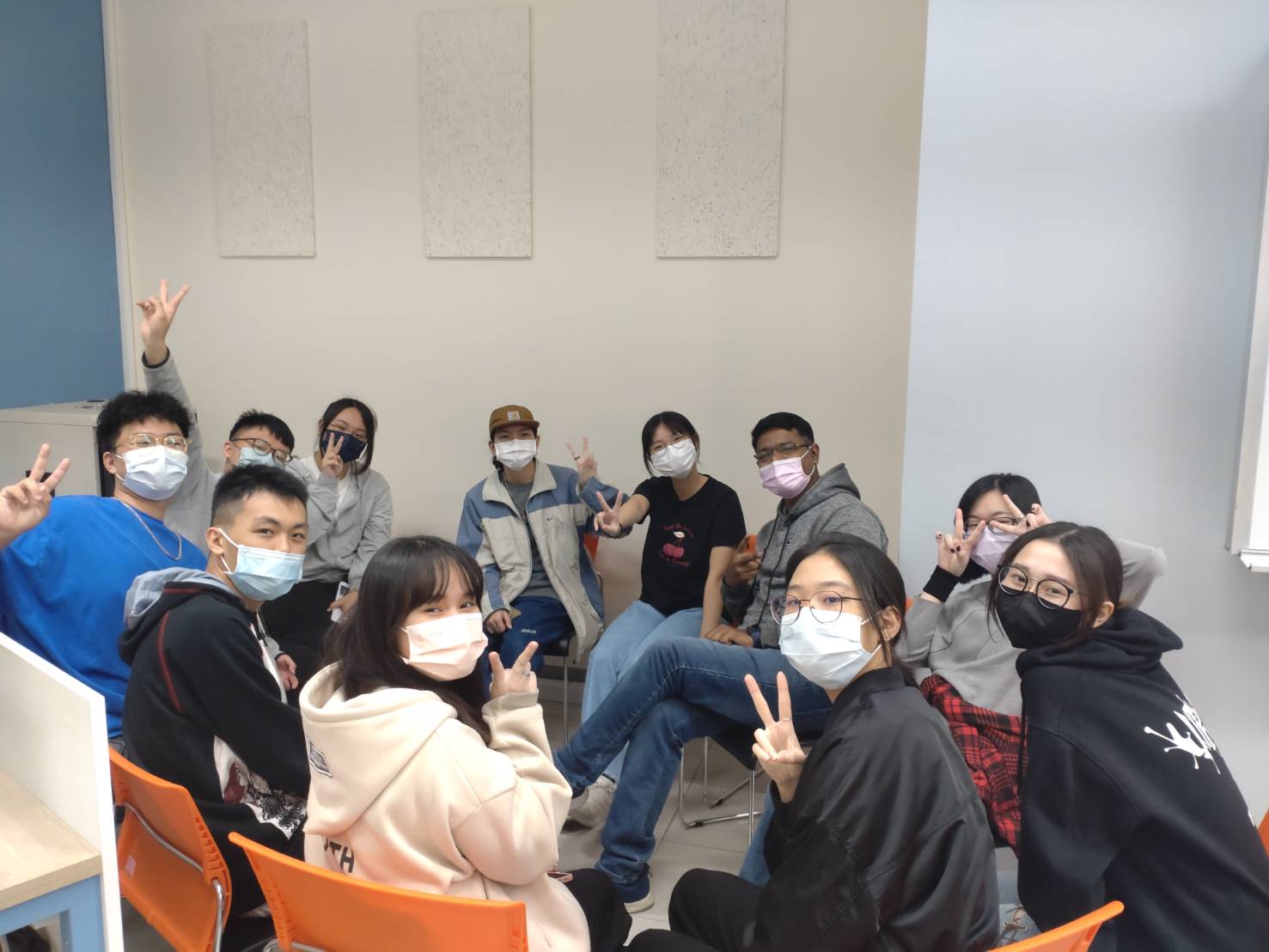
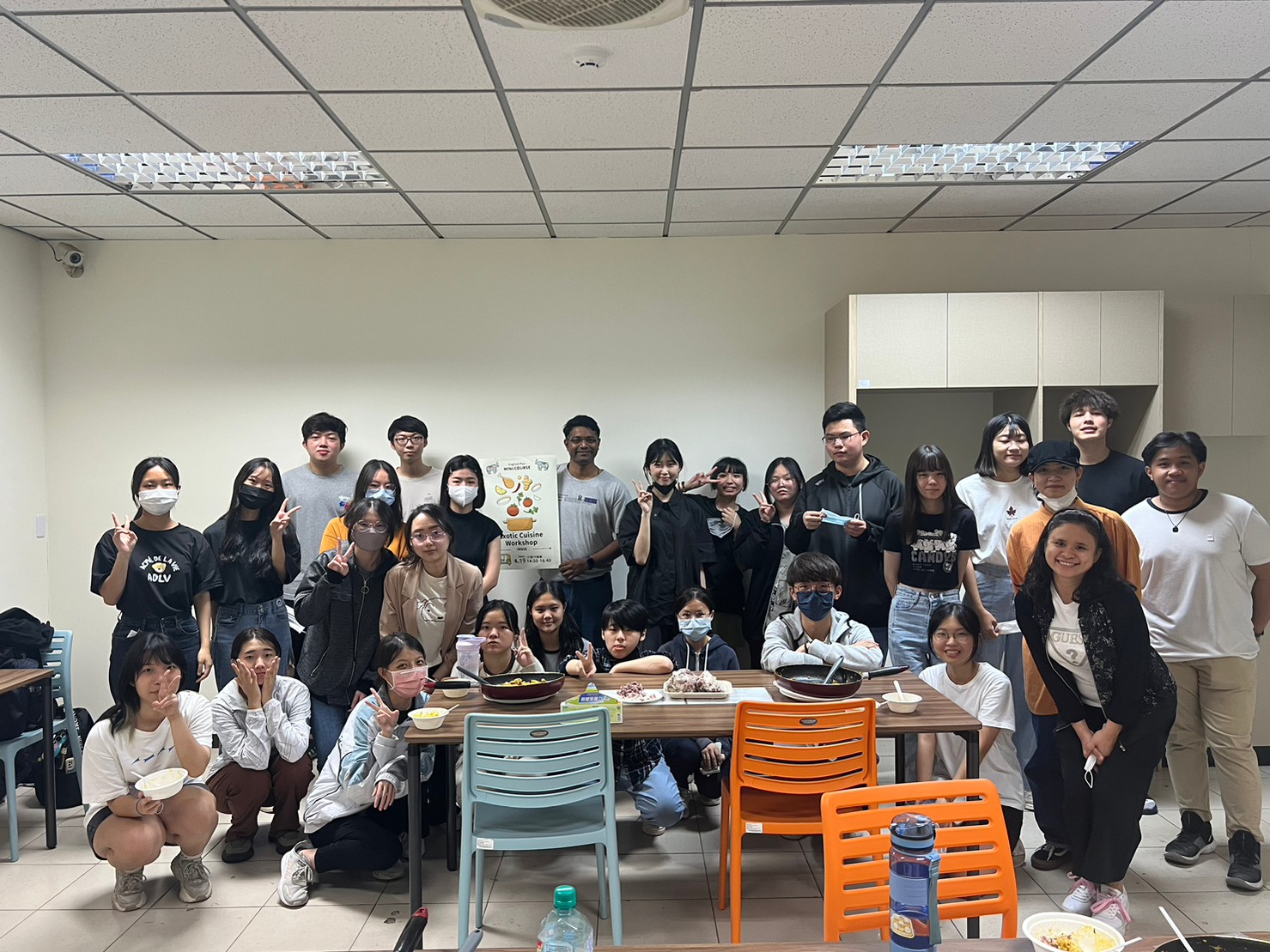
To enhance the English learning environment on campus and provide more opportunities for students to engage in English communication, we often invite international students to visit classes and chat with English learners. Additionally, we have a relaxing and cozy English Corner for local and international students to get together. We also regularly organize online cultural exchange activities with overseas schools. To facilitate the transition to all-English learning, we provide a series of micro-courses, “Talk about Life in English”, led by international teachers and students. These thematic English interactive workshops emphasize cross-cultural communication, foster students’ confidence in EMI instruction, and help motivate students to learn English in order to participate in classroom discussions. Each semester, we invite students to organize an “English Funfair”. The students design entertaining educational activities for all students on campus. The purpose of this activity is two-fold: firstly, to motivate students to develop their English for practical activities, and secondly, to attract more students to participate in bilingual education learning.
The highlights of the implementation of bilingual education in our school are as follows:
- Establish mechanisms to promote EMI courses and improve students’ English by: a) developing innovative teaching models to improve students' English with small class teaching, and b) gradually applying these models to all the English courses in the university.
- Establish a training mechanism for EMI teachers to a) enhance their English abilities, b) encourage further EMI training, and c) provide a support system to increase the number of EMI teachers.
- Encourage international students to participate in bilingual education activities to help create an international, bilingual campus environment.
- Build self-study resources and assessment methods by: a) providing English self-study resources through different channels, and b) building an evaluation system to assess students’ learning progress and proficiency