:::
 Back to Year 2022
SCHOOL
NATIONAL TAIWAN UNIVERSITY
Abstract
Here are the main achievements of National Taiwan University for the AY 2022/23:
- Promoting English-taught Programs: NTU has always been committed to promoting English-taught degree programs at the college and department levels facilitate the enrollment of international students and provide opportunities for domestic students to immerse themselves in an English learning environment. As of the 2022-2023 academic year, NTU has established 20 such programs with the support of the BEST project and will operate three new degree programs from the 2023-2024 academic year: 1) The Bachelor Program of Intelligent Engineering and Technology from the College of Engineering, 2) The Bachelor Program of Biotechnology and Food Nutrition from the College of Bio-resources and Agriculture, 3) The Master Program in Disaster Risk Reduction and Resilience from the International College. In addition, several academic units of NTU have provided sufficient English-taught courses to meet students' graduation requirements, among which the Department of Civil Engineering and the Department of Economics get funded from the BEST Program to offer Undergraduate English-taught programs.
- Promoting EMI Courses: We actively advocate for the teaching of EMI courses. With the support from the BEST program, we have increased our investment in teacher enhancement, support, subsidies, and more. Importantly, these efforts have yielded excellent results. In the academic year 2022, there were 1761 EMI courses (excluding language courses), constituting 11.37% of all courses. By the end of that semester, the percentage of sophomores among undergraduates and first-year students among graduates earning at least 20% of their credits from EMI courses was 15.20% and 32.62%, respectively.
- Introduction of the English-Medium Instruction Preparation Program (EMIPP)” - In alignment with the opportunity afforded to students to participate in English-Medium Instruction (EMI) courses pertinent to their major disciplines from their sophomore year, our institution has taken the initiative to collaborate with scholars possessing expertise in language pedagogy. This collaboration has culminated in the development of the EMIPP, specifically designed for first-year students. This program, offered as a module under the Freshman English curriculum, provides a unique opportunity for students to not only improve their general English proficiency but also acquire the necessary skills to take EMI classes more effectively. The overarching aim of EMIPP is to equip students with the necessary linguistic skills and confidence, thereby ensuring their successful engagement in EMI courses in subsequent years and facilitating more effective assimilation of course content. The course has already commenced in the first semester of the 112th academic year.
- Introduction of English for Specific Academic Purposes (ESAP) Courses - These courses are thoughtfully designed to cater primarily to the educational needs of freshmen and sophomores who are exempt from the Freshman English course. The aim of these courses is to enhance our students' academic English proficiency, particularly in their chosen fields of study. Emphasis is placed on developing robust skills in reading comprehension and effective communication. This initiative is to ensure a smooth transition for students into EMI courses within their specific academic disciplines. In the first semester of the 112 academic year, priority has been given to offering "English for Management." "English for Bioresources and Agriculture" is currently in the process of planning, and will be offered in the 113 academic year.
- Introduction of "English Enhancement Program" (EEP) - EEP is a collaborative initiative spearheaded by the Center For Bilingual Education, the Center for Teaching and Learning Development, and students from the Center for Teacher Education. This innovative program is specifically tailored to provide English learning resources to support students who may face challenges in academic performance. Our aim is to bridge the proficiency gap and foster a greater motivation for learning among these students. Spanning 11 weeks, this program has been designed by our trainee teachers. It features a blend of peer assessment and guidance from external consultants, creates a dynamic and supportive learning environment, and provides students from the Hope Project an opportunity to bolster their confidence in English language skills. The assessment results showed a significant improvement in the post-test scores compared to the pre-test scores for all participants. There was also a marked increase in the intrinsic motivation among students to use English. During the 111th academic year, we have provided service for a total of 36 students from the Hope Project.
- The ongoing success of the "Eng-Lite Program" - In the 111th academic year, 21 units collaborated to organize a wide array of English activities, including English Corner, Professional English Activity, or Everyday Life English Activity, attracting a total of 9,036 participants. The aim of the Eng-Lite Program is to broaden and enhance students’ opportunities to engage in English communication.
- Promoting EMI Seeded Instructors Project: Starting from the academic year 2022, we have initiated the EMI Seeded Instructors Project in the College of Engineering, Social Science, Life Science, and Bio-Resources & Agriculture. In this project, instructors are selected from each college and tasked with developing plans to share their expertise in their respective professional areas, offering consultation services for EMI courses, advocating EMI teaching knowledge to fellow instructors within their colleges, and fostering a bilingual teaching environment.
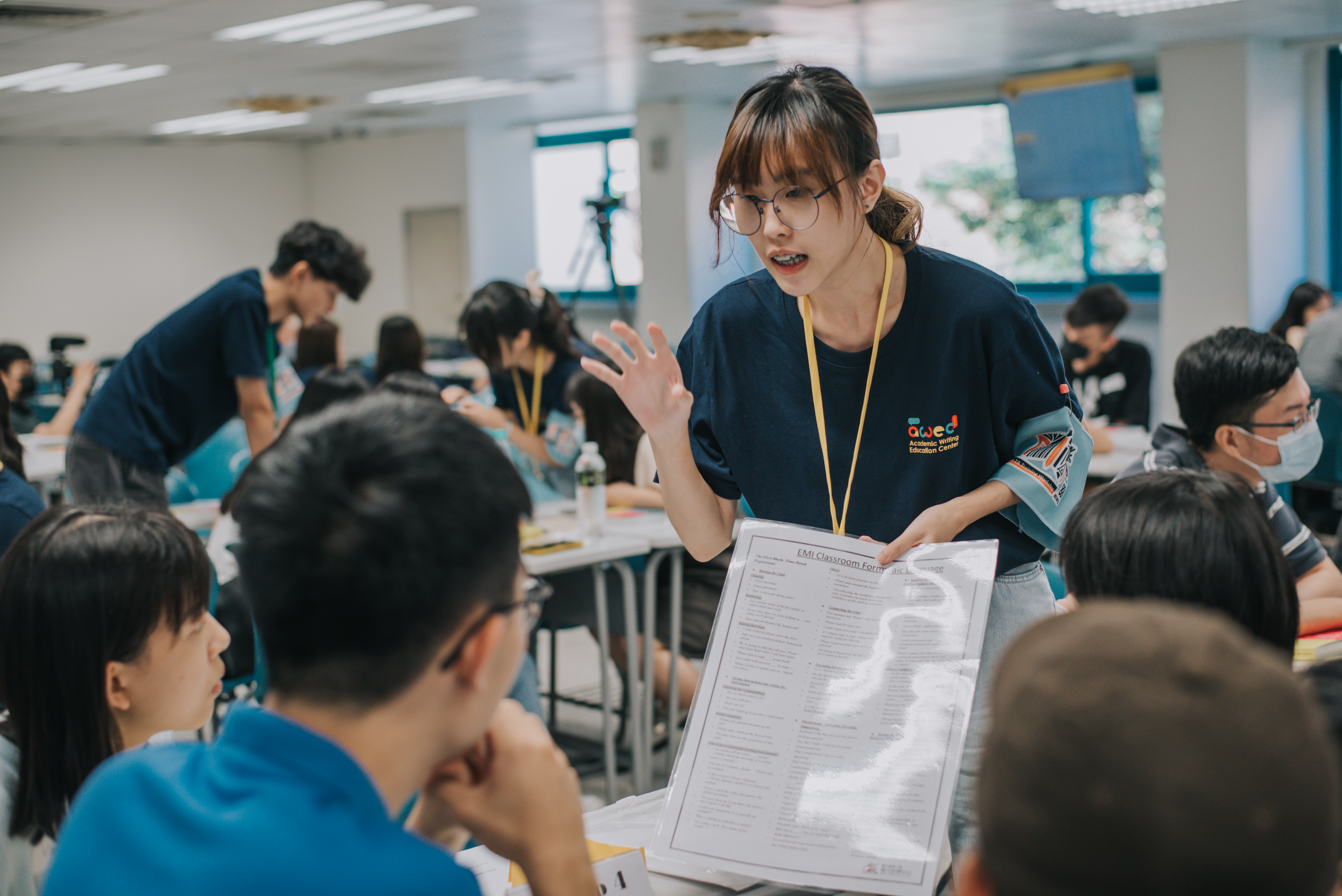
- Advancing EMI-TA Training Workshop: We, CBE, the Academic Writing Education Center (AWEC), and the Center for Teaching and Learning Development (CTLD) have collaboratively established an expert team of EMI Teaching Assistants (TA). The primary objective is to equip EMI TAs with the necessary prior knowledge of EMI courses and enhance their abilities to lead group discussions effectively. Practically, we plan to guide EMI TAs through mock EMI classrooms, engaging them in tasks related to course proceedings and teaching. Concurrently, AWEC will develop a comprehensive brochure for TAs, offering guidelines for practical activities and analyses of TA cases. This resource will serve as a self-learning toolbook. In the 2022 academic year, we successfully trained a total of 203 students as EMI TAs. Furthermore, the EMI TA training courses aim to extend support to other universities and colleges across Taiwan. We anticipate hosting two additional EMI TA training events in June and September to assist domestic universities and colleges in training approximately 400 students as EMI TAs.
- The Inter-institutional EMI Faculty Support Groups Initiative provides the startup fund for organizing events to facilitate dialogue and sharing in EMI practice and fortify peer-to-peer (P2P) EMI faculty network development. The target audience is the motivated faculty member who wants to advance EMI professional development. The faculty members could form the support group freely, with at least six members from at least three universities. Each group shall organize at least five events. This grant can be up to NT200,000 per support group, depending on the group size, the types of events, and how broad the impact is. Six groups received the fund in the spring semester of the 2022 academic year, and the members are from across 24 universities.
- Establishment of the "Employee English Enhancement Program (EEEP) "- The EEEP aims to enhance NTU employees' English proficiency for administrative tasks and boost their confidence in English communication. Starting from the 111th academic year, this program will be offered in the second semester of each academic year. It focuses on common English terms used in administrative work, providing training in document writing, practical discussions, and simulated exercises to improve employees' English abilities. The goal is to strengthen services for international students and visiting scholars. In the 111th academic year, 25 employees from 14 administrative units participated in the program.
- Organizing relevant EMI workshops and lectures; the key activities are outlined as follows:
- The E2 English Reading Workshop aims to promote and facilitate reading skill development through reading strategy, the SQ3R framework. The workshop incorporates lectures and hands-on practice in 3 different broad subject areas: engineering, life sciences, and social sciences. The first workshop took place in the spring semester of the 2022 academic year, with 181 attendees from 26 universities.
- We organized an EMI Seminar, titled "Constructive Alignment in Teaching and Technology-Enhanced Teaching", on March 14, 2023. This seminar specifically concentrated on the implementation of constructive alignment in teaching as well as the utilization of technology within the field of medicine. The seminar followed an interactive interview format, fostering the exchange of teaching opinions among participants from different universities.
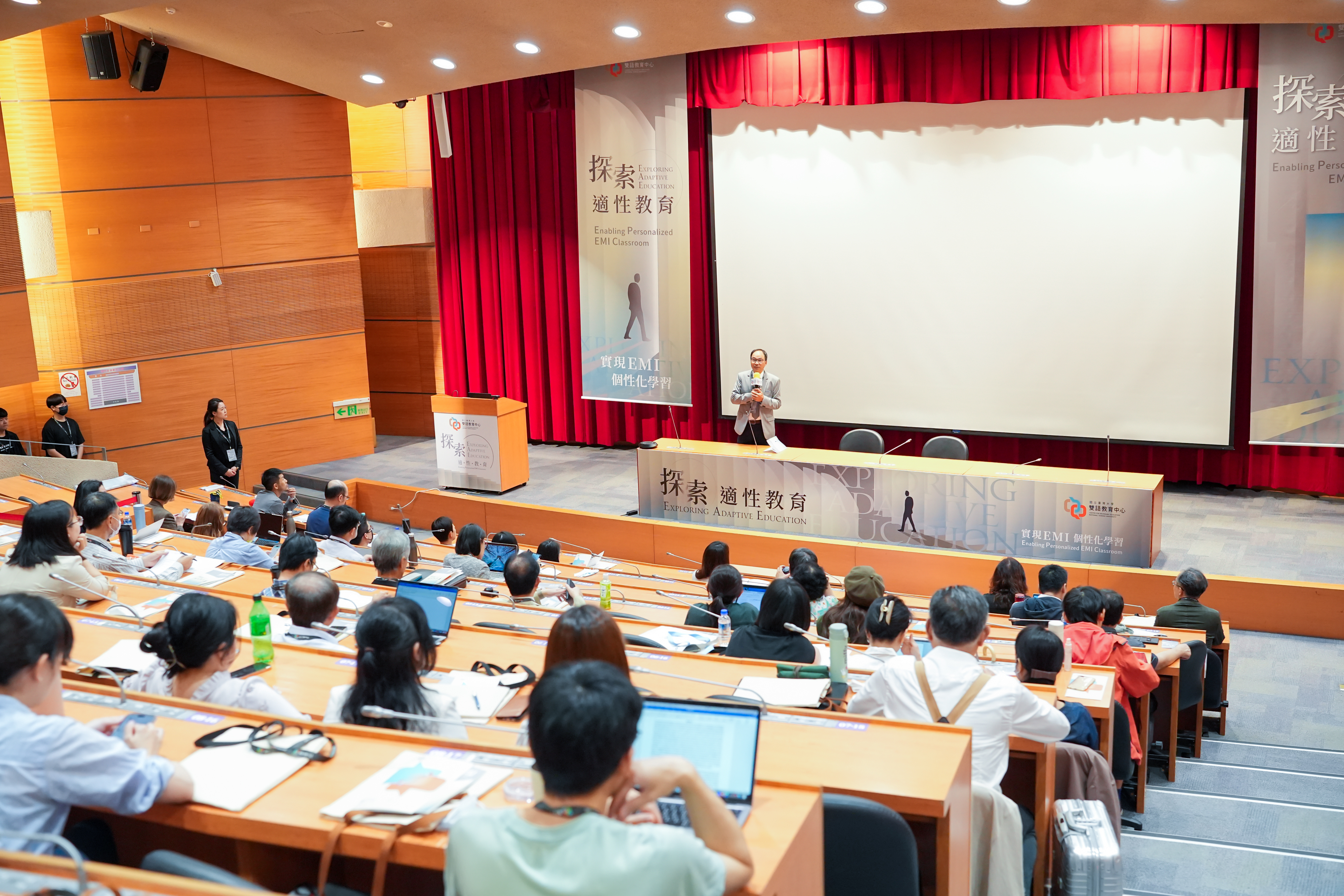
- NTU organized the 2023 Taiwan Bilingual Higher Education Forum under the Ministry of Education (MOE) commission. The aim is to showcase the achievements of the Bilingual Education for Students in College (BEST) project: Phrase one and the services and resources offered by the MOE-commissioned EMI resource centers. With the theme of bridging forward, this forum aims to encourage nationwide universities to utilize what the EMI resource centers have to offer, share their experiences, and develop sustainable institutional policies for enhancing national EMI practice.
- We (CBE) held an expert seminar titled "Towards Institutional Adoption: Enhancing Learning and Teaching with Learning Analytics" on April 21, 2023. During this seminar, instructors gained insights into the concept of learning analytics, methods and classification of data analysis. Importantly, they acquired an understanding of how to apply learning analytics to analyze students' learning behaviors and backgrounds. The application of learning analytics enables adjustments to teaching methods and course designs based on individual student's potential and characteristics within the classroom.
- On May 19th, 2023, in collaboration with the Language Center of the National Taiwan University of Science and Technology (NTUST), we were honored to co-host the "English Language Teaching for EMI." The symposium focuses on how English teachers can adapt their course designs and teaching strategies to meet the demands of EMI. Additionally, the event featured insightful sharing of experiences from both universities regarding how to adjust or develop English teaching courses. This initiative aligns perfectly with the Ministry of Education's (MOE) "Program on Bilingual Education for Students in College; BEST," specifically its first phase and second stage objectives. It also demonstrates and responds to the MOE's expectations of NTU as a leading figure in higher education.
- NTU initiated the EMI Teaching and Learning Center (TLC) to facilitate the development of the EMI capacity across the Taiwan sector in late 2022. TLC is dedicated to advancing and accelerating the growth of universities in bilingual education nationwide by offering student- and faculty-centered support through outreach services and practice-oriented resources.