National Taiwan Normal University
NTNU has adopted “Opportunities with Options” as its program’s core, aiming to provide our students with the option to learn through English as they advance their knowledge and become globally competitive world citizens. A summary of the highlighted achievements in the past two years has been provided below.
1. Organization
In the first year of the BEST Program, NTNU established the Office of Bilingual Education (OBE) to lead the university in its transformation into a bilingual university. OBE is complemented by two committees: the Implementation Committee and the Consultative Committee. The two committees provided essential feedbacks from key stakeholders from across the university, allowing adjustments, as well as refinements of university bilingual policies and approaches.
The last two years also saw the cementing of our Center for Academic Literacy (CAL) as the core academic English support agency for our students. Through its highly popular one-on-one tutoring service, CAL exemplified top-tiered customer-centered English support. In the last year alone, at least 2,015 tutoring sessions were provided by at least 15 professional tutors. In addition, CAL also organized extracurricular academic English courses, workshops, and lectures, published self-learning materials and booklets, and assisted graduate students as they edit and perfect their theses. In short, CAL is one of the keys to NTNU’s continued advancement in bilingual learning and becoming an example for others to emulate.
2. Courses
The 2022 Academic Year is the first full academic year where our new Common Core English program was implemented. The new Common Core English program aims to enhance our undergraduate students’ English proficiency from English for General Purposes (EGP) all the way to being ready for EMI courses. Waiting for them are a wide range of EMI courses, as all of our undergraduate programs and the Center for General Education now offer at least 18 credits of EMI courses each. There are also at least four EMI interdisciplinary programs available for those who are interested. For our graduate students, NTNU had gradually rolled out its Graduate Programs in English (GPE) in the last two years. More and more of our graduate programs are now offering GPE to our students, with 56.3% of our Master’s programs and 69.4% of our doctoral programs now offering GPE. As GPE is available to both domestic and international students, it is our belief that such programs will accelerate the internationalization process in our student body and foster an environment more conducive to multilingual and multicultural exchanges.
3. Faculty and Students
To ensure all students are familiar with what EMI entails and what support and resources are available, NTNU had continuously promoted and advertised such information in the last two years. For example, to ensure all new students are familiar with EMI and all of our support resources, we have piloted the integration of such information into “Introduction to University Learning”, a required course for almost all incoming freshmen in the last year. In this course, we not only introduced students to CAL, but also other extracurricular support mechanism on campus, such as English Chat Rooms, online grammar courses, self-learning resources, student learning communities, and English-learning related financial support.
For our faculty, our EMI professional development and certification program includes both online and in-person training. In the 2022 academic year, more faculty members had participated and completed the training and NTNU also continued to refine our approach based on changing circumstances and faculty feedback. By the end of the Spring 2023 semester, at least 136 faculty members had successfully been certified, and at least 20 faculty members completed our new Oxford EMI training program. The 20 faculty members who completed the Oxford EMI training courses are now our EMI Pilot Instructors who will participate in NTNU’s push to promote EMI teaching on campus and serve as mentors to other less experienced instructors. There are also an increasing number of foreign faculty members here at NTNU. Our foreign faculty members hailed from many different countries, some from distant places such as the United States, Canada, the Netherlands, and Germany, while others are from our neighbors such as Japan and Korea. As of the Spring 2023 semester, the share of foreign faculty members at NTNU is 4%.
4. Experience Sharing and Collaborations
NTNU is eager to collaborate and share EMI promotion experiences with all universities across Taiwan, and continues to publish various EMI-related research papers and books for reference by colleges and universities across the country. Thus far, we have successively published The Ultimate Guide to Giving Academic Presentations in English and The Ultimate Guide to Teaching in English (authored by NTNU’s Professor Posen Liao), Bilingual Education (authored by NTNU’s Professor Tzu-Bin Lin), and English-Medium Instruction (EMI) in Higher Education (edited by NTNU’s Professor Mei-Hui Liu). In addition, we are also expecting an additional publication by Professor Mei-Hui Liu in 2024 titled English-Medium Instruction in Higher Education: Convergence and Conflicts.
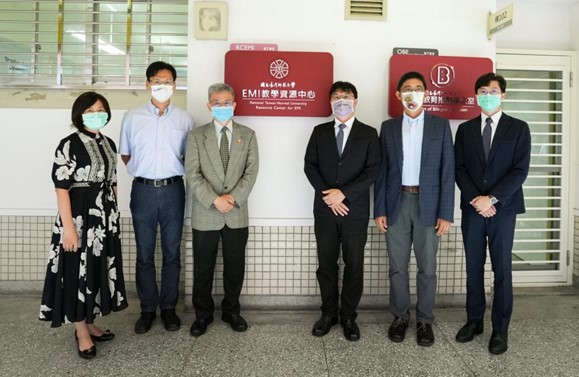
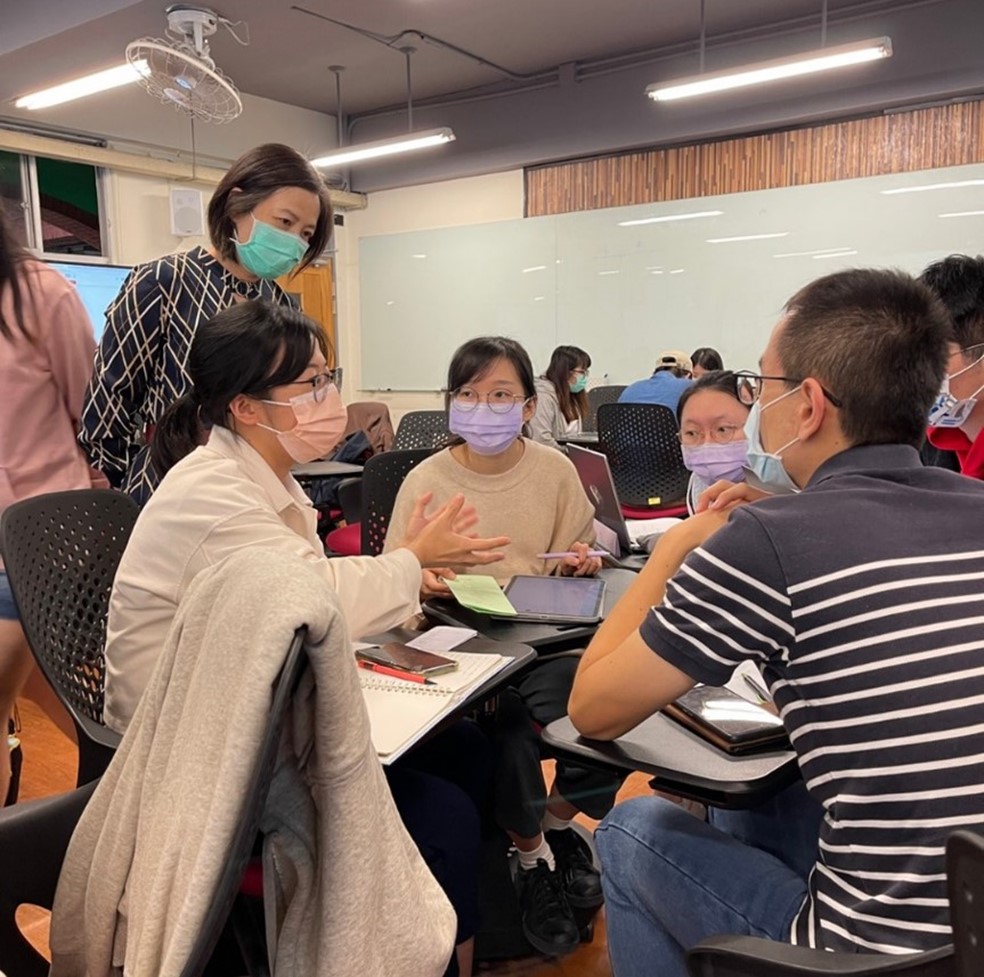
Finally, NTNU’s Resource Center for EMI was established in 2022. Services it provides include teacher professional development and training courses, teacher’s community of practice, teaching assistant training courses, and academic tutor training. Currently, there are 205 teachers from at least 48 colleges and universities participating in our teacher training program. Moreover, 112 students successfully completed the teaching assistant training course in the last year and the number of applications for our teacher’s community of practice programs reached 34. Most importantly, NTNU is also actively sharing its EMI experiences and strategies with other universities and colleges and will continue to do so in the coming years.