National Taipei University of Technology-College of Engineering
Taipei Tech’s bilingual development is guided by university-level leadership and driven by its outstanding benchmark colleges in engineering, applied sciences, and social sciences (College of Engineering, College of Management, and College of Electrical Engineering & Computer Science). The bilingual initiative endeavors to balance national development needs with global competitiveness, establishing a comprehensive and professional EMI curriculum that fosters bilingual thinking and cross-cultural competence. The Center for Bilingual Learning (CBL), led by the university president, coordinates and implements university-wide bilingual learning strategies, EMI course development, and effectiveness evaluations. The initiative is structured around three core strategies: 1) Establishing a university-wide strategic support system, 2) Advancing EMI faculty professional development, and 3) Integrating students’ academic and professional English development.
To ensure the long-term development of EMI teaching, Taipei Tech has established a range of incentives and support measures. Since the 2022 academic year (111th academic year), the university has introduced bilingual learning scholarships for students, awards for outstanding EMI teaching assistants, EMI course teaching incentives, and first-time EMI course development grants. These initiatives encourage students, faculty, and EMI teaching assistants to cultivate an English-friendly campus environment.
Taipei Tech has also invested significantly in EMI teaching resources to provide comprehensive capacity-building support. Initiatives include a one-on-one professional English consultation service in collaboration with Fulbright Taiwan’s EMI advisors, serving over 600 participants. In June 2023 (112th academic year), the university established the Center for Academic and Professional Writing, and it regularly organizes English Producers workshops to support students’ oral and written communication skills.
Since the 2020 academic year (109th academic year), Taipei Tech has pioneered the ESP & EMI Faculty Synergy Program, the first of its kind in Taiwan, which fosters faculty collaboration and pedagogical innovation. This initiative has established three-tiered faculty teaching communities that foster collegiality, collaboration, and a strong support network among faculty members across the university. To date, the program has facilitated 89 faculty communities and engaged approximately 150 faculty members. By collaborating with Pennsylvania State University, a systematic EMI faculty professional development program is tailored to the needs of Taipei Tech’s faculty and disciplines. These localized EMI faculty training courses have been presented at multiple international academic conferences, further reinforcing Taipei Tech’s role as a model institution for EMI and ESP education.
Taipei Tech boasts the most comprehensive ESP curriculum among universities in Taiwan, offering nearly 100 ESP courses annually that align with students' learning needs and global trends. To assess students’ English learning progress, Taipei Tech has administered an annual English proficiency test for 3,000 to 3,200 students for several years. Additionally, the university adopts the LTTC General English Proficiency Test (GEPT) for English learning assessment. Being at the forefront of ESP curriculum and teaching material development for over a decade. In 2021 (110th academic year), the university restructured its first- and second-year mandatory English courses into ESP-focused courses, with the second-year ESP curriculum officially implemented in 2022 (111th academic year). To further enhance students' English proficiency and specialized communication skills, Taipei Tech will fully professionalize its first- and second-year English courses starting in 2025 (114th academic year). The first-year (freshman) English will be redesigned as interdisciplinary thematic ESP courses, equipping students with multidisciplinary perspectives and specialized English comprehension and expression skills. And the second-year (sophomore) courses will consist of college-specific ESP courses, integrating discipline-specific knowledge with English language application to consolidate students’ academic and workplace communication skills. The curriculum design emphasizes the practical application of professional English and communication strategies. Through interdisciplinary integration and alignment with industry trends, students will gain hands-on experience and develop English proficiency tailored to professional contexts, workplace scenarios, and international competitiveness.
One of the highlights of Taipei Tech’s EMI and ESP initiative is its discipline-specific teaching material development. Each of the university’s six colleges has developed its own ESP textbooks under the Taipei Tech ESP Series, producing 12 volumes for Taipei Tech students. In addition, beginning in the second semester of 2024 (113-2 academic year), EMI and ESP faculty will engage in the generation of discipline-specific discourse registers, specialized vocabulary, and contextually appropriate collocations as learning materials to facilitate language and content learning. By leveraging AI-powered tools, teaching materials will integrate visual learning aids to enhance student retention and comprehension, strengthening their ability to apply specialized academic vocabulary effectively to ensure teaching and learning quality.
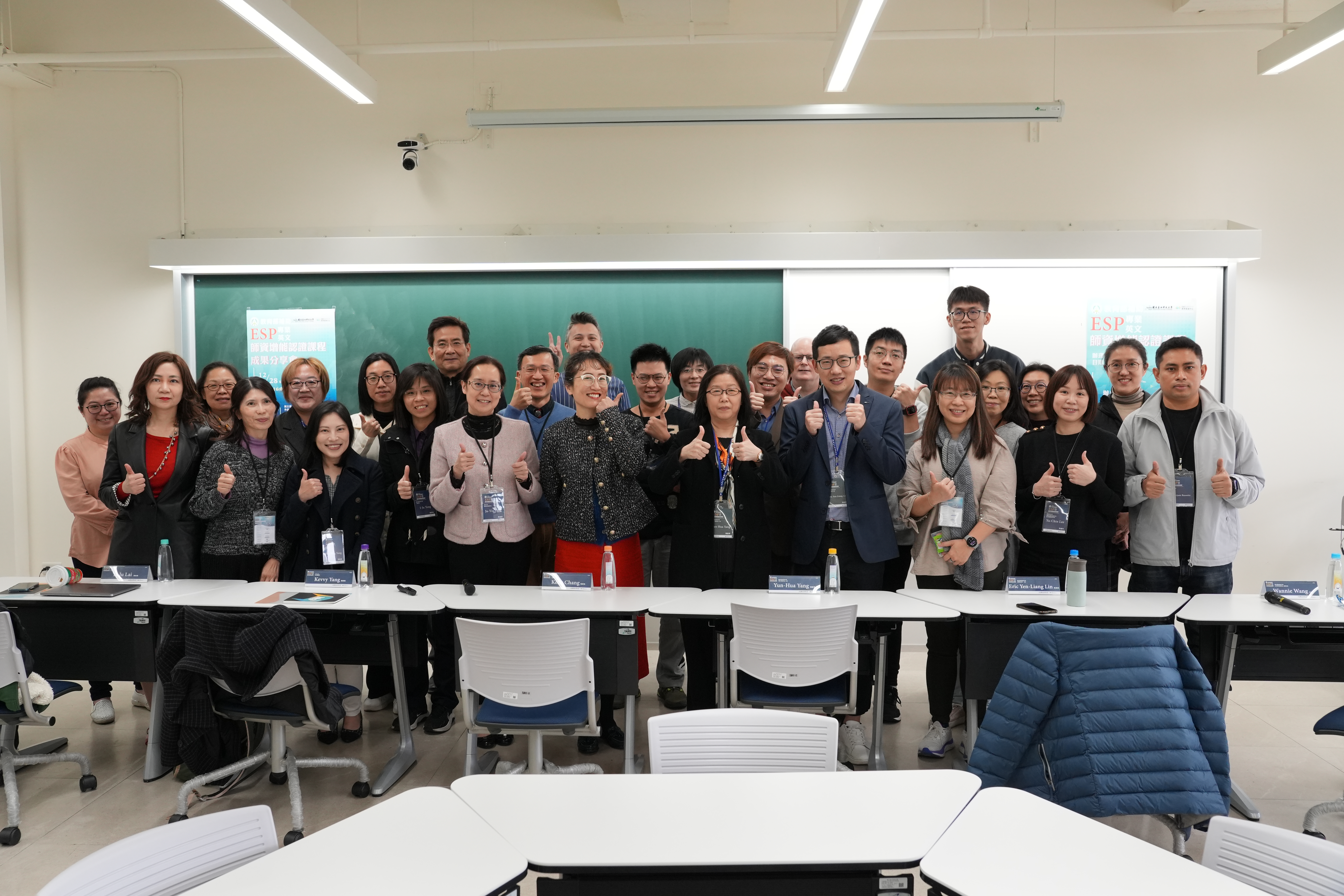
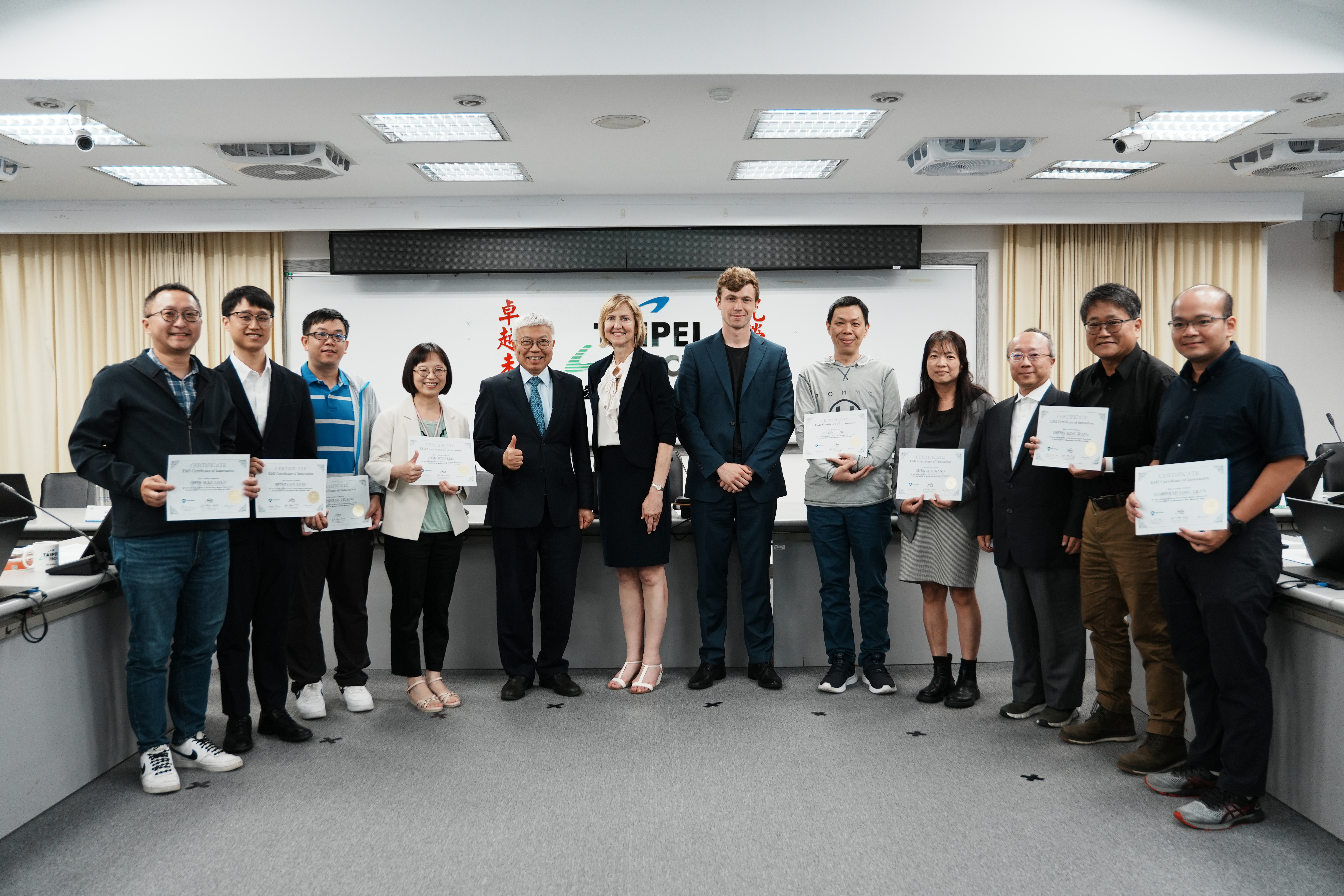
Since 2024 (113th academic year), Taipei Tech has been actively expanding its cross-university ESP faculty training programs, leveraging its extensive expertise and solid foundation in ESP curriculum development. As part of this initiative, Taipei Tech has implemented the ESP Faculty Certification Program, partnering with National Taiwan University of Science and Technology’s EMI Teaching Resource Center, extending training opportunities to 16 universities and technical colleges. A total of 28 faculty members from these institutions have participated in the program. The curriculum comprehensively covers ESP course structuring, instructional design, and faculty capacity-building, and workshop training sessions. Taipei Tech is committed to assisting institutions in establishing and strengthening their ESP frameworks. In alignment with long-term bilingual education initiatives, the university will continue to expand cross-institutional partnerships, broaden training opportunities, and enhance the shared resources for EMI and ESP faculty development.
With a steadfast commitment to cultivating global talent and innovative international education, Taipei Tech integrates cutting-edge teaching methodologies and multicultural learning environments to equip students with bilingual proficiency and EMI-enabled professional skills. This robust bilingual learning ecosystem serves as a foundation for Taipei Tech’s future-oriented mission, empowering students to navigate an increasingly interconnected and dynamic global landscape.