National Chung Cheng University-College of Education
National Chung Cheng University – The Program on Bilingual Education for Students in College
2024/25 Academic Year Highlights Report
National Chung Cheng University (CCU) stands as the sole university in the Chiayi region recognized by the Ministry of Education with three BEST benchmark college programs. The Colleges of Engineering, Management, and Education represent premier benchmarks in the fields of engineering and applied sciences, and social sciences, respectively. Committed to becoming an internationally renowned institution that cultivates exceptional professional talent, CCU advances its bilingual education framework through three strategic pillars: sustainable bilingual campus development, cultivation of globally mobile professionals, and enhancement of international academic impact.
To operationalize this vision, CCU established the Bilingual Resource Promotion Center. Led by the Center for Language Studies, this center coordinates campus-wide bilingual education through both vertical integration and horizontal communication. It operates under a core mission to ensure systematization, quality consistency, and optimal resource allocation across multiple dimensions, including institutional design, quality assurance, faculty development, and student support.
To monitor these efforts, the university implemented a comprehensive EMI teaching evaluation and quality assurance dashboard. During the 2024/25 academic year, over 60 EMI courses completed structured classroom observations, with student evaluations consistently exceeding 4.2 (out of 5) for both "course objective clarity" and "learning support." Furthermore, CCU has invested heavily in advanced educational technologies to support blended learning, including a CCU-GPT-enhanced eCourse platform, the CCUTube online resource platform, and a dedicated EMI Moodle module. Internal and external quality assurance is further reinforced through prestigious international accreditations, such as IEET and AACSB.
Faculty development remains a cornerstone of CCU’s bilingual strategy. In 2024/25, the university conducted over 40 EMI faculty training workshops and introduced diverse internationally recognized teacher certification programs in partnership with Fulbright advisors, the Oxford EMI certification program, Columbia University, National Taiwan Normal University, and National Cheng Kung University. Additionally, CCU has established cross-institutional faculty training and classroom observation systems while integrating EMI teaching metrics into faculty incentive and promotion structures to encourage active participation.
For students, the university structured a progressive "Foundation → Professional → International" learning pathway. General English courses were significantly upgraded and supplemented by intensive exam-prep classes, specialized micro-courses, and various exam subsidies and incentives. Consequently, exam registration and attendance rose by 20% compared to the previous year, yielding substantial growth in B2-level proficiency and positioning nearly 80% of students on a clear trajectory toward B1+. Driven by this momentum, university-wide EMI course offerings more than doubled, expanding from 235 courses in AY2020 to 542 in AY2024.
Administratively, CCU employs an innovative dual-track governance model. At the university level, the Center for Language Studies leads the EMI resource center to establish campus-wide standards, promote new systems, manage quality assurance, and share language resources. Concurrently, at the college level, individual colleges develop differentiated features tailored to their unique professional advantages. Internally, close collaboration among the Offices of International Affairs, Student Affairs, Academic Affairs, and General Education ensures a seamless learning pathway. Externally, strategic partnerships with regional resource centers, the Taiwan Comprehensive University System, and the Six-University Alliance support EMI faculty training and international language and culture teaching teams. Notably, these bilingual resources extend beyond the campus to benefit regional industries and support the globalization of local culture.
Throughout 2024/25, the strategic expansion of EMI courses and English proficiency enhancement measures has successfully shifted student perspectives, making EMI the "new normal" as a vibrant bilingual campus culture takes root. By balancing rapid course expansion with a rigorous quality assurance framework—including positive teaching evaluations, classroom observations that promote professional community learning, and international accreditations—CCU has solidified the foundation of its benchmark colleges. Crucially, these initiatives have generated significant spillover effects into non-benchmark colleges, forging a collaborative, cross-college promotion pattern and establishing a definitive new trend in bilingual campus development.
College of Education
The College of Education at National Chung Cheng University has entered its fifth year of implementing the bilingual learning project, achieving fruitful outcomes. Relying on the ELMD international doctoral program, the College has established cross-disciplinary faculty communities and an EMI mentoring system on campus and actively exerted regional influence. By continuously organizing winter and summer all-English camps and building resource-sharing mechanisms with regional high schools, the College has deeply rooted bilingual education resources locally. Despite its relatively small scale, the College has steadily expanded EMI course offerings and teaching support systems. In the 2024/25 academic year, undergraduate EMI courses reached 37 (25.17% of the total), and graduate courses reached 29 (17.26%), with an overall proportion of EMI courses at 20.95%. Looking ahead, the College will continue to perfect teaching and learning support mechanisms, overcome existing challenges, and further enhance CCU's regional capacity and international visibility in bilingual education.
- Comprehensive Teaching Support System: Established cross-disciplinary faculty communities and an EMI mentoring system to provide solid support for teachers.
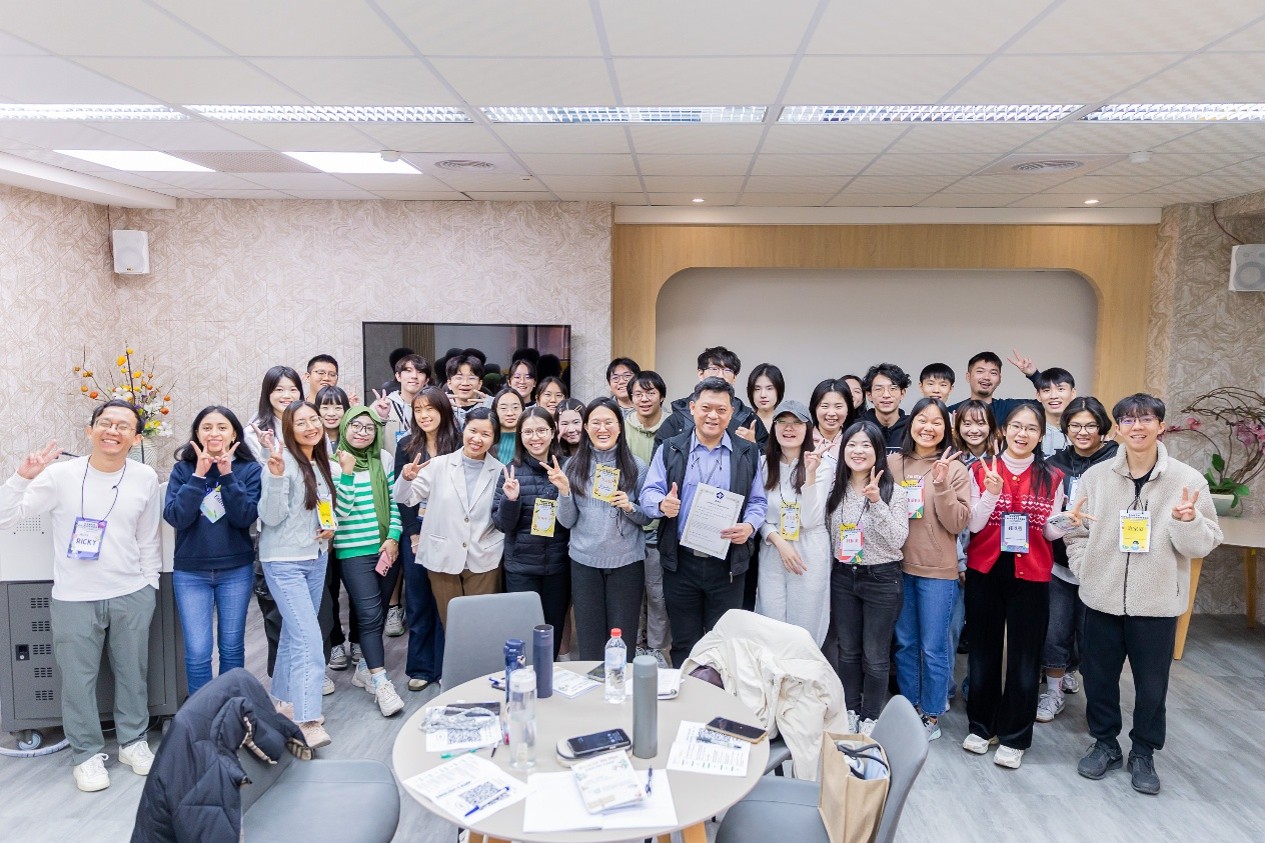
- Local Cultivation and Resource Sharing: Continuously organized winter/summer all-English camps (e.g., "Because We Met") and built resource-sharing mechanisms with regional high schools to expand regional impact.
- Steady Expansion of EMI Courses: In the 2024/25 academic year, undergraduate EMI courses reached 37 (25.17%, an increase of three courses from the previous academic year and a rise of more than one percentage point), and graduate courses reached 29 (17.26%), with an overall proportion of 20.95%.
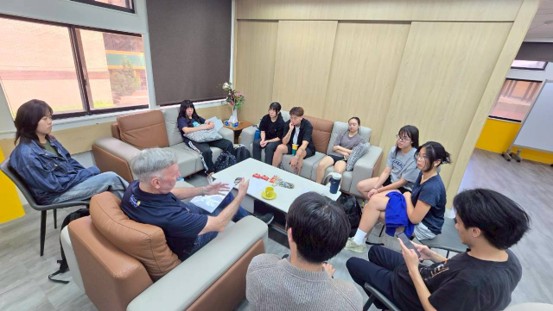
- Diverse Informal Learning Activities: Promoted the 4-hour-a-week English Café activities to create a friendly environment for English speaking.
- Continuous Optimization of Learning Spaces: Committed to further enhancing teaching resources, support mechanisms, and learning spaces for both students and faculty to strengthen bilingual promotion capacity.