National Taipei University of Technology-College of Engineering
National Taipei University of Technology (Taipei Tech) has advanced bilingual education through centralized leadership and collaboration among three benchmark colleges: Engineering, Management, and Electrical Engineering and Computer Science. The Center for Bilingual Learning (CBL), led by the President and senior administrators, oversees university-wide initiatives to promote English-Medium Instruction (EMI) and English for Specific Purposes (ESP). Taipei Tech's strategy is built on three pillars: (1) establishing a thorough support system, (2) advancing EMI faculty training, and (3) improving student academic achievement and English fluency.
To sustain EMI growth, Taipei Tech provides incentives such as teaching hour subsidies, course development rewards, flexible salary schemes, student bilingual learning awards, and specialized EMI Teaching Assistants (TAs). In the 113th academic year, 78 EMI courses across seven colleges underwent formal observation and feedback, with 80 faculty members participating. These measures are integrated with a quality assurance framework aligned with AACSB and IEET standards, ensuring international alignment and continuous curriculum improvement.
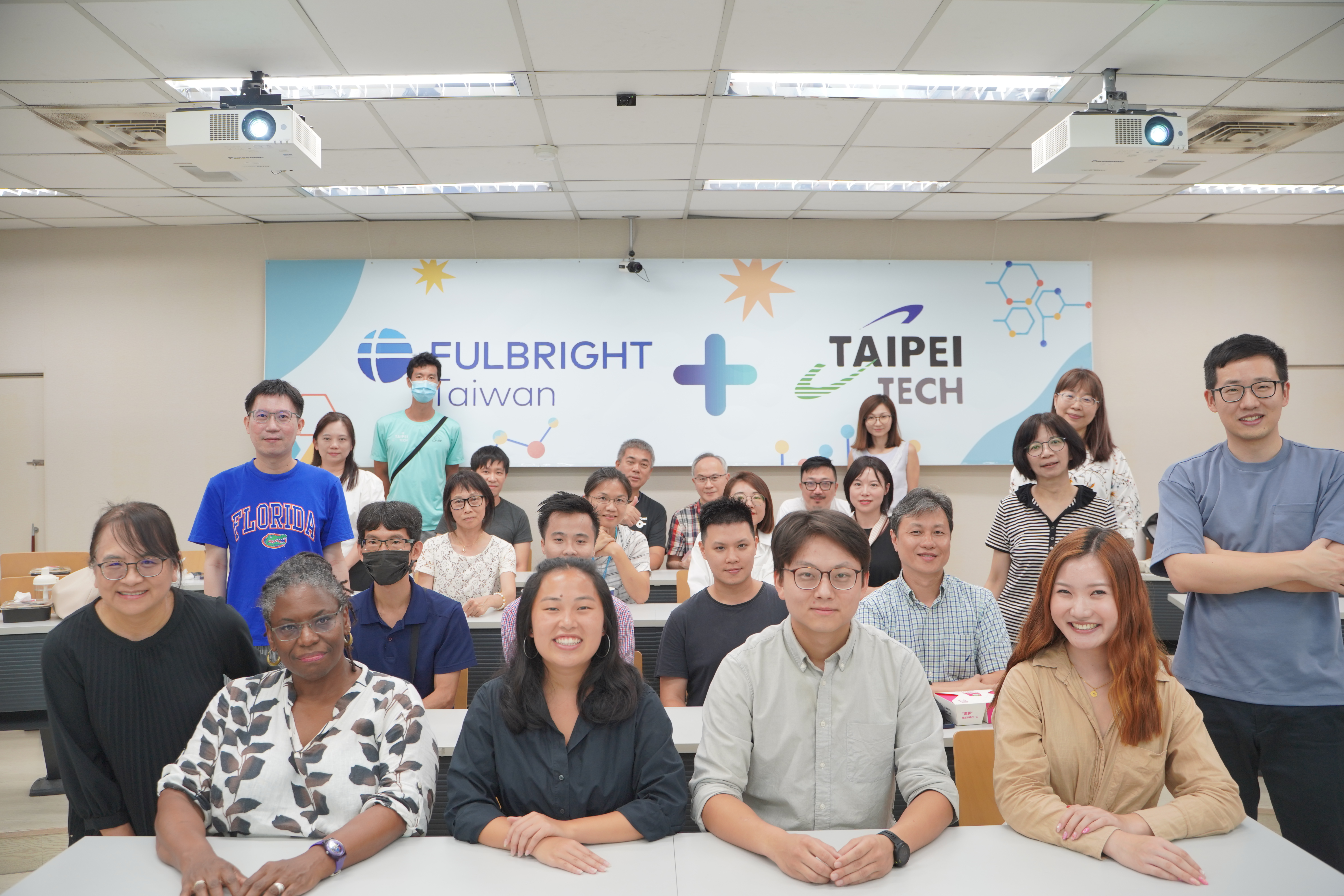
Since 2020, Taipei Tech has implemented Taiwan’s first “EMI & ESP Faculty Advancement Program,” establishing a three-tiered faculty community system that has supported 95 groups and 190 participants. Partnerships with Pennsylvania State University and Fulbright Taiwan have provided blended training, consultations, workshops, and overseas programs. From 2022 to 2024, around 65 EMI/ESP activities engaged over 1,850 participants, including faculty from more than 50 universities, strengthening Taipei Tech’s leadership in EMI development nationwide. Taipei Tech also offers nearly 100 ESP courses annually, with over 3,200 students taking standardized English exams for placement and progress tracking. In 2024–2025, more than 1,400 students received targeted speaking and writing support through English Producers programs, while six colleges co-developed 12 discipline-specific ESP textbooks aligned with CEFR B1 and B2 levels. Additionally, an AI-driven lexical analysis platform supports the co-development of high-frequency vocabulary and collocation materials, further strengthening ESP instruction and EMI readiness.
Looking ahead, Taipei Tech will continue to expand EMI offerings and develop preparatory and bridging programs to attract international scholars and students. The university's goal is to nurture bilingual, globally competitive talent through global learning and resource integration. Taipei Tech's mission will be powered by this strong ecosystem, which promotes internationalization and prepares the institution for success in a globalized world.