Chinese Culture University
(I) Enhancement of Student English Proficiency
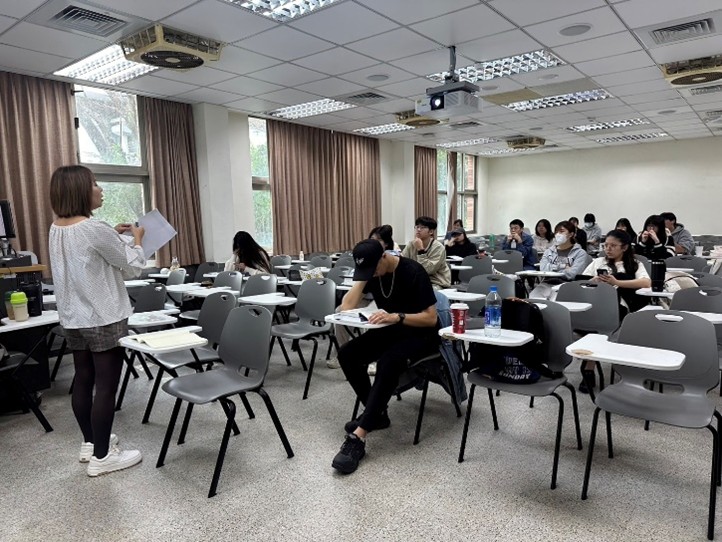
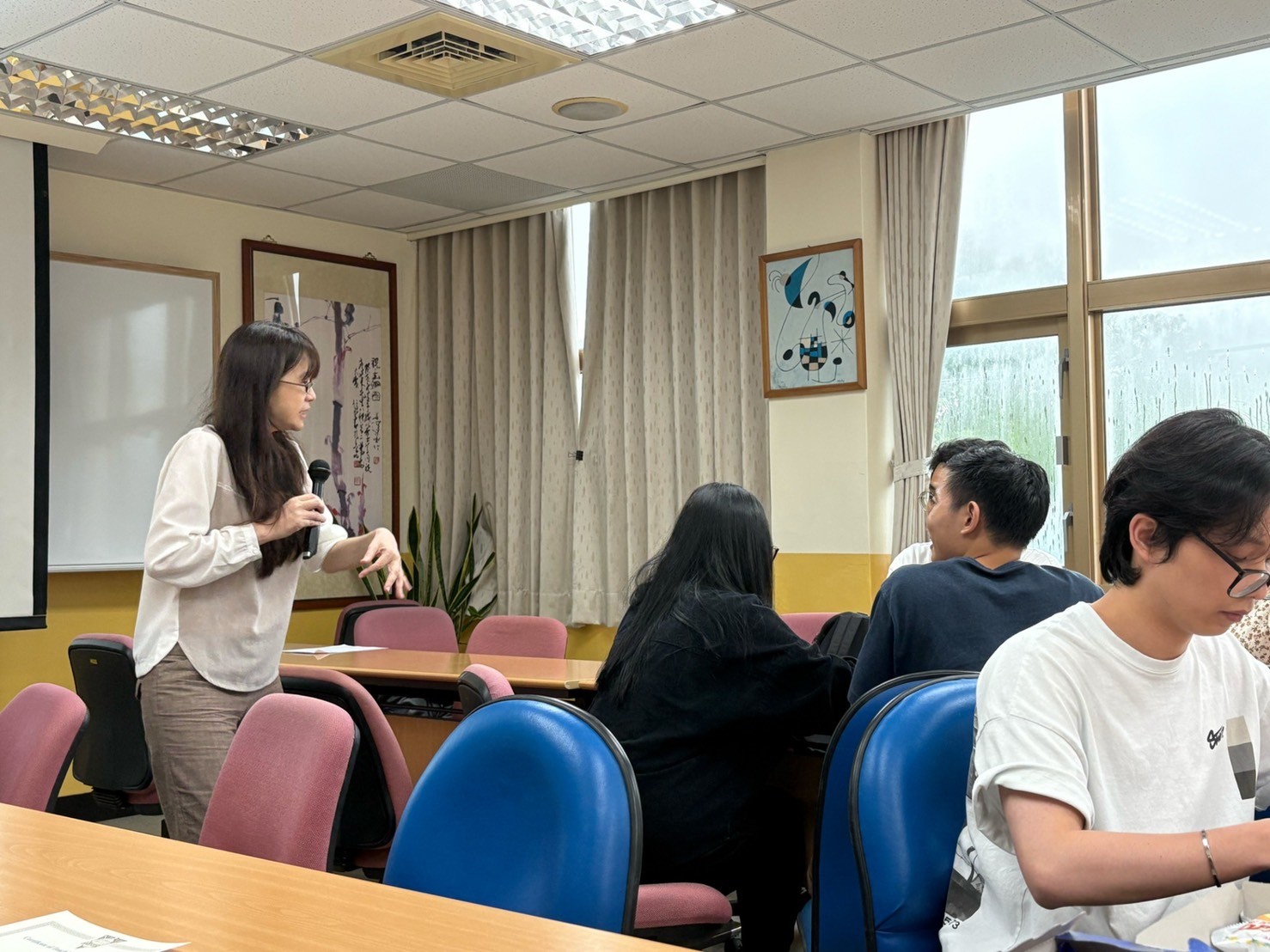
To elevate students' English proficiency and international competitiveness, the University has constructed a comprehensive English capability cultivation mechanism based on students' proficiency levels and learning needs. By editing and compiling textbooks tailored to the four core skills (listening, speaking, reading, and writing), offering diversified curricula, and introducing digital learning resources, the University has progressively established a structured learning pathway that spans from Foundational English to English for Academic Purposes (EAP) and English for Specific Purposes (ESP). This pathway effectively assists students in bridging the gap between foundational language learning, EMI (English as a Medium of Instruction) courses, and global workplace demands. Concurrently, the Office of Bilingual Learning has organized specialized seminars, inviting internal and external experts and scholars to share insights and exchange ideas online. This encourages students to engage in English-mediated interactions and cross-disciplinary learning, thereby fostering international communication capabilities and autonomous learning motivation.
During the 113 Academic Year, the University conducted two terms of non-credit intensive English enrichment programs, opening 6 classes with a cumulative enrollment of 353 faculty members, staff, and students. The course content encompassed the cultivation of English listening, speaking, reading, and writing skills, utilizing proficiency-based streaming and a small-class teaching model to optimize students' learning efficacy.
Furthermore, the University has continuously promoted courses such as Workplace English Deep-Cultivation, English for Academic Purposes (EAP), and English for Specific Purposes (ESP). In the 113 Academic Year, a total of 6 workplace English courses were offered, accumulating 216 instructional hours; through professional English applications and workplace scenario-oriented pedagogy, these courses assisted students in building professional communication capabilities and career competitive advantages.
At the same time, the University initiated a comprehensive curriculum reform for Freshman English starting from the 113 Academic Year, introducing proficiency-based streaming and a co-teaching model paired with foreign teaching assistants. Notably, the proportion of Freshman English courses conducted entirely in English has reached 68.6%. Overall, students' post-assessment scores in English proficiency demonstrated stable growth compared to their pre-assessment baselines. This indicates that the various measures implemented to enhance English proficiency have achieved preliminary success, gradually building students' confidence and capability to undertake EMI courses.
(II) Construction of the Campus EMI Pedagogy and Support Framework
Through a university-level governance structure and cross-departmental collaboration mechanisms, the University has progressively established a comprehensive support ecosystem encompassing EMI curriculum planning, faculty support, pedagogical consultation, and learning outcome assessment. Guided by regular consensus-building meetings, faculty community exchanges, and student feedback loops, the University implements rolling adjustments and continuous optimization to build a bilingual education support system that aligns with institutional development needs.
In the 113 Academic Year, the University offered a total of 254 professional EMI courses across undergraduate, master’s, and doctoral programs. Among these, the proportions of domestic sophomores and first-year master’s students who enrolled in at least one EMI course reached 52.84% and 63.52% respectively, demonstrating that EMI courses have progressively penetrated and deepened across various academic fields.
To elevate the quality of EMI instruction, the University enacted the Guidelines for Rewarding Full-Time Faculty Members Conducting Full English Instruction and the Implementation Measures for EMI Bilingual Project Faculty Professional Development Communities, encouraging instructors to dedicate themselves to EMI pedagogy and cross-disciplinary exchanges. In the 113 Academic Year, a total of 62 courses were awarded incentives for full English instruction, while professional growth communities and cross-institutional collaborations continued to expand.
In addition, the University has actively driven professional faculty certification and empowerment training. In the 113 Academic Year, 6 faculty members completed international EMI teacher certification courses, and another 32 faculty members completed EMI teacher empowerment training programs. The training modules covered critical dimensions such as AI technology applications, intercultural communication, and interactive pedagogical strategies. According to the results of the end-of-semester EMI course teaching evaluations, students generally expressed high satisfaction with the instructors' teaching methodologies and course content. This demonstrates that the University, through its faculty support and quality assurance mechanisms, has steadily enhanced the instructional quality of EMI courses and student learning outcomes.
| Students taking English-taught (EMI) courses in the 113th academic year | |||
| category | Rate of students taking at least one course taught entirely in English (EMI) | ||
| Number of people in Taiwan (%) | Number of people from Mainland China,Hong Kong and Macao (%) | Number of foreigners (%) | |
| 113 academic year/sophomore year | 52.84% | 36.36% | 67.37% |
| 113academic year/first year of master's degree | 63.52% | 25.00% | 83.67% |
| category | Number of people in Taiwan | Number of people from Mainland China,Hong Kong and Macao | Number of foreigners |
113 academic year/sophomore year (All-English lessons) | 1245 | 8 | 64 |
113academic year/first year of master's degree (All-English lessons) | 249 | 1 | 82 |
113 academic year/sophomore year (Total number of people) | 2356 | 22 | 95 |
113academic year/first year of master's degree (Total number of people) | 392 | 4 | 98 |
(III) Online Instructional Materials Segmented for Full English Instruction
To mitigate the learning difficulties arising from language barriers, the University has actively integrated digital technology with bilingual educational resources, progressively constructing a seamless learning support framework that covers "pre-class preparation, in-class assistance, and post-class review." By deploying online instructional materials, digital platforms, teaching assistants, and AI tools, the University has forged an intelligent bilingual learning environment.
Since the 110 Academic Year, all EMI courses have been assigned certified teaching assistants to support instructional delivery. In the 113 Academic Year, a total of 72 EMI teaching assistants were trained, providing critical pedagogical support to faculty and academic counseling to students. To strengthen student learning efficacy, the University established a dedicated "Full English Instruction Zone" and a "Professional Terminology Zone." Furthermore, utilizing project funding, high-definition recording equipment was procured to encourage faculty to record course instructional materials and supplementary professional terminology content, enabling students to perform pre-class preparation and post-class review. Currently, the proportion of EMI courses incorporating online auxiliary teaching has surpassed 40%.
Concurrently, the University has actively integrated AI and digital technology to assist bilingual education. In the 113 Academic Year, 4 EMI faculty workshops and related enrichment seminars were conducted, covering themes such as AI tool applications, digital instructional design, and intercultural communication, thereby stimulating pedagogical innovation and professional exchange among faculty.
Meanwhile, through English self-learning platforms, MOOCs micro-credit courses, English Chat Times, language competitions, and professional journal databases, the University has cultivated a supportive bilingual learning environment. This multifaceted approach enhances students' autonomous learning capabilities, global perspectives, and cross-cultural communication skills, progressively realizing the strategic policy goals set forth by the Ministry of Education’s "Program for Bilingual Education for Students in College/University."
Future Outlook of the Chinese Culture University Bilingual Learning Initiative
The Program for Bilingual Education for Students in College/University (EMI Initiative) at Chinese Culture University takes "deepening international exchange, enhancing student global mobility, and constructing an internationally friendly campus" as its core vision. Looking ahead, the University will continuously solidify its three core strategies—"Student Capability," "Faculty Systems," and "Smart Resources"—to drive the comprehensive and sustainable development of bilingual education.
From the Student Dimension: The University will continue to deepen the Freshman English curriculum reform and expand the curation of English for Academic Purposes (EAP), English for Specific Purposes (ESP), and international standardized English proficiency test preparation courses. By blending AI-driven digital learning tools, self-directed learning platforms, and situational English activities, the University aims to cultivate bilingual talents endowed with global mobility and cross-disciplinary capabilities.
From the Faculty Dimension: Continuous emphasis will be placed on promoting international EMI teacher certifications, faculty empowerment workshops, and faculty professional development communities, encouraging educators to utilize AI technology and innovative teaching methodologies to elevate the quality of English-medium instruction.
From the Resource Dimension: The University will consistently optimize online instructional materials, smart learning platforms, and pedagogical support systems. Backed by a rigorous quality assurance framework and rolling management-by-objectives evaluation mechanisms, the University will continuously enrich the substance of its bilingual education.
Moving forward, Chinese Culture University is committed to integrating bilingual capabilities into the fabric of daily campus life, empowering faculty and students with international engagement and mobility, and steadfastly evolving into an internationalized, digitized, and sustainable bilingual-friendly campus.