Nanhua university
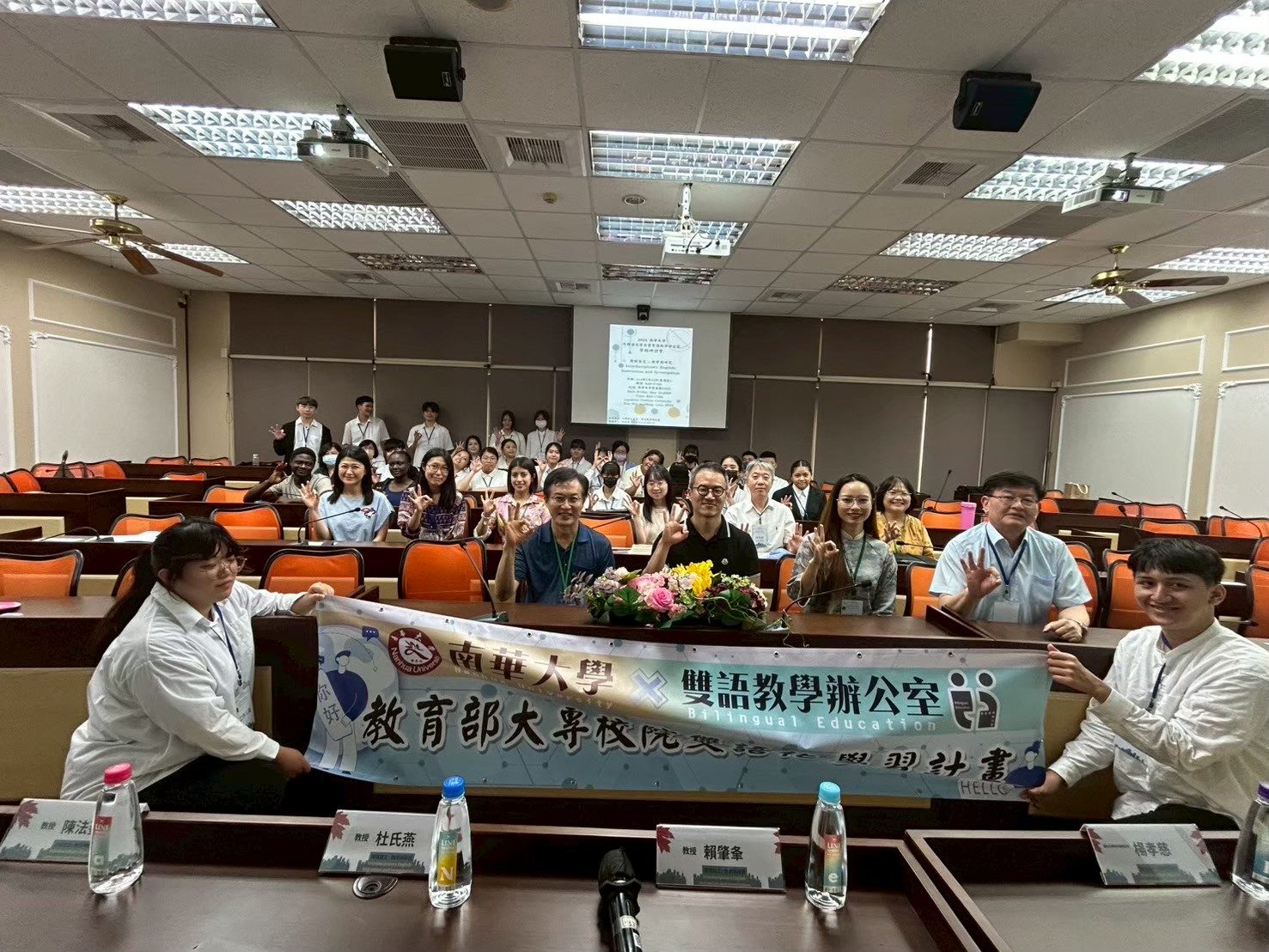
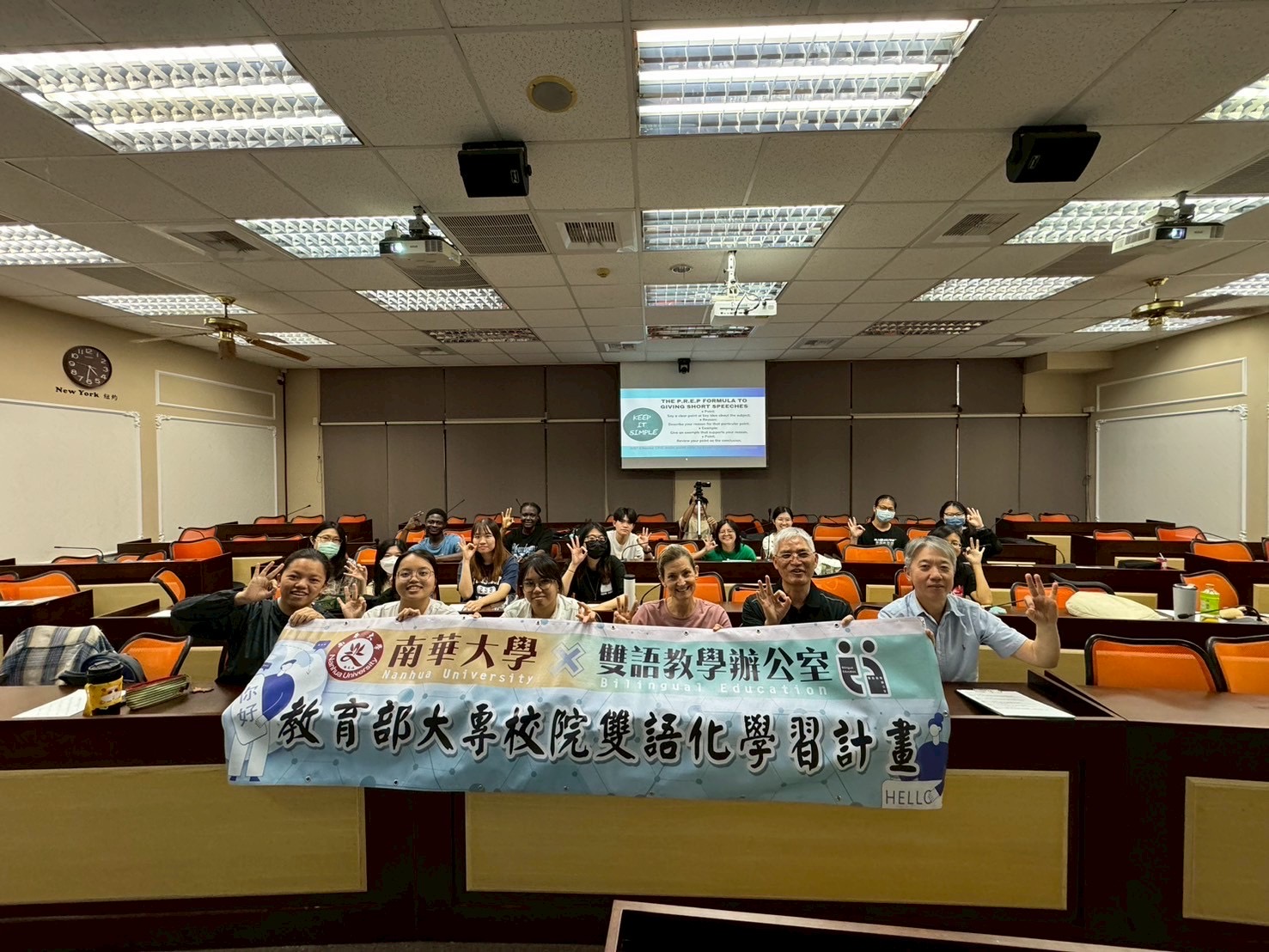
In alignment with Axis F, "Enhancing Global Exchange," of the University's Institutional Development Plan for the 2023–2027 academic years (112–116 AY), Nanhua University has proposed the NHU BEST (Better English Students & Teachers) Bilingual Learning Program. The vision of this program is to "Enhance English Proficiency and Global Perspectives, Cultivating Nanhua Graduates with International Mobility." Adhering to the philosophy of "seeking not to teach 'good students,' but to 'teach students well,'" the program echoes the university's vision to connect with national policies and international trends. From 2021 to 2025, the program has progressed transitions through five phases: "Sowing, Sprouting, Developing, Fruition, and Refining." Progressing steadily and sustainably from the sowing phase to the developing phase without rushing for quick success, the program's distinctive features, highlights of achievements, and self-evaluation for the 2024 academic year (113 AY) are outlined below.
(I) Distinctive Features
1. Focusing on "Better" rather than "Best": Achieving "Better" and Continuing to Improve
In the 2020 academic year (109 AY), only 3 graduates from the university's undergraduate day division achieved a CEFR level of B2 or higher, accounting for a mere 0.38% of the 780 graduates. Recognizing our students' weaker English proficiency, this program pragmatically proposes the BEST initiative, targeting "Better" instead of "Best." Embracing the philosophy of "no best, only better," and after years of effort, the proportion of day division undergraduate graduates reaching the B2 level in the 2024 academic year (113 AY) has grown to 0.8%, demonstrating that our students' English competence is continuously getting "Better."
2. Equal Emphasis on Competence and Literacy: Enhancing English Proficiency and Cultivating English Learning Literacy
Institutional Research (IR) analysis indicates that our students generally fall into the mid-to-lower tier within educational and social domains, characterized by noticeably lower self-confidence, particularly regarding their English proficiency. This program addresses both competence and literacy; it aims not only to enhance English language ability but also to improve students' learning methods, habits, attitudes, and environment. To this end, from the 2021 to 2023 academic years (110–112 AY), the "Nanhua University Student English Learning Literacy Scale" was developed and validated for reliability and validity, serving as a tool for effectiveness assessment and a means to elevate students' English learning literacy.
3. Developing an Interpretation System for Self-Designed Assessment Tools: PDCA Quality Assurance Based on English Testing Systems and Scales
Adhering to the four principles of "Student-Centered, Teacher-Focused, Outcome-Oriented, and Evidence-Based," the university has utilized its established foundational English language and reading proficiency testing systems. Furthermore, a standardized scale was self-developed in the 2021 academic year (110 AY) and validated in the 2022 academic year (111 AY) with favorable reliability and validity to establish norms. In the 2023 academic year (112 AY), the architecture for the testing and interpretation system was developed. An interpretation app will be developed in the future to track student English proficiency and literacy annually, utilizing the PDCA cycle to continuously enhance student capabilities.
4. Balancing Stability with Integration: Steady Sowing to Align with National Policies and International Trends Upholding a steady strategy of "avoiding haste, making solid progress," the program employs a four-step approach—"Inventory, Reference, Integration, and Foresight"—aiming to align with the "2030 Bilingual Policy" and grasp the international trend of "remote, transnational bilingual communication." Although instant results are unattainable, steady sowing and sprouting have laid a solid foundation for future development, fruition, and refinement.
(II) Highlights of Achievements
1. Establishing and Strengthening the Organizational Framework
The project constructed a "1368 Promotion Framework." On September 27, 2021, the administrative council approved the establishment of the university-level, cross-unit "Bilingual Education Program Office." The President serves as the Director, and Professor Yu-Te Kuo, Chair of the Department of Foreign Languages and Literature, was appointed as the CEO. The office is staffed with at least two professionals and provided with ample resources, working in full cooperation with the Language Teaching Center and other academic and administrative units under a clear division of labor. A newly established MBA 1+1 dual-degree program has secured an MOU with University of the West (UWest) in the United States, confirming course articulations. Additionally, the international business 2+2 dual-degree program has been enhanced to deepen curriculum internationalization. From the 2020 to 2024 academic years (109–113 AY), 24 students enrolled in the dual-degree program at UWest, 21 of whom have already graduated.
2. Promoting an Integrated Model of Formal, Non-Formal, and Latent Curricula
In the 2020 academic year (109 AY), only 20.7% of the university's English-taught courses met the Ministry of Education's (MOE) definition of EMI courses. Consequently, the university pioneered an integrated model combining formal, non-formal, and latent curricula. Formal curricula were enhanced through EMI courses; from the 2020 to 2024 academic years (109–113 AY), the proportion of domestic sophomores and first-year master's students taking EMI courses rose from 5.4% to 14.3%, and the ratio of day division undergraduate graduates achieving B2 proficiency grew from 0.38% to 0.8%. Furthermore, a transnational online EMI course, "Global Environmental Change and Sustainable Development," was co-offered with Rajamangala University of Technology Lanna in Chiang Mai, Thailand, alongside three other online EMI courses: "Topics in Buddhist Biography," "Travel English," and "Topics in Contemporary Mindfulness," successfully achieving the target for the 2024 academic year (113 AY). English curriculum maps and learning maps were created, utilizing diverse non-formal curricula and context-rich latent curricula to boost students' international mobility.
3. Strengthening Seed Teachers and Faculty Clusters, Structuring the ODIR+CTM Pedagogy, and Integrating ChatGPT for Assisted English Learning
In the 2024 academic year (113 AY), a cohort of 30 seed teachers was assembled, and they were actively supported in obtaining 36 professional certifications. EMI faculty clusters were formed to drive professional development initiatives, refining student-centered teaching models, enhancing teachers' language awareness, and fostering a positive classroom atmosphere. The program also utilized grouping and heterogeneous learning, established an 11-member EMI advisory team, and implemented a three-tier remedial teaching system for EMI students. In the 2023 academic year (112 AY), the ODIR+CTM pedagogy was structured, incorporating ChatGPT to assist English learning. A single-group pre-test and post-test design demonstrated that this pedagogy and assisted learning significantly improved students' English literacy and proficiency.
4. Substantial Improvement in Student-Faceted Indicators Across Five Categories
By ensuring foundational capabilities and encouraging course enrollment backed by support systems, the university formed 4 English elite groups and provided learning incentives to strengthen overseas study and dual-degree participation. The program reinforced level-based adaptive teaching, diversified learning, incentive systems, and learning outcome quality assurance mechanisms. From the 2020 to 2024 academic years (109–113 AY), the "ratio of English courses taught entirely in English" rose from 0% to 32%; the "ratio of sophomores and first-year master's students taking EMI courses" increased from 5.4% to 14.3%; the "ratio of English-major undergraduate graduates reaching B2" went from 2.7% to 9.5%; the "ratio of day division undergraduate graduates reaching B2" increased from 0.38% to 0.8%; and the "ratio of day division undergraduate graduates obtaining the E1 English course level" grew from 0% to 3%. This clearly demonstrates that the achievement rates for the five student-faceted indicators significantly increased over this period. Although the 2023 academic year (112 AY) target of 0.8% for English-major undergraduate graduates reaching B2 was not fully met, it still marked a substantial improvement compared to the 2020 academic year (109 AY).
5. Structuring Course and Teaching Evaluations
An EMI course quality assurance mechanism was structured to ensure instructional quality phase by phase. EMI learning outcome standards were established, and an EMI teaching feedback survey incentive and counseling mechanism was implemented. Over its three years of implementation from the 2021 to 2024 academic years (110–113 AY), the quality of English courses and instruction has steadily improved.
(III) Self-Evaluation
Spanning 2021 to 2025, this project progresses through five phases: "Sowing, Sprouting, Developing, Fruition, and Refining." Over the past three years, it has successfully transitioned from the sowing phase to the developing phase. At the institutional level, quarterly evaluation and management controls have been rigorously implemented. In September 2025 (114 AY), an institutional self-evaluation advisory meeting was convened, yielding a consensus: the project emphasizes "Better," continues to drive the integration of formal, non-formal, and latent curricula, and incorporates ChatGPT into innovative teaching. In the 2024 academic year (113 AY), the objectives of the developing phase were fulfilled, with the vast majority of the performance indicators expected by the Ministry of Education successfully met. Moving forward, the university will establish a cooperation mechanism with the MOE's Bilingual Education Resource Center to strengthen freshman English curriculum reforms, refine pedagogical methods, and enhance students' speaking and writing skills, thereby advancing deeper into the developing phase and progressively achieving the vision of cultivating bilingual talent.