Southern Taiwan University of Science and Technology
- Institutional Characteristics, Project Implementation Framework, and Summary of Outcomes
In order to enhance students’ interests in an all-English learning environment and improve teachers’ abilities in delivering EMI courses, the University has set two major objectives: a) to gradually implement English as the medium of instruction in General English courses, and b) to motivate students to enter EMI courses. After analyzing the university’s current situation as well as the students’ learning characteristics, four guiding principles have been formulated to implement this plan: bottom-up development, gradual expansion in scale, progressive advancement in difficulty, and broadening of implementation scope. Through phased expansion of course offerings and faculty capacity, the University aims to steadily increase the number of EMI courses, student participation rates, and faculty teaching competence.
The EMI program is promoted by a three-phase framework. The first phase is called the English proficiency development stage, which lasts for three consecutive semesters. The focus is to improve students’ general English for listening, speaking, reading, and writing. The second phase, lasting for two semesters, serves as a bridge to help students adapt to all-English courses in their academic fields. In this phase, both students and instructors gradually adapt to EMI while allowing limited use of Mandarin for support. After completing the second phase of the program, students who have reached CEFR B2 or above are eligible to enter the third phase. The third phase emphasizes effective learning in EMI courses. Students should be capable of taking all-English courses, enrolling in international programs, or participating in international exchange student programs with overseas partner universities.
For faculty development, the University continues to support EMI faculty communities and professional development activities while actively cultivating new EMI instructors. To increase the number of qualified EMI instructors, each college selects teachers to participate in EMI training courses organized by the resource centers for bilingual education. The faculty training is conducted over three stages: the first phase focuses on the development of EMI teaching knowledge and skills, such as establishing the language and techniques for EMI; the second phase involves EMI teaching practice and trial teaching; the third stage is the EMI teaching practicum, where the newly trained teachers offer formal EMI courses.
Through this three-phase framework, the University seeks to achieve three major objectives: (1) establish an effective instructional model for enhancing students’ English proficiency; (2) develop comprehensive support mechanisms that strengthen faculty English competence and participation in EMI teaching, thereby expanding the EMI teaching workforce; and (3) establish resource-sharing and inter-institutional collaboration mechanisms to ensure the sustainable development of EMI education.
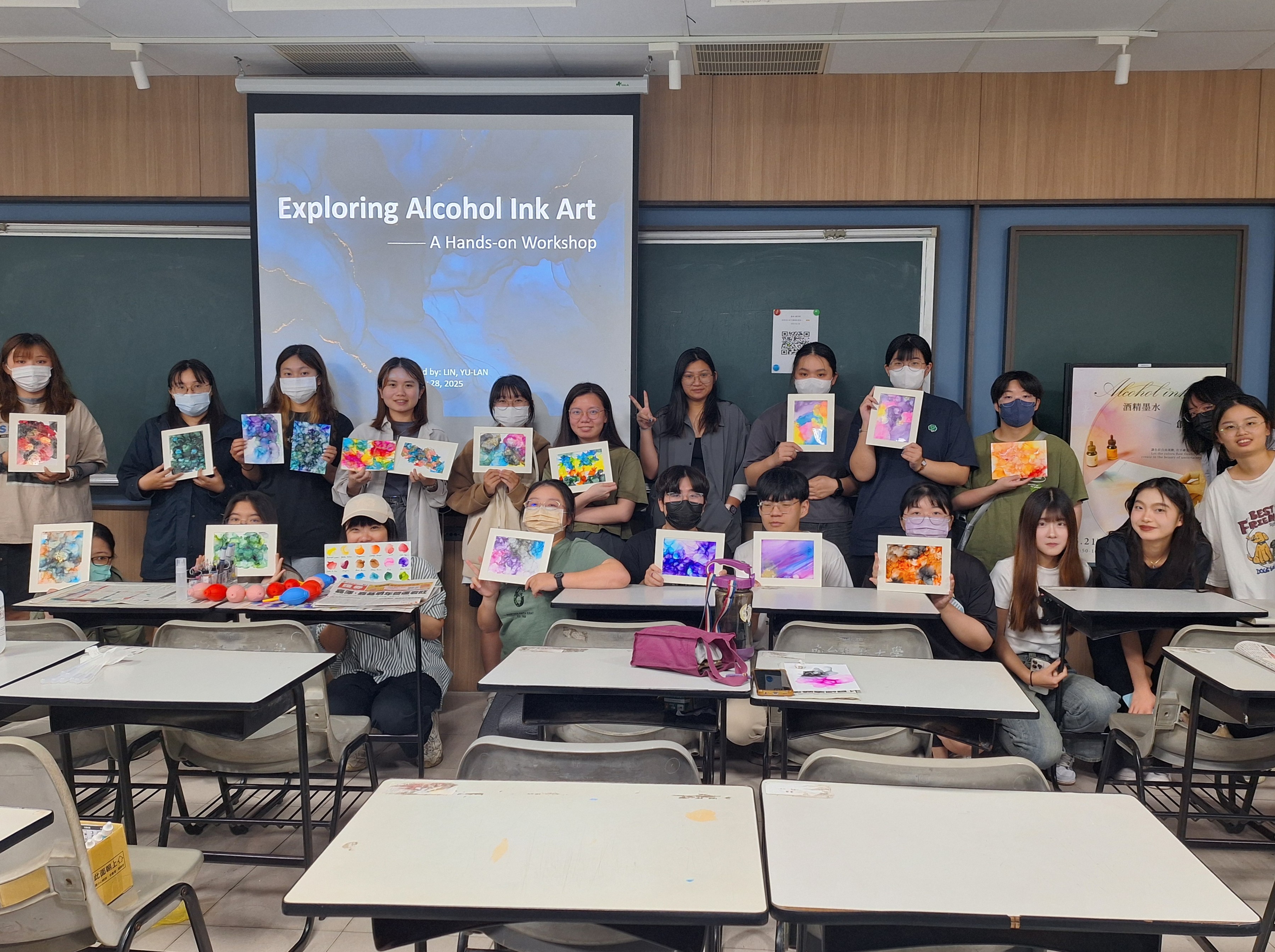
In terms of implementation, our school promotes bilingual education through four dimensions: curriculum design, learning support, intercultural exchange, and student engagement activities. Centered on the concept of “English in Everyday Life,” these initiatives aim to strengthen students’ language proficiency through authentic daily experiences. In addition to establishing support and assessment systems for self-directed English learning, we also make full use of our internationalized campus resources by arranging classroom interactions between international and local students, creating English communication zones, and organizing online cultural exchange activities with overseas institutions. Furthermore, in response to the characteristics and strengths of students in technological and vocational education, our school promotes EMI by offering practice-oriented EMI foundation courses. We also provide thematic EMI micro-courses under the title “English for Everyday Life.” Through these innovative learning experiences, which differ from traditional English teaching models, students gradually develop the confidence and motivation to learn in an all-English environment.
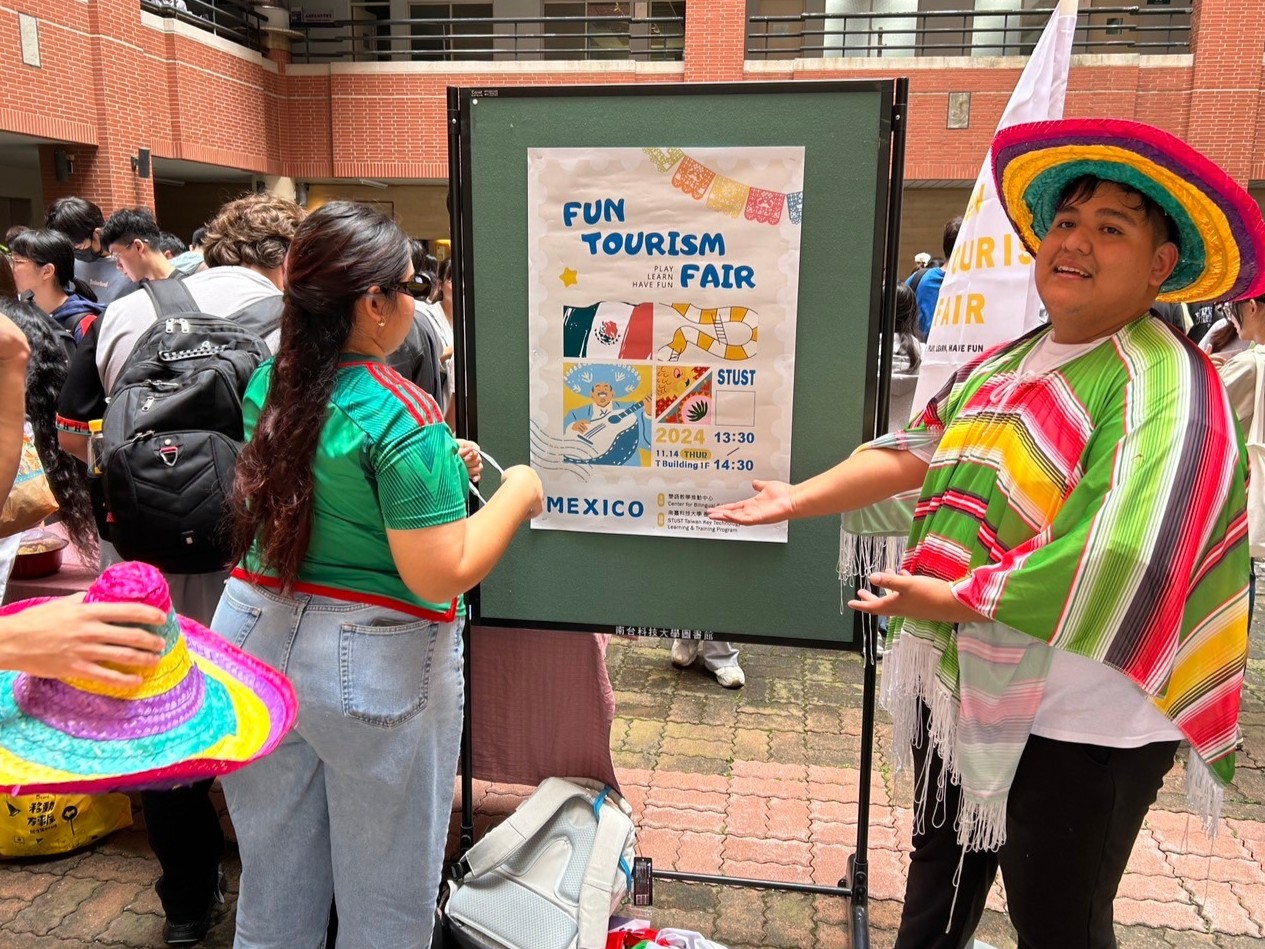
To cultivate a robust on-campus English-learning environment and expand avenues for practical language application, each semester the Center for Bilingual Education (CFBE) at STUST organizes the student-led 'Fun Fair' Marketplace, which is autonomously planned and executed by students. The event incorporates diverse themes—such as tourism, sustainability, and cross-cultural awareness—into interactive English challenge activities. Through this edutainment-based approach, seed student leaders actively stimulate greater motivation for English learning among their peers, thereby broadening student participation and fostering a vibrant, diversified English-learning environment.
The key execution highlights of the bilingual initiative driven by the CFBE at STUST are summarized as follows:
1. Established innovative instructional models aimed at enhancing students' English proficiency across all university-wide language courses;
2. Formulated a comprehensive EMI faculty training and incentive framework to systematically expand the EMI teaching workforce;
3. Cultivated immersive, real-world English-learning environments by positioning international students as vital bilingual education resources;
Instituted English tutoring, self-access learning, and competency assessment mechanisms to reinforce support for speaking and writing skills.
- Methodologies and Operational Procedures for Institutional Self-Evaluation
The University adopts the PDCA (Plan–Do–Check–Act) quality management cycle to continuously monitor, evaluate, and improve project implementation through monthly and quarterly review mechanisms.
1. Monthly reviews are conducted by project implementation units to monitor progress and address operational issues.
2. In addition to reviewing the implementation outcomes of the project during the Center's meetings at the beginning and end of each semester, quarterly reviews are chaired by the Vice President and attended by college deans and senior administrators, including the Academic Affairs Office, International Affairs Office, and General Education Center. These reviews evaluate project progress, provide recommendations, and promote institution-wide collaboration in advancing the bilingual education initiative.
For course-level evaluation, post-course satisfaction surveys and individual interviews are conducted to assess learning outcomes and identify student needs. Feedback is used to refine course design and instructional practices. Online surveys employing a five-point Likert scale are administered for English proficiency development courses, self-directed learning programs, and English roundtable activities. More than 70% of participating students reported satisfaction with both course content and learning outcomes.
In addition, external English proficiency assessments are employed to evaluate student learning outcomes. The Dynamic Placement Test (DPT) is administered regularly, and students who achieve outstanding results are provided with subsidies to take standardized English tests such as CSEPT, TOEIC, or IELTS. These measures enable the University to effectively monitor and evaluate the impact of its instructional initiatives.