CHUNG SHAN MEDICAL UNIVERSITY
Distinctive Features of the University's Bilingual Education Development Plan
As a medical university, our institution recognizes that medical knowledge is rapidly evolving and that English plays a crucial role in communication within the medical field. Therefore, we have made fostering global communication and cross-cultural skills among our faculty and students a core pillar of our institutional development strategy. To realize this vision, we actively champion bilingual education initiatives and encourage active engagement from our entire campus community.
Achievements and Highlights
1. Faculty Development
(1) Enhancing Faculty Competence in EMI Instruction
In the first semester of Academic Year 2024–2025, we collaborated with National Cheng Kung University to provide EMI teacher training, with 20 faculty members successfully completing the program. In the second semester, we co-organized an EMI teacher training program with the American Institute in Taiwan, through which 23 faculty members completed the training. To date, 67 faculty members have earned EMI teaching certification, accounting for approximately 16% of our 410 full-time faculty.
(2) Empowering Faculty in EMI Course Design and Technology Integration
- Innovation in Digital Teaching Materials and AI Applications:
We organized a series of 14 workshops and seminars on XR technologies, 3D printing, AI-powered tools, and Canva AI design. These initiatives enhanced faculty members' capabilities in material development, innovative pedagogy, and technology integration within EMI courses. - Faculty Communities and Inter-University Collaboration:
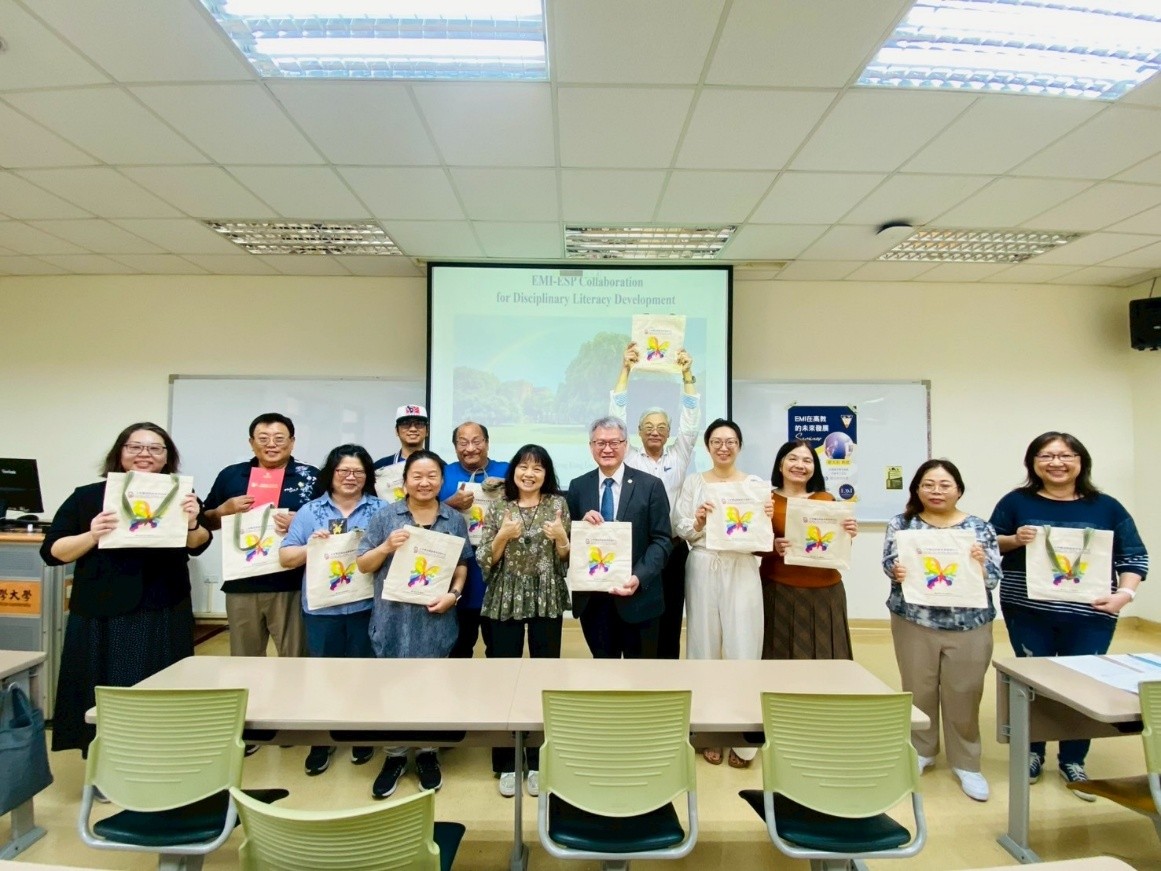
We sustained our internal EMI Faculty Community while leveraging resources from MOE resource centers, such as National Taiwan University, to launch an Inter-University EMI Faculty Support Group. We hosted 20 events dedicated to sharing best practices and teaching experiences, successfully driving interdisciplinary and cross-institutional resource integration.
2. Student Development
(1) Steady growth in the proportion of full English language courses: In Academic Year 2024–2025, 43% of English language courses (20 out of 47 courses) were delivered entirely in English, exceeding the annual target of 35%.
(2) Target Achievement in EMI Course Enrollment among Sophomore and First-Year Graduate Students: A total of 11% of sophomore students (146 out of 1,325) completed at least one EMI course, while 5% of first-year master's students (13 out of 240) enrolled in at least one EMI course, meeting the established targets.
(3) Continuous Improvement in Freshmen's English Proficiency: Results from the 2024 English placement test for first-year students showed that 51.3% achieved CEFR B1 level or above, representing a notable increase from 42% in 2023.
(4) English Proficiency Support and Capacity Building: Through the BEST English Proficiency Test (BESTEP) and the CSMU English Placement Test (CEPT), approximately 30–50% of students across cohorts have attained CEFR B1 level or above, while around 40% have reached CEFR B2 level or above. Prior to entering their sophomore year in Academic Year 2024–2025, 334 students (19.4%) had already met our English graduation requirement.
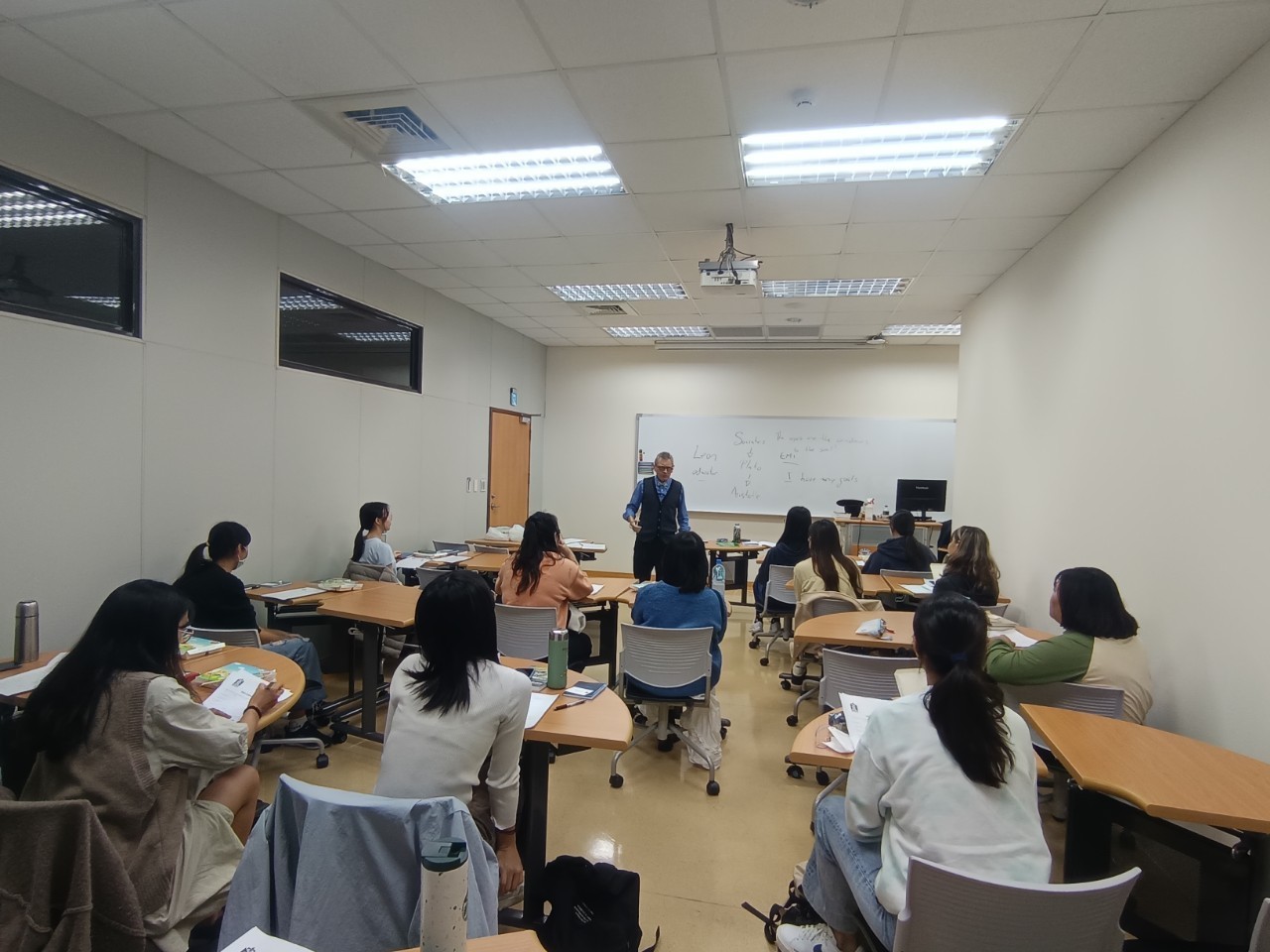
(5) Departmental and Student Organization Activities: In 2024, the EMI Center supported activities organized by the Academic English Exchange and Intercultural Communication Club and the Department of Speech-Language Pathology and Audiology. The student club hosted two lectures on “Current International Issues through News Discussions” and “Experiences in Intercultural Communication.” Meanwhile, the Department of Speech-Language Pathology and Audiology organized a seven-session lecture series titled “EMI & SLPA: Developing a Global Perspective in Speech-Language Pathology and Audiology—What Can You Learn Before Participating in Overseas Summer Practicums?” These activities provided students with opportunities to enhance their English-speaking skills while gaining insights into American culture.
(6) English Competitions and an Immersive English-Learning Environment:
We organized the MyET English Speaking Contest, which attracted 40 participants, and the Campus English Painting Competition, which received submissions from 9 students. These activities helped foster an English-rich campus environment and encouraged students to actively engage in English learning beyond the classroom.
3. Curriculum Development
(1) Expansion of EMI Course Offerings: A comprehensive review of the English-language and English-medium courses in Academic Year 2024–2025 indicated that most offerings were elective courses. For first- and second-year undergraduate students and first-year master's students, a total of 30 EGP (English for General Purposes), EAP (English for Academic Purposes), and ESP (English for Specific Purposes) courses were offered, alongside 20 EMI courses. Our school aims to steadily increase the number of EMI courses in the coming years.
(2) Promotion of International Pathway Programs: Through collaboration among the EMI Center, the Office of International Affairs, and the Department of Healthcare Administration, we have promoted integrated bachelor's-to-master's pathway programs with Andrews University and Duquesne University. These initiatives provide students with greater opportunities to engage directly in international academic programs and learning experiences.
(3) Diversified Student Enhancement Programs: We organized a variety of short-term EGP, EAP, and ESP courses, including Public Speaking for Health Education, English Conversation for International Issues, and Academic English Writing for Healthcare Professionals. In addition, summer programs such as the Spoken English Intensive Summer Program and the BLS Certification English Immersion Course were developed to strengthen students' practical English communication skills and professional application of English in healthcare-related contexts.
4. Resource Sharing and Inter-Institutional Collaboration
We continue to leverage activities and resources provided by regional resource centers designated by the Ministry of Education. These include programs and professional development opportunities offered by National Taiwan University, National Cheng Kung University, Fulbright Taiwan, and the Language Training and Testing Center. Through active participation in these initiatives, our school strengthens institutional capacity, enhances faculty and student development, and promotes the effective implementation of bilingual education.
5. Supporting Measures
To achieve the performance indicators expected of a BEST Program institution, the EMI Center has implemented a range of supporting measures. EMI Teaching Assistant (TA) workshops are organized once each semester to enhance TAs’ understanding of EMI pedagogy and classroom support strategies. In Academic Year 2024–2025, a total of 19 certified EMI teaching assistants were matched with EMI courses, providing both instructional and learning support for faculty and students. In addition, we continue to upgrade the hardware and software facilities of EMI classrooms, ensuring that high-quality teaching and learning resources are available to support bilingual education. Furthermore, an Administrative English Program is offered annually for University staff members to strengthen their English communication skills and support the ongoing international campus environment.
6. Monitoring, Quality Assurance Mechanisms, and Institutional Systems
(1) Student Course Incentive Scheme: In Academic Year 2024–2025, a total of 43 students received EMI course completion incentives, bringing the cumulative number to 356 since the implementation of the policy. In addition, students are encouraged to take Coursera courses, which may be recognized for credit transfer or eligible for incentive applications in accordance with departmental regulations.
(2) Internal Self-Evaluation of Program Implementation: The EMI Center operates under the guidance of our school’s Committee for the Promotion and Consultation of EMI Courses, which oversees strategic goals, development directions, resource allocation, EMI course implementation, and the optimization of related faculty and student reward systems. The committee convenes each semester, during which the EMI Center reports on ongoing initiatives, and committee members provide feedback on progress, planning, outcomes, and performance indicators.
(3) Internal Evaluation of EMI Courses: EMI course applications are submitted by faculty members and approved through review by the aforementioned committee. Instructors are required to maintain course documentation throughout the semester and complete a self-evaluation at the end of the course. Meanwhile, the Office of Academic Affairs collects and analyzes student satisfaction survey results, which are submitted to the committee for review and serve as a basis for continuous improvement. In Academic Year 2024–2025, the overall student satisfaction rate reached 94.7%. For courses with lower satisfaction ratings, instructors have adjusted their teaching strategies based on students’ feedback.
(4) Evaluation of EMI Teaching Quality: Instructors are required to implement teaching and quality assurance procedures in accordance with our EMI Course Certification and Quality Monitoring Guidelines. If a course does not pass review, instructors may revise their teaching plans based on students’ or peers’ feedback and reapply for certification. Faculty members are also encouraged to participate in one-on-one course consultation sessions to further enhance teaching and course quality.
(5) Administrative Staff Capacity Building: In Academic Year 2024–2025, two Administrative English training sessions were conducted for university staff, strengthening English communication skills and supporting the comprehensive implementation of campus internationalization initiatives.