Minghsin University of Science and Technology
Project on Creating an International and Diverse Bilingual Environment
MingHsin University of Science and Technology (MUST)
Over the past five years, MUST has implemented the Bilingual Education Initiative through two consecutive phases. Building on an institution-wide approach, the project has evolved from establishing foundational support systems to strengthening discipline-specific language learning and interdisciplinary collaboration. As a result, the University has developed a comprehensive framework that integrates curriculum development, faculty support, student learning assistance, assessment practices, and international engagement. Major achievements between August 2024 and July 2025 are outlined below.
(1) English Placement and ESP Curriculum Development
Recognizing the wide range of English proficiency levels among incoming students, the University has established a placement-based English curriculum alongside a structured English for Specific Purposes (ESP) program. This approach allows students to receive instruction that aligns with both their language proficiency and academic needs. In the 2024 academic year, 1,073 freshmen enrolled in 20 sections of Freshman English, while 975 sophomores took ESP courses offered across 21 sections. Together, these courses provide a pathway for students to strengthen their general English proficiency while developing the language skills required in their respective disciplines.
(2) Ongoing Professional Development for EMI and ESP Instructors
Supporting faculty development remains a central component of the University's bilingual education efforts. During the 2024 academic year, seven professional development workshops were organized, attracting a total of 401 participants. In addition, 15 faculty members attended external EMI-related training programs. The University also encourages interdisciplinary classroom observations and teaching exchanges. Faculty members from the Bilingual Education Center worked closely with colleagues from departments such as Computer Science and Information Engineering, Industrial Engineering and Management, Semiconductor and Optoelectronic Technology, and Multimedia and Game Development. These opportunities have fostered valuable dialogue on teaching practices and contributed to the continuous refinement of EMI and ESP courses.
(3) Positive Student Feedback on EMI and Pre-EMI Courses
Student feedback indicates that EMI and Pre-EMI courses have been well received. Many students reported that the courses provided sufficient language support and helped them engage more confidently in English-medium learning environments. On a five-point scale, students rated the relevance and usefulness of course content at an average of 4.4. The use of instructional materials such as visuals, videos, and other multimedia resources received an average rating of 4.5, the highest among all survey items. Students also highlighted instructors’ efforts to encourage classroom interaction and create a supportive learning atmosphere. Overall, the findings suggest that students view the EMI learning experience positively and that current support measures are helping them adapt to English-medium instruction.
(4) English Assessment and Student Support Services
To encourage continuous language development, the University combines English proficiency benchmarks with a range of assessment and support services. During the 2024 academic year, six English proficiency tests were administered, attracting 619 participants. More than 60 percent of test takers achieved the equivalent of CEFR A2 or above. Outside the classroom, students can access additional support through the English Learning Corner, which offers assistance with speaking, writing, translation, and test preparation. More than 60 students make use of these services each semester, providing an important complement to formal coursework.
(5) Development of Semiconductor English Learning Materials
One distinctive feature of the University's bilingual education initiative is the development of an ESP textbook, Semiconductor Basics: 30 essential questions for understanding the core of technology, designed to help students from non-technical backgrounds gain access to semiconductor-related knowledge and terminology. The textbook was co-authored by Professor Tzu-Chia Chao, Dean of the College of Humanities and Design, and Director Pei-Chun Yu of the Bilingual Education Center, with academic support from faculty members in the College of Semiconductor Technology. Through illustrations, audio resources, examples, and practice activities, the textbook introduces key concepts in semiconductor technology in a clear and accessible way while simultaneously developing students’ English proficiency.
(6) International Exchange and Intercultural Learning Opportunities
The University continues to provide opportunities for students to engage with international peers and develop intercultural competence. One example is the Chinese language and cultural exchange program hosted for visiting high school students from Utah, USA, which created meaningful opportunities for interaction and language practice. In addition, students participated in a range of international workshops and exchange activities that strengthened both their English communication skills and their understanding of different cultural perspectives.
(7) Building an English-Friendly Campus Environment
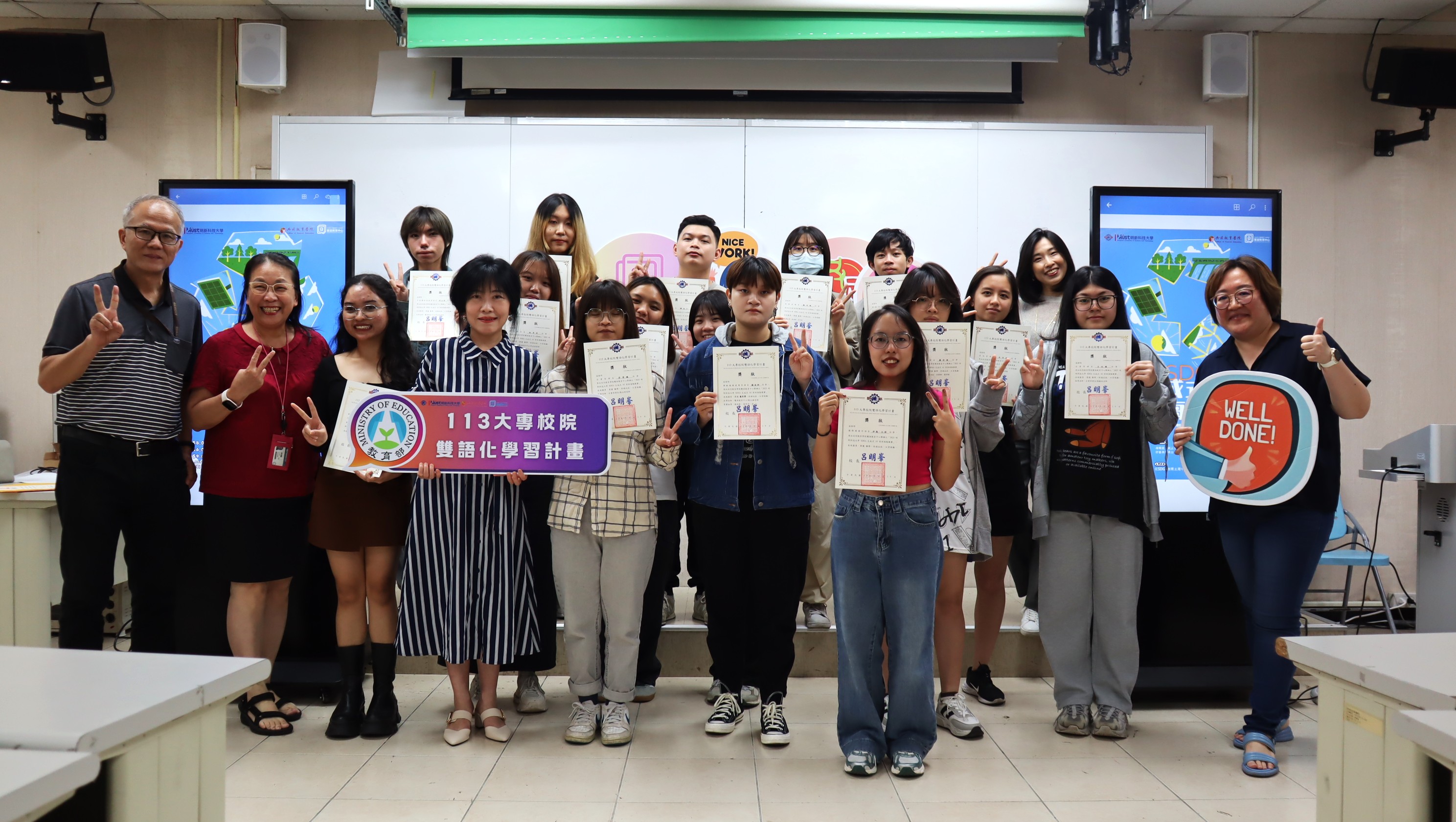
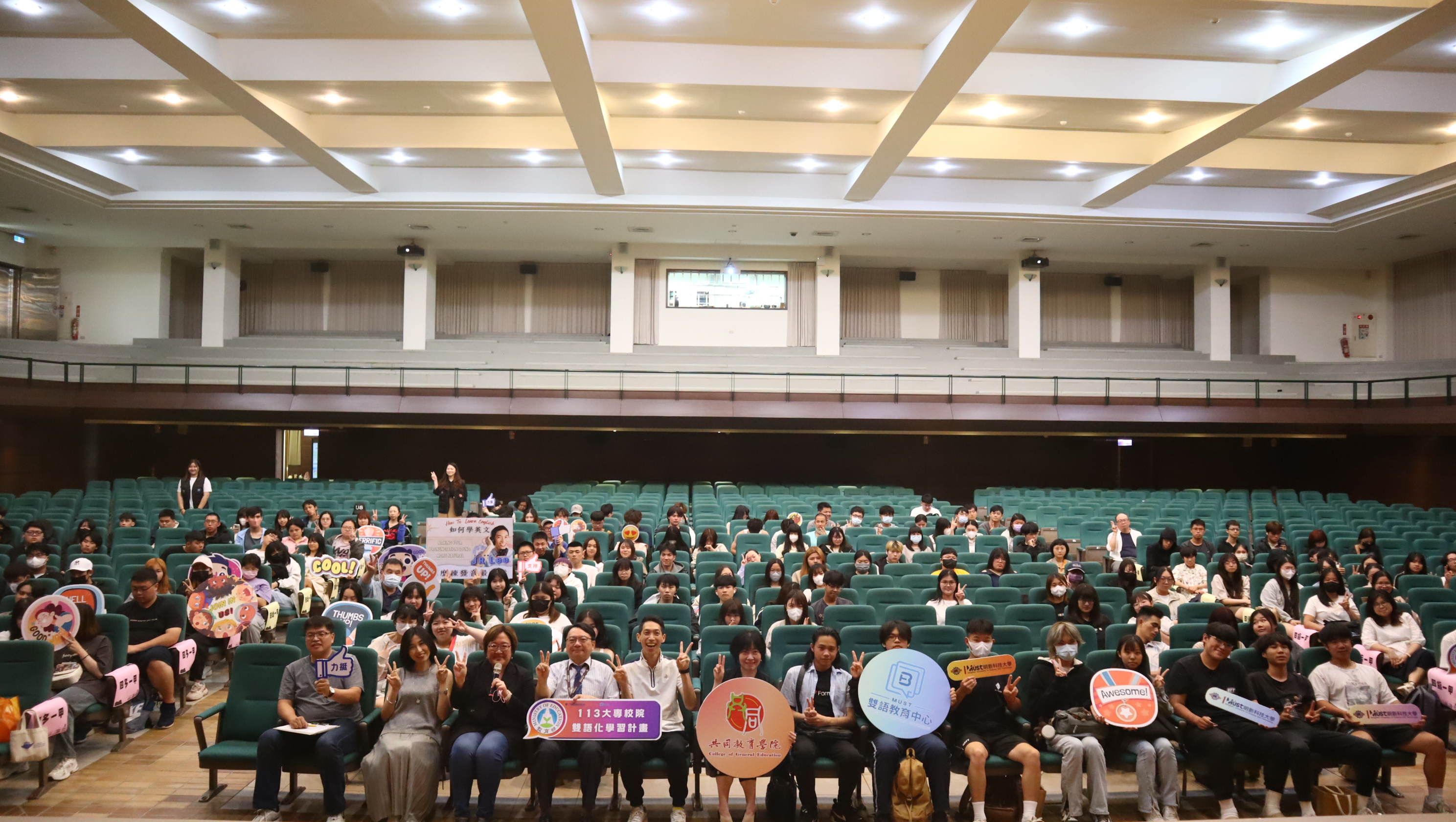
Beyond the classroom, the University seeks to create an environment where students can use English in authentic and meaningful contexts. During the 2024 academic year, seven campus-wide bilingual events were organized, attracting more than 1,200 participants.These activities provided opportunities for students to engage with English through interactive and real-world experiences, helping to increase motivation, confidence, and language use beyond formal coursework.
(8) Self-Evaluation and Continuous Improvement
Continuous improvement is an integral part of the University's bilingual education initiative. Information gathered from course evaluations, student and faculty feedback, peer observations, and learning outcome assessments is regularly reviewed and used to inform future planning and resource allocation.
The University also draws on external expertise and teaching consultations to evaluate the effectiveness of EMI and English-language programs. Through this ongoing cycle of review and refinement, the University aims to ensure that its bilingual education initiatives remain responsive to student needs and continue to support meaningful learning outcomes.