Wenzao Ursuline University of Languages-College of English and International Studies
Effectiveness and Highlights of the 113 Academic Year Bilingual Project
Preface
During the 113 academic year, the College of International Culture, Education, and Foreign Affairs at Wenzao Ursuline University of Languages implemented the "Project on Bilingual Education for Students in College" (BEST Project). The key achievements are summarized into two dimentions below:
Faculty Dimension: Integration of AI into EMI teaching, faculty professional development (EMI capacity building), and international networks.
Student Dimension: Cultivation of bilingual competence, application of AI in language learning, and cross-cultural communication skills.
Faculty Dimension
During the 113 academic year, the College of International Cultural Education and Foreign Affairs continued to advance teachers' professional development in EMI instruction. Through professional learning communities, peer reviews (classroom observations), co-teaching, international exchanges, and workshops, the college established a comprehensive EMI teaching support system. The BEST project for this academic year emphasized collaboration and experience-sharing among faculty members to foster a sustainable bilingual teaching culture.
At the same time, the college actively promoted the integration of AI into EMI instruction. It established several faculty communities, including the Digital Humanities Community, the AI-Driven EMI Teaching Community, and the International Affairs, AI, and EMI Synergy Community. Through regular workshops, co-preparation of courses, and pedagogical experiments, teachers were guided to integrate generative AI tools into their course designs and classroom activities. The Digital Humanities Community further served as a cultivation platform for "AI seed teachers," driving faculty participation in institutional innovative curriculum designs and AI lesson plan grant projects. This demonstrated the college’s forward-thinking and leadership in integrating AI with bilingual education.
- Instructional Practice and Quality
EMI Co-teaching with Industry Experts: A total of 62 classes of EMI co-taught courses were conducted. By combining the expertise of academic professors and industry lecturers, the courses balanced professional knowledge delivery with language support, achieving a student satisfaction score of 4.6 out of 5.
International Synchronous Co-teaching: International scholars were invited to co-teach 15 EMI courses. This allowed students to engage directly with global academic perspectives and diverse cultural backgrounds, enhancing the internationalization of the curriculum and yielding an overall satisfaction score of 4.5 out of 5.
EMI Capacity Building: In addition to providing ongoing Cambridge EMI online training, the college launched a specialized project workshop on AI and EMI integration during the 113 academic year. This included corporate site visits to explore the practical applications of AI in bilingual education. A total of 27 teachers completed the Cambridge training, which covered classroom management, lesson plan design, communicative language teaching (CLT), and mixed-ability classroom teaching, effectively enhancing teachers' EMI delivery and instructional strategies.
Quality Assurance & Classroom Interaction: The college continuously improved course quality through observation and feedback mechanisms. This academic year, 35 EMI classroom observations were completed. The average classroom interaction time reached 13.3 minutes per session (accounting for 26% of class time), indicating that teachers have successfully adopted strategies that promote student engagement.
Innovation and Sharing: Supported by the university’s reward and subsidy system, faculty actively pushed for instructional innovation. In the university-wide AI-Integrated Lesson Plan Achievement Presentation, 25 teachers presented their results—12 of whom were from our college, with 6 of those presentations featuring EMI courses. Teachers utilized tools such as ChatGPT, Canva, and VR to design teaching materials and classroom activities. This not only boosted student engagement but also encouraged faculty across the university to collaboratively explore AI-EMI pedagogical practices.
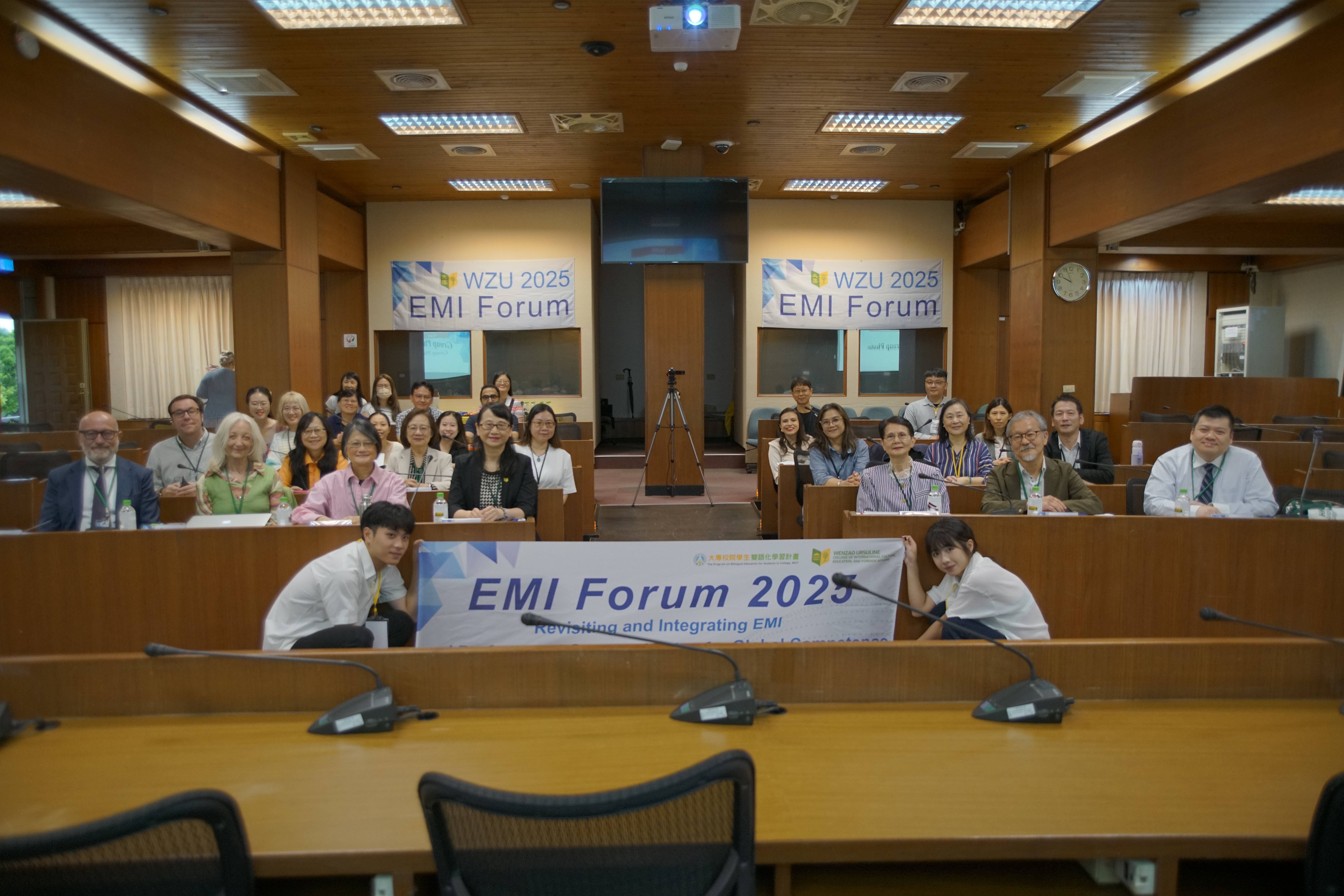
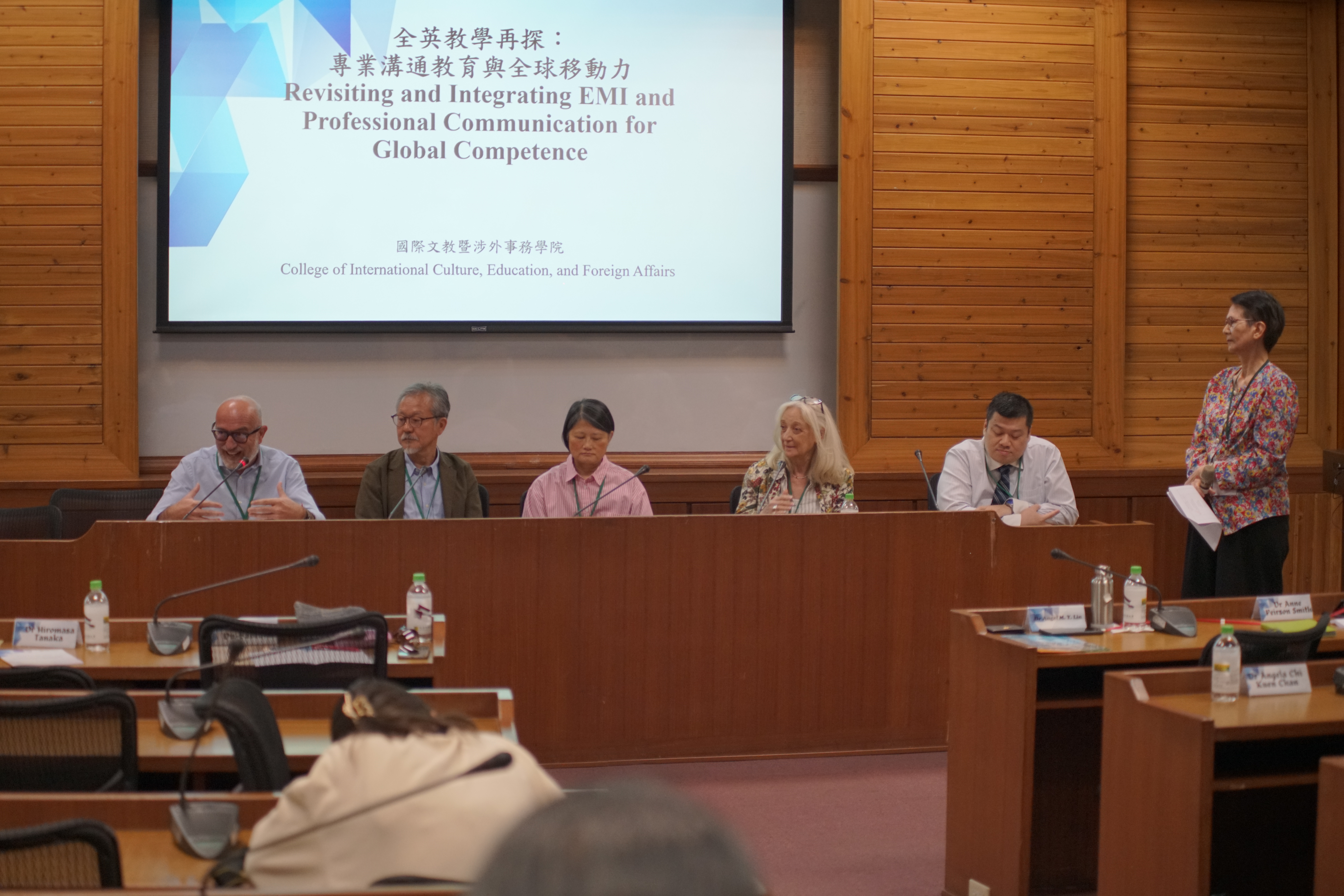
International Forum: The college hosted an EMI International Forum, inviting multiple international scholars to participate. This expanded the international horizons of both internal and external faculty, while facilitating cross-institutional and international collaboration.
Student Dimension
During the 113 academic year, the College of International Cultural Education and Foreign Affairs structured its EMI, EAP (English for Academic Purposes), and ESP (English for Specific Purposes) curricula to merge language learning with professional knowledge cultivation, helping students improve both their English communication skills and professional applications.
- Curriculum Offerings & Satisfaction
The college offered 123 EMI courses, 24 ESP courses, and 4 EAP courses. The overall student satisfaction score reached 4.24 out of 5, reflecting positive student feedback regarding the bilingual learning environment and course quality.
- Student Support Systems
To help students adapt to EMI courses, a comprehensive pre-class, in-class, and post-class support system was built. This included English proficiency testing and placement systems, the Language Diagnostic and Counseling Center (LDCC), speaking and writing tutoring, and remedial teaching for specialized courses, all aimed at reducing student anxiety and enhancing learning outcomes.
Remedial Teaching: The Office of Academic Affairs offered 43 remedial classes, drawing a cumulative attendance of 755 students, with an overall improvement rate of 87.2%.
"CMI Little Tutor" Pilot Program: The college pioneered the "CMI Little Tutor" (CMI Xiao-Fu-Zi) peer-tutoring system. Through after-school small-group tutoring, it helped students deepen their understanding of course material, earning high praise from students. Through the integration of university-level and college-level resources, a dual-support network balancing language proficiency and professional study has been established.
AI Integration & Cross-Disciplinary Skills: The college actively drove AI-integrated learning and cross-disciplinary competency. Beyond utilizing generative AI tools within regular coursework, the college hosted the nation's first English Prompt Engineering Competition and organized Culture Corner activities. These initiatives encouraged students to use English for creative writing, critical thinking, and cross-cultural communication. The Culture Corner events blended Sustainable Development Goals (SDGs), international cultural issues, and AI-creation themes. Student participation grew significantly, showcasing high engagement with both English learning and emerging technologies.
Future Development
Upholding Wenzao Ursuline University of Languages' proud 60-year tradition of excellence in language education, the College of International Culture, Education, and Foreign Affairs remains dedicated to cultivating talents with "Professional Expertise + Bilingual Competence."
Looking ahead, the college will continue to integrate AI into language learning, while enhancing students' Global Citizenship literacy, laying a profound foundation of professionalism for students to be professionals of international mobility and employability.