Tamkang University
Since joining the Ministry of Education’s Bilingual Education Program in Academic Year 2021, Tamkang University (TKU) has actively promoted bilingual education with a focus on enhancing English proficiency, strengthening EMI (English as a Medium of Instruction) teaching, and fostering students’ international mobility. Aligned with its internationalization strategy, these efforts aim to create a high-quality learning environment that integrates both professional knowledge and language competence. With coordination by the EMI Promotion Center and implementation across colleges based on disciplinary strengths, steady progress has been achieved in recent years.
In terms of EMI course development, the College of International Affairs has reached a mature level of implementation, offering three fully English-taught undergraduate programs and four graduate institutes. The EMI course ratio stands at 69.3%, with more than 79% of full-time faculty having EMI teaching experience, and all undergraduate credits delivered entirely in English. The College of Business and Management, the largest business school in Taiwan, offers 13 undergraduate programs and 13 graduate institutes, including English-taught programs and a dual-degree master’s program. Due to its large student population, EMI expansion remains more gradual, with current figures at 14.4% for course ratio and 36% for faculty participation. In addition, ESP (English for Specific Purposes) and EAP (English for Academic Purposes) courses are offered to strengthen students’ academic and professional English abilities.
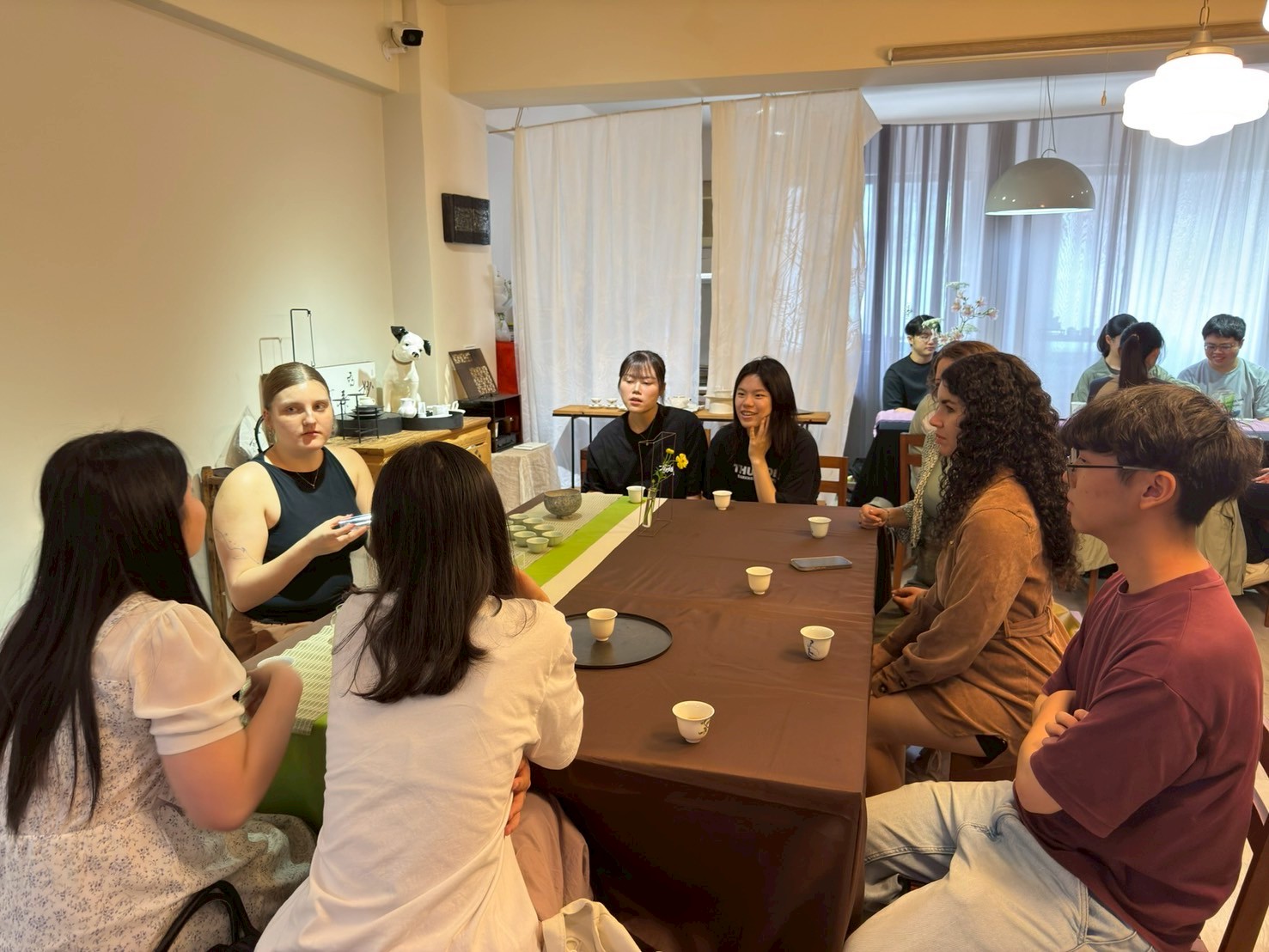
To support student learning, TKU provides a comprehensive support system that includes online learning platforms such as MyET and TutorABC, enabling flexible and level-based self-directed learning. Remedial English courses have been implemented through eight classes, with a total of 139 participants. EMI teaching support is further strengthened through 39 Teaching Assistants (TAs), who assist in 57 courses and receive relevant training to enhance their effectiveness. TKU has also organized 26 English-medium lectures featuring international scholars and industry professionals, broadening students’ global perspectives and practical knowledge. A distinctive highlight is the integration of Taiwanese tea culture into English learning activities, through which students develop the ability to present local culture in English while strengthening cross-cultural communication and cultural awareness. This approach reflects a progression from language learning to cultural expression and international communication.
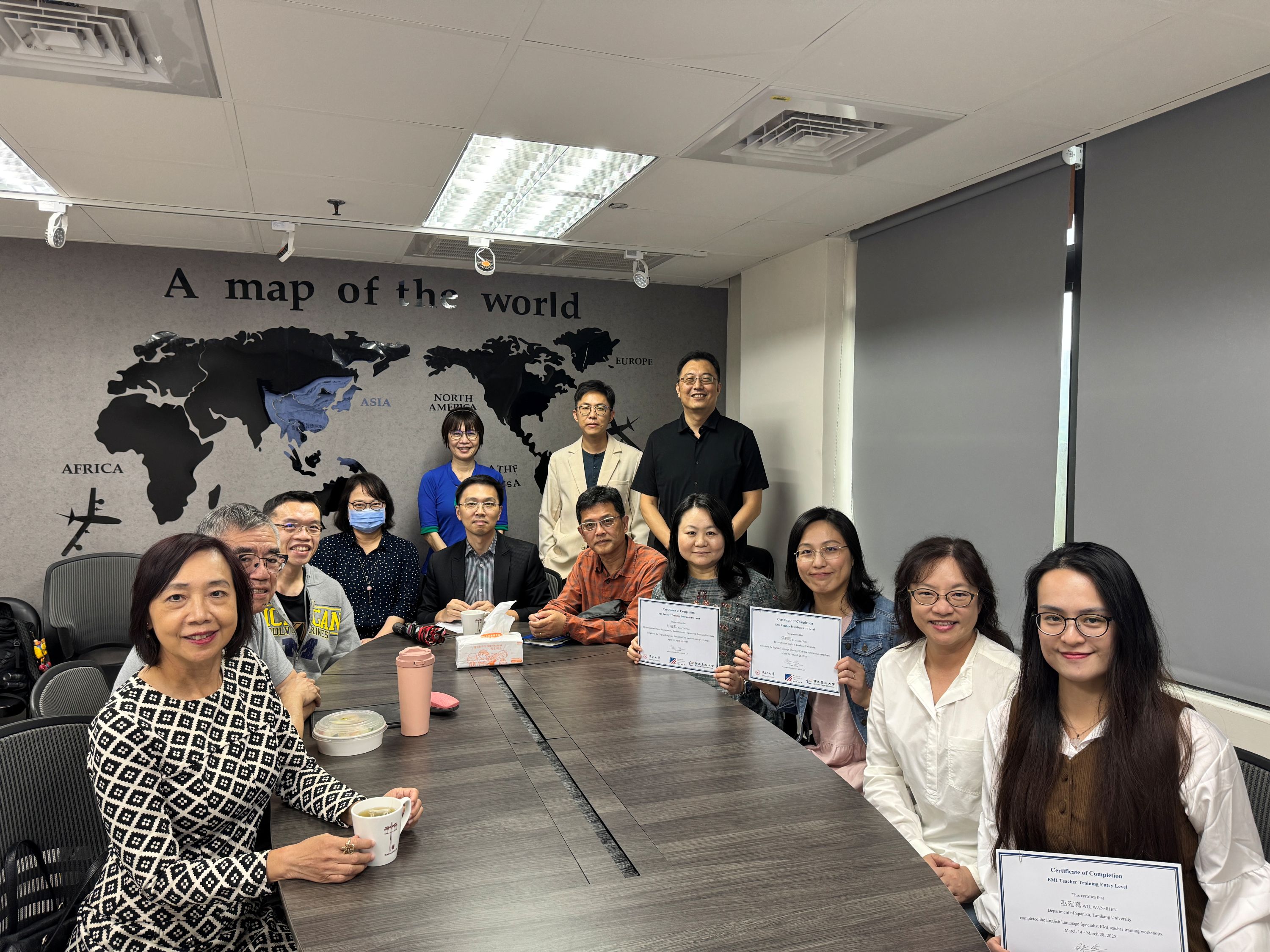
In terms of faculty development, structured training and international collaboration have been actively implemented to enhance EMI teaching capacity. In partnership with National Taipei University and the American Institute in Taiwan, a three-stage EMI training program was conducted, with 24 faculty members completing the program. EMI faculty communities have also been established, with 17 sessions held to facilitate the sharing of teaching practices and experiences. In addition, international experts have been invited to conduct professional workshops, including an intercollegiate session led by a lecturer from the University of Adelaide in Australia, attracting 38 participants. Furthermore, one faculty member nominated by TKU was successfully selected to participate in an overseas EMI training program at the University of Texas at Austin, organized by the EMI Resource Center of National Taiwan Normal University, demonstrating external recognition of teaching quality and professional capability.
Overall, steady progress has been made in the implementation of bilingual education, with concrete outcomes in course development, student support, and faculty training. While challenges remain, particularly in expanding EMI implementation in large-scale programs, the overall direction remains aligned with established goals. Moving forward, continued efforts will focus on strengthening implementation, refining support mechanisms, and enhancing program quality, in line with Taiwan’s “Bilingual Nation 2030” policy and the broader vision of internationalization.