Hungkuang University
Hungkuang University proposed the program of Bilingual Education for Students in College, BEST, as an effort to meet the needs and interests of students in a university of technology. It aims to achieve the goal at two levels: firstly, to help our students become accustomed to using English, and secondly, to enable Hungkuang students to utilize their professional skills at the workplace. To accomplish the learning effectiveness of both English language and content subjects, the University moves at a steady pace by following the protocol—making the Nursing College as a pilot model, the IR correction, and the whole-school application. To start with, the Nursing College will conduct a major operation strategy and develop both EMI and ESP courses. Based on the experience of the Nursing College, the Center for Foreign Language and EMI Teaching (CFL/EMI) will then develop and implement the successful model in the other colleges.
Development Features
Feature 1: Nursing College as the Pilot Model
The Nursing College was chosen as the initial focus of the EMI program at Hungkuang University. Through modularized, bridging, and “learning by using” approaches, the University has developed guiding principles and examples for EMI, ESP, and EAP course design and implementation. These practices have been gradually extended to the newly established College of International Hospitality and Tourism and will later be applied to other colleges.
Feature 2: Expansion of Professional ESP Courses across Departments
By the 113 Academic Year, every Department offered at least one ESP course. In addition, a new university-wide compulsory course, “Workplace English Presentation,” was introduced for sophomores, co-taught by content-subject teachers and English instructors from the CFL/EMI, ensuring the integration of both linguistic and professional competence.
Program Highlights
Highlight 1: Enhanced EMI Instruction in Freshman English
The number of EMI Track A classes (nearly 100% English) was increased, with smaller class sizes to ensure quality learning. For the first time, native English-speaking teachers were hired to teach these classes, with the number expanding to three classes in the Spring semester. Future plans include gradually extending English-only teaching to Track B classes, supported by international teaching assistants as well.
Highlight 2: Intensive English Program (IEP)
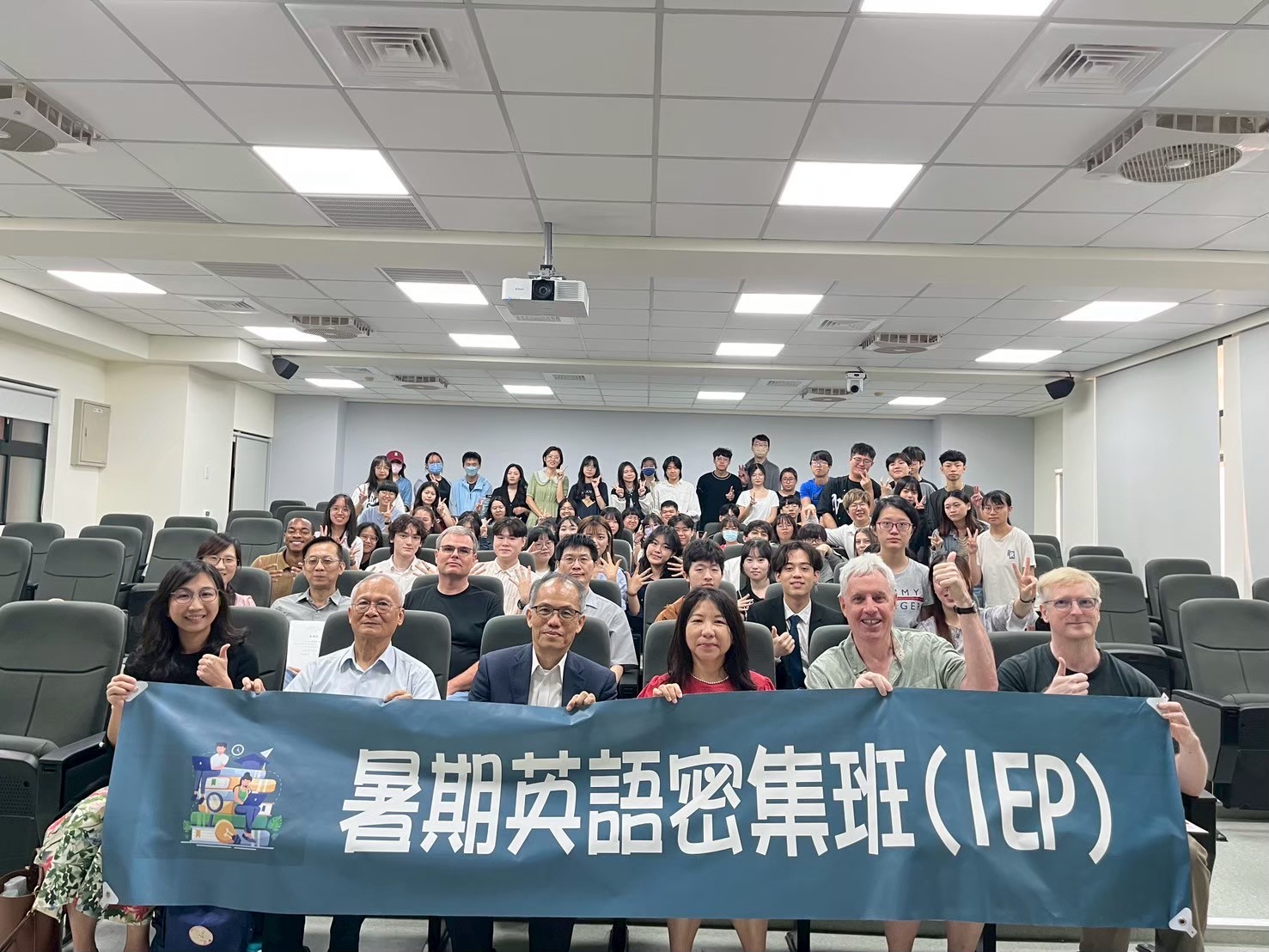
A total of 58 students participated in the four-week summer IEP, co-taught by both native and local teachers. On average, students improved their TOEIC scores by 76 points, demonstrating significant learning gains while also familiarizing themselves with the resources of the Center of Foreign Language and EMI Teaching.
Highlight 3: Growth and Sharing for EMI Faculty
At least three EMI faculty workshops were held each semester, alongside the formation of intra- and inter-university EMI-teacher communities. Experienced teachers were selected as seed mentors to support novice EMI instructors. An EMI demonstration section was also established to encourage observation, sharing, and professional exchange.
Highlight 4: Promotion of Internationalization
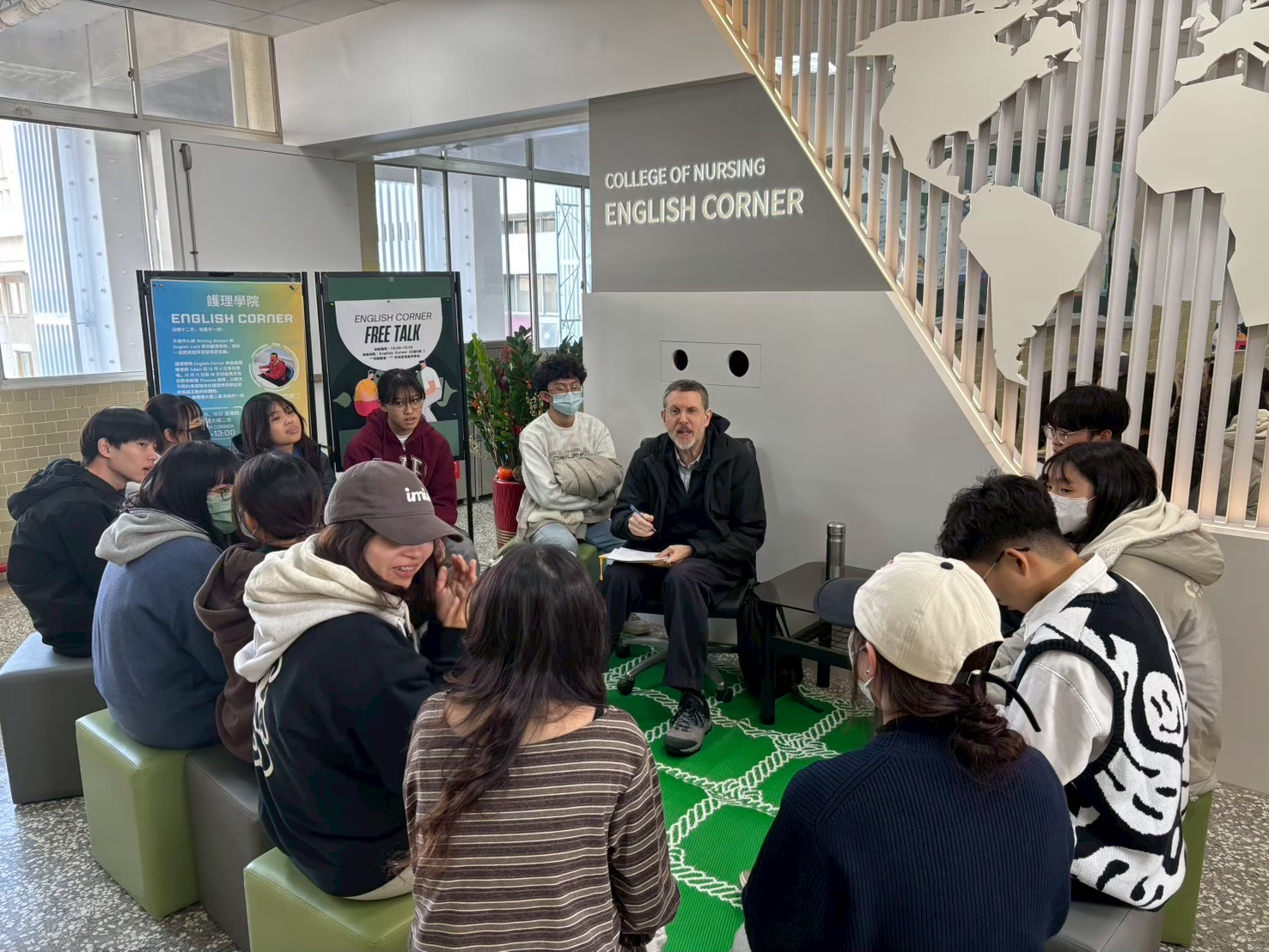
The University created an immersive bilingual environment with bilingual signages and announcements, and organized English-speaking training classes for administrative staff taught by native instructors and supported by international students. International students were recruited as teaching assistants, while additional international interns were brought in through national programs to support the Language Café, IEP, and other cultural exchange activities.
Highlight 5: Integrating AI into Courses for Self-directed Learning
Students were encouraged to use platforms such as MyET for English speaking practice, while new generative AI learning modules were introduced. The University also expanded its online learning resources, including diverse video courses and apps, to strengthen students’ self-learning capacity.
In addition to the two features and five highlights, the implementation of the Hungkuang BEST program is achieved in five aspects—strengthening teachers’ resources and efficacy, improving curriculum design and implementation, improving students’ learning effectiveness and attitudes, conducting organizational integration and re-positioning, and developing school features. The challenges of implementing The BEST program and the strategies to overcome the difficulties have been under scrutiny for adjustment and better results in the 113 academic year.