University of Taipei
The University of Taipei (UTaipei) was awarded the Ministry of Education’s "Program for Bilingual Education in Universities: Universal Enhancement Program" in Academic Year (AY) 112. In AY 113, aligned with the university’s three core development pillars—"Model School for Teacher Education," "Cradle for Gold Medal Athletes," and "Urban Research Think Tank"—the institution has steadily advanced deep-seated reforms in bilingual education.
1. Measures to Enhance Student English Proficiency
UTaipei is dedicated to constructing a comprehensive, progressive learning pathway: EGP (English for General Purposes)、 ESP (English for Specific Purposes) 、 EMI (English as a Medium of Instruction).
Curriculum Reform: In AY 113, the university reformed its general English curriculum by increasing the required undergraduate credits from 4 to 6. Furthermore, 25 ESP courses were introduced across four key fields: engineering, social sciences, medicine/agriculture, and the arts, enrolling a total of 861 students.
Language Proficiency & Learning Support: To support students' proficiency and learning portfolios, the university continues to host on-campus TOEIC exams and subsidizes/rewards students taking the Bilingual Education Standardized Test for English Proficiency (BESTEP). In AY 113, the percentage of sophomores and first-year master's students taking EMI courses reached 19% and 22.5% respectively, successfully meeting project targets.
Autonomous Learning Resources: The university expanded its diverse self-study resources, accumulating 88 English autonomous learning courses (including 26 online micro-courses). It also regularly organized the "Online Chinese-English Writing Gym" activity, which attracted over 360 participants this academic year, effectively sharpening students' bilingual reading and critical writing skills.
2. Faculty English Teaching Support System
To build up a robust faculty capacity for English-mediated instruction, the university has established a multi-layered, progressive support mechanism.
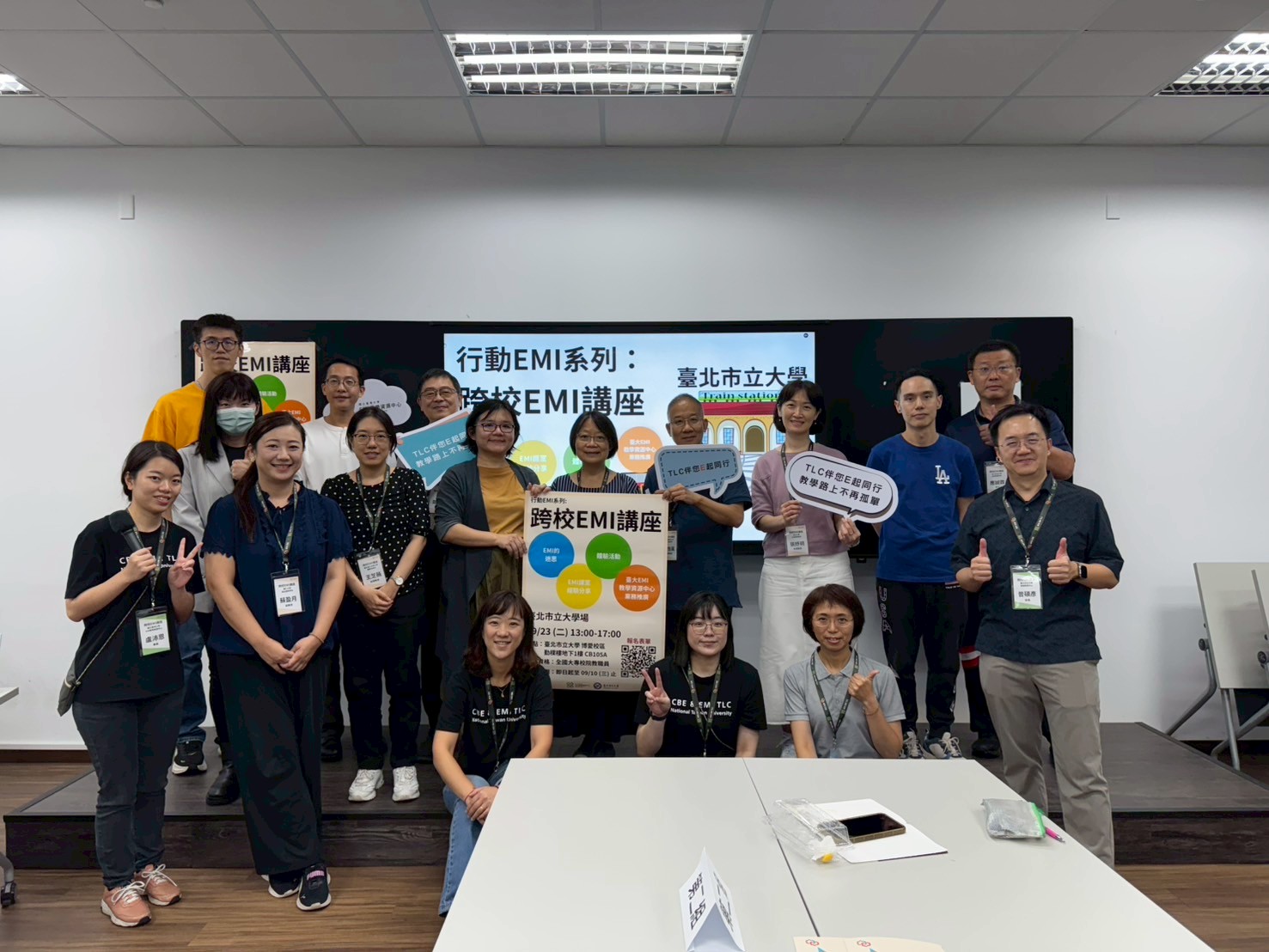
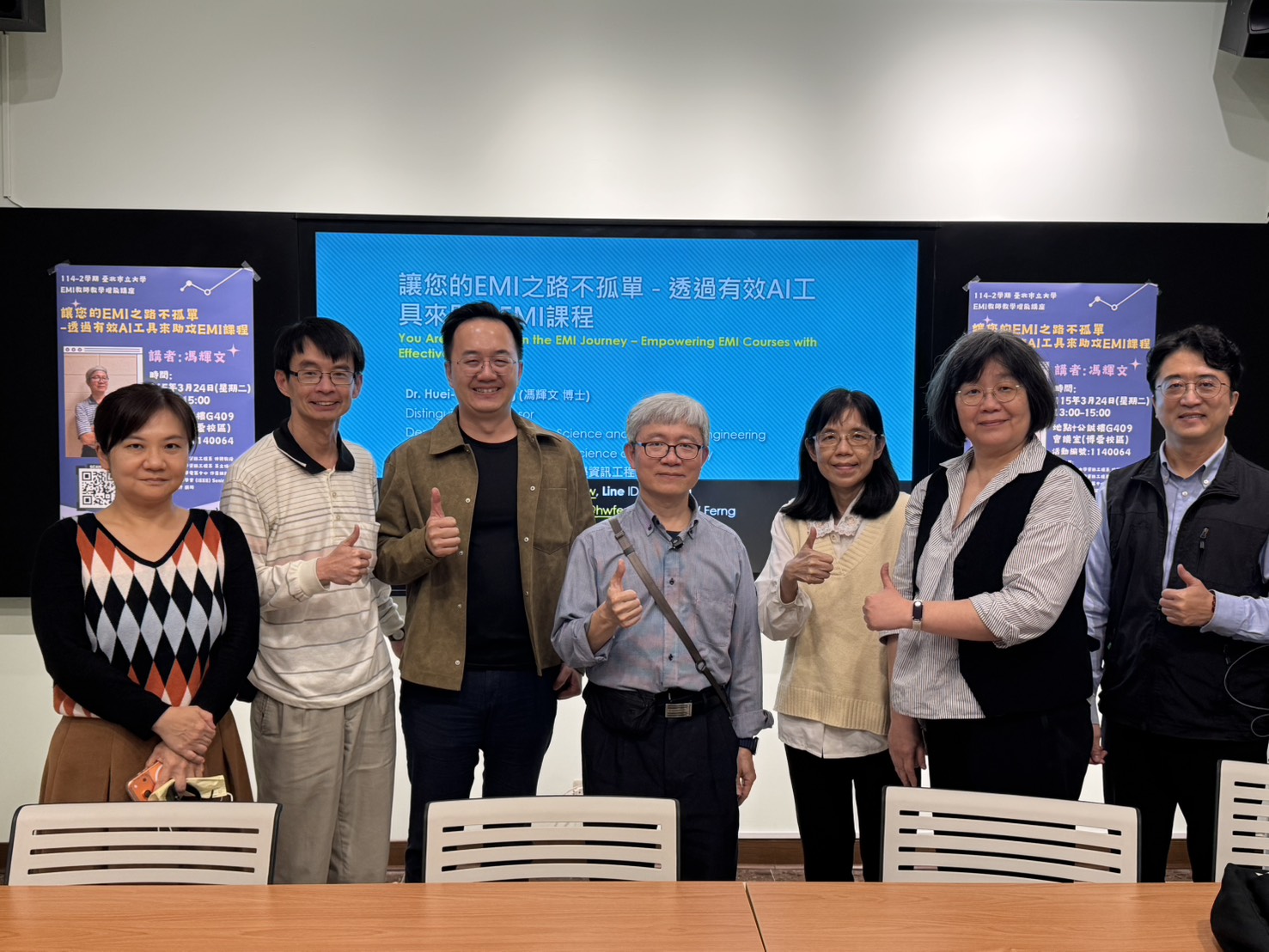
Professional Development: In AY 113, the university purchased 26 additional user accounts for the Oxford EMI Training online course designed by the University of Oxford. It also brought in international professional resources—such as the Foundation for Scholarly Exchange (Fulbright Taiwan)—to hold 5 EMI faculty empowerment lecture series.
Tangible Incentives: The university fully implemented a 1.5x hourly pay rate multiplier for EMI courses and integrated this into the flexible salary evaluations for exceptional talents, rewarding 26 courses this academic year.
Teaching Assistant (TA) System: UTaipei has deepened its EMI TA training system. Since AY 111, all assistants have been required to complete foundational training (achieving a 100% completion rate), and the university partnered with the National Taiwan Normal University (NTNU) EMI Teaching Resource Center for advanced courses. Since AY 110, a cumulative total of 34 EMI courses have been subsidized to employ teaching assistants, ensuring teachers receive practical, substantial classroom support.
3. Quality Assurance (QA) Mechanism
The university has constructed a rigorous, comprehensive curriculum quality assurance mechanism, safeguarding the quality of bilingual teaching at both the source and the classroom level.
Source Quality Control: The university established the "EMI Course Review Committee," convened by the Vice President. A professional team strictly reviews course syllabi, the extent of English textbook adoption, and remedial support packages for lagging students, ensuring rigorous gatekeeping before courses are offered.
Teaching Monitoring: The university has steadily promoted short-, medium-, and long-term classroom observation systems. In AY 113, a total of 11 EMI/ESP courses were randomly selected for classroom observations. Feedback from both internal and external committee members facilitated teachers' professional reflection and teaching strategy optimization.
Data-Driven Evaluation: Institutional Research (IR) data analysis and systematic pre- and post-course evaluation questionnaires were implemented for ESP and EMI courses. The results confirmed that after taking these courses, students showed significant improvements in English listening comprehension, reading comprehension, and English writing/reporting skills, demonstrating substantive, evidence-based QA outcomes.
4. Methods of University Self-Evaluation
For project governance and regularized self-management, the university established the "Bilingual Education Promotion Office" in 2022 (AY 111) to dedicatedly execute policy. In March 2024 (AY 113), the cross-unit, collaborative "Bilingual Education Promotion Committee" was officially formed, spearheaded by the Center for General Education (a first-tier administrative unit) to achieve vertical integration and horizontal communication.
Regular Governance & Budget Management: In AY 113, a total of 10 regular management meetings, such as the "General English Teaching Seminar," were convened to rollingly review implementation progress and budget execution rates (the project budget execution rate reached 99% this semester).
Intercollegiate Collaboration & External Resources: Professor Yun-Hua Yang, who possesses a strong professional background, was specially invited to serve as an advisory committee member. Additionally, a long-term, stable strategic consultation mechanism was established with the NTNU EMI Teaching Resource Center.
Resource Sharing: The university deepened intercollegiate cooperation by assisting 152 faculty members in applying for Grammarly English editing software licenses and sending teachers to participate in cross-institutional "ESP Faculty Empowerment Certification." By fully leveraging cross-institutional alliance resources, the university has successfully established a sustainable self-evaluation system driven by data research for policy adjustment.